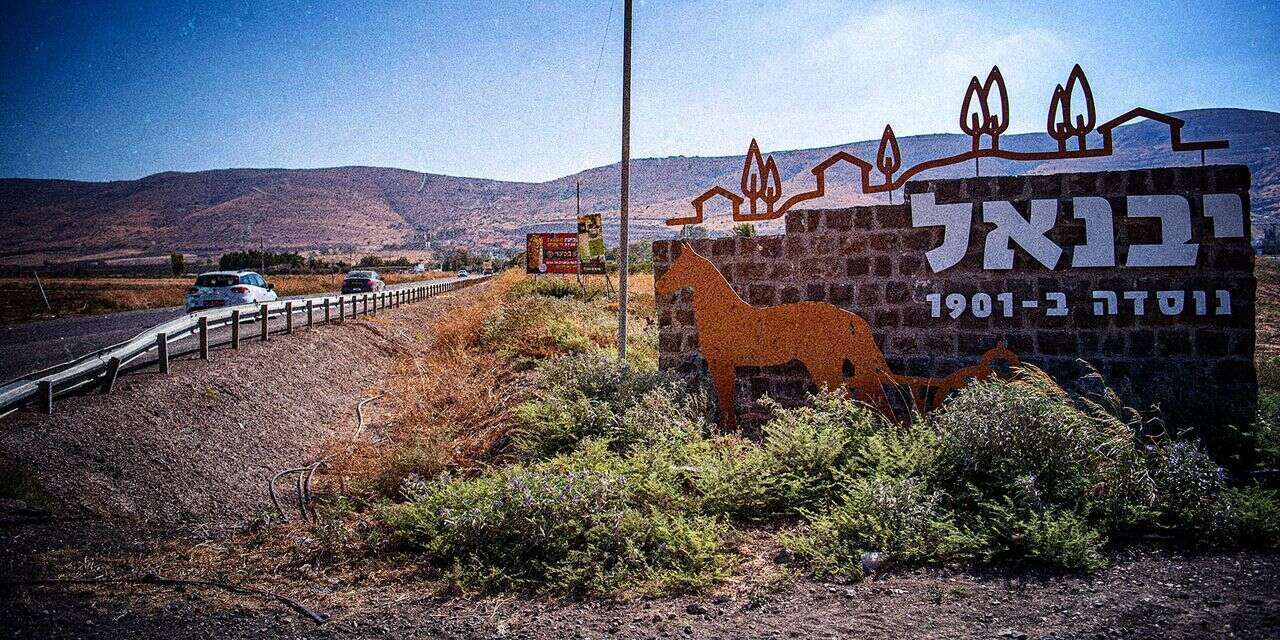
The findings of a committee established by Israel's Welfare and Social Affairs Ministry to investigate child marriage in the northern Israeli town of Yavne'el have been released after more than three years of work. The report warns of suspected related offenses, including sex crimes and even human trafficking, and highlights serious difficulties in enforcing the law and overseeing educational institutions in the community.
According to Health Ministry figures presented to the committee, 95 births to underage girls living in Yavne'el, a town of approximately 5,000 residents, were recorded between 2000 and 2025. Nearly a third of those births, 29, occurred between 2023 and 2025. The figures also show that 35% of the girls who gave birth were just 15 or 16 years old.
The committee stressed that the figures do not necessarily reflect the full extent of the phenomenon, partly because of efforts to conceal it. According to the report, child marriages occur primarily among teenagers aged 15 to 17 in the town's Breslov Hasidic community, where marriage at a young age is promoted as a religious and educational goal.
The findings indicate that Jewish religious marriage ceremonies, known as kiddushin, are sometimes conducted in secret, with only a handful of participants. When law enforcement officers arrive, those involved claim the gathering is merely an engagement party.
The marriages are not registered with state authorities at the time they take place and are sometimes registered retroactively once the couples reach adulthood. The report also found that underage girls who give birth are generally registered as single mothers, with no details of the father provided, enabling them to claim benefits from Israel's National Insurance Institute.

Obstacles to law enforcement and oversight
The report also highlights significant difficulties faced by police in tackling the practice. In 2020, four criminal investigations were opened into underage marriages, but three were closed for lack of evidence. No cases were opened in 2024 or 2025, while nine investigations were launched in 2026 and remain ongoing.
In the education system, the committee found that child marriage is considered a "red line" by Breslov educational institutions in Yavne'el, meaning the issue is not open for discussion with the Education Ministry. An attempt by a ministry inspector to introduce educational content addressing the issue was unsuccessful.
The report further noted that oversight of some ultra-Orthodox educational institutions in the town, which receive partial state funding, is insufficient. Private educational networks with ties to political figures exercise dominant control over these institutions.
Recommendations for government intervention
The committee was appointed in June 2023 by the director-general of the Welfare and Social Affairs Ministry, but its work was delayed by the war that began on October 7, 2023. Because of the time that had elapsed, officials decided against publishing a full report, opting instead to release a summary of the findings and recommendations.
Among the recommendations are a dedicated government resolution addressing child marriage, the establishment of a national steering committee, the creation of a specialized police unit, the appointment of a national coordinator in the State Attorney's Office and consideration of tougher penalties.
The committee's findings prove the urgent need for coordinated action by law enforcement, welfare and education authorities to combat the practice and protect underage girls at risk.