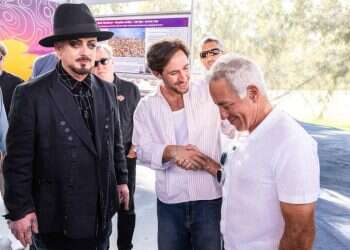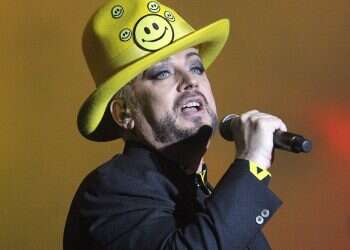
We had waited a long time for a night like this. Boy George, the 1980s icon and lover of Israel, took the stage Wednesday at Menora Mivtachim Arena in Tel Aviv for the first of two shows, sending the crowd back decades. On Saturday, he will return to the same stage for a show dedicated to survivors of the Nova festival and their families, but Wednesday night, the love for Israel was already an inseparable part of the celebration. For over two hours, people well past their 20s went back to dancing in front of their childhood idol, while some of the young ushers looked like they were trying to figure out which decade they had wound up in.
An hour and a half before the official start time, hundreds of people had gathered at the entrance to the arena. Among the oversized hats and T-shirts bearing George's signature look, most of the crowd looked like people who remembered the 1980s firsthand. But there were also those who had inherited the love for him. Einat and Ori, a mother and her 11-year-old daughter from Petah Tikva, came together. "I know Boy George because of my mom, and I really love him because he's cool and colorful," Ori explained, noting she knows almost all his songs by heart. Einat, bursting with pride, summed it up, "A cool kid at the show of a cool guy."
Outside the hall, we also met Josh and Sydney, British Jews who had come to Israel for a family visit and took the opportunity to reconnect with an old love. "He's one of the most electric performers out there, and we never miss a chance to see him, going all the way back to the Culture Club days," they said enthusiastically.
The '80s formula still does the job
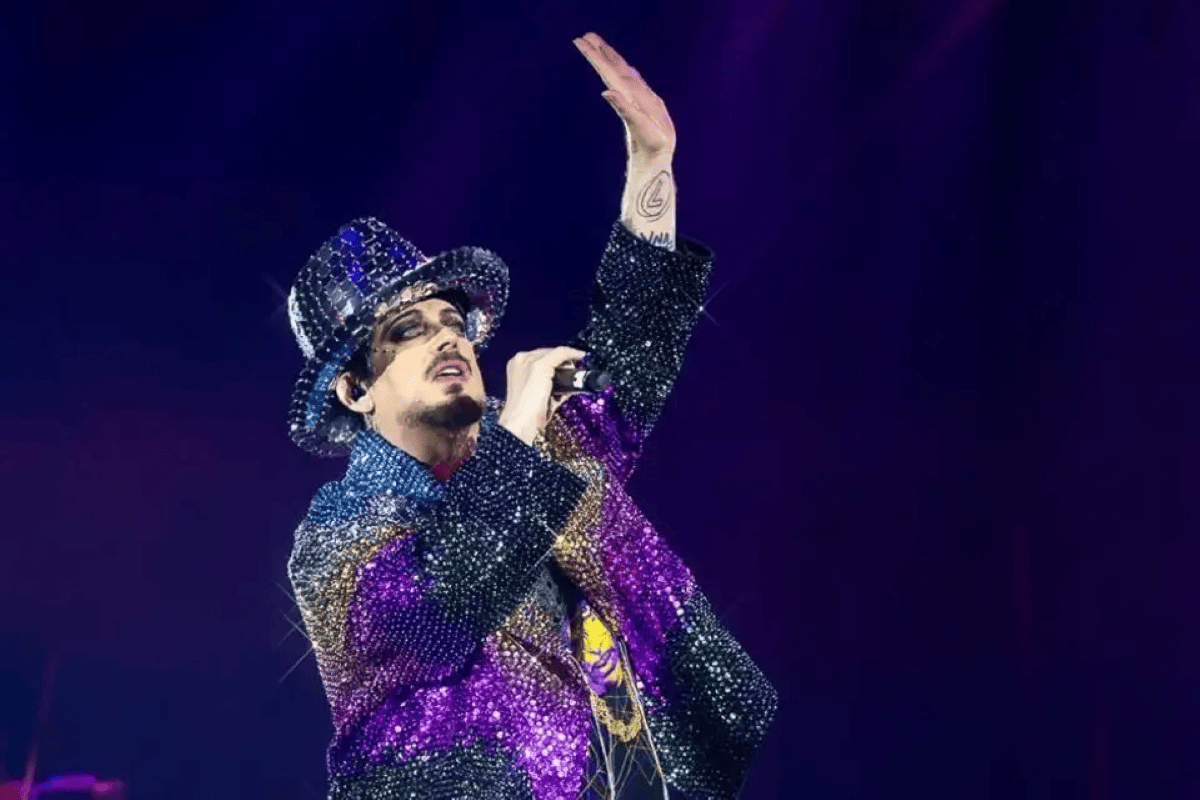
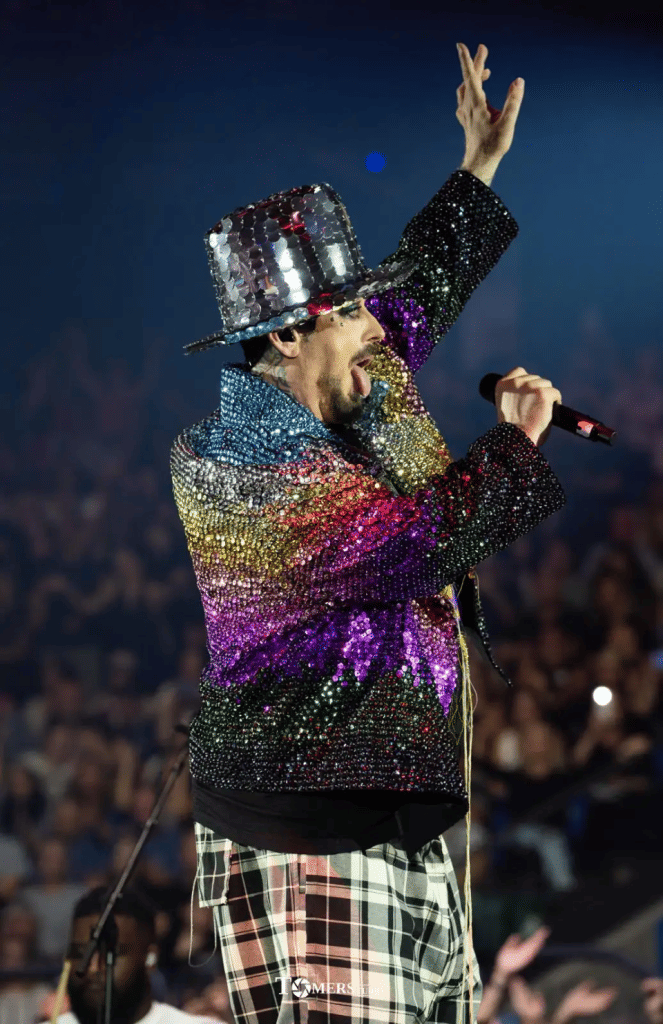
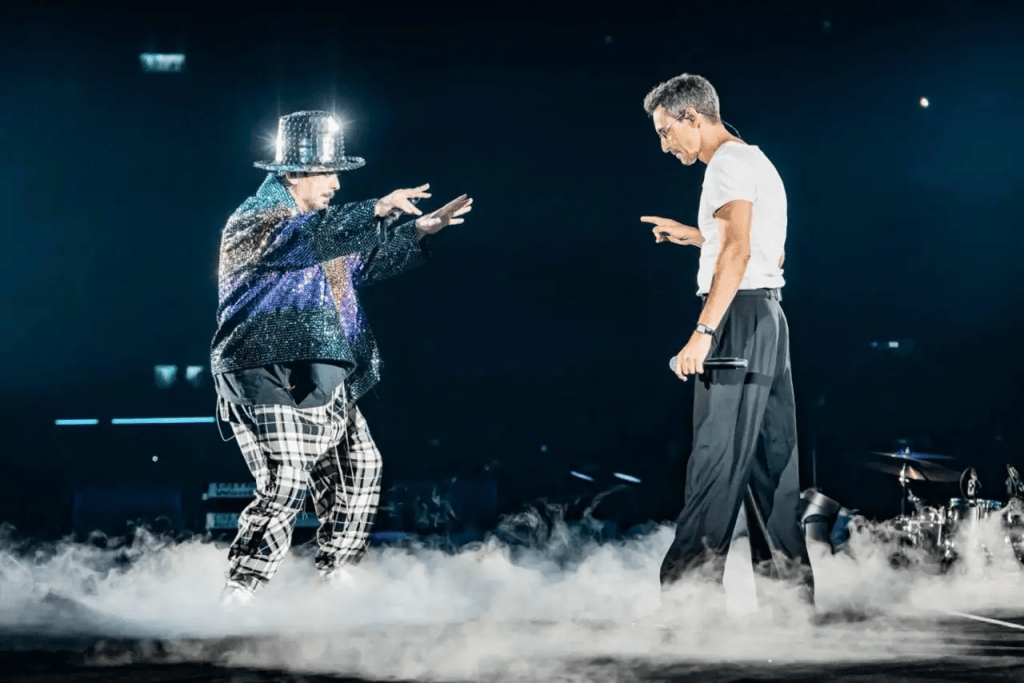
Shortly after 9:30 p.m., the lights went down, the band took its positions, and George was greeted with whistles and thunderous applause. "Hello!" he called out, drawing a roar in response, before opening with a cover of Prince's "Purple Rain." The tall hat, the colorful, sparkling jacket, the platform shoes, and the shimmering silver jumpsuit worn by one of the backup singers left no room for doubt: this was an '80s show, built on the winning '80s formula, with no contemporary pretensions. A singer at the center, a live band, backup vocals, and hits that spoke for themselves. On the stage, surrounded by the crowd on every side, the 65-year-old George still clearly knows the job. His voice is no longer the young voice from the old recordings, but he carries the songs well and gets the crowd going with ease.
Already by the third song, "Do You Really Want to Hurt Me," Ivri Lider (a leading Israeli singer-songwriter) joined him onstage, introduced by George as a close friend. They sang Culture Club's breakout hit to a crowd that knew every word, joined in and danced between the rows of chairs. Before "Time (Clock of the Heart)" from 1982, George said he felt like he was traveling through time. It was easy to understand what he meant. "This song is dedicated to everyone here who's with someone they love. It's dedicated to you. Think about it, and always remember how precious they are to you," he said.
Around the stage, people in their 40s, 50s and beyond rose from their seats, hugged, sang and danced. For a moment, the arena looked like a high school reunion, featuring the original singer instead of a cassette tape. Those who grew up on these songs got a chance to feel young again, in front of the idol who had accompanied them back then and who could still get them on their feet.
George also has plenty to say between songs. Before "The Internet Wants My Blood," he took a jab at those who champion free speech but struggle to accept his right to speak his mind. The song deals with the feeling of being under siege that accompanies his posts online. In a past interview, George described the cycle of posting a tweet, deleting it, and reposting it, insisting that deleting a post is not necessarily out of fear; sometimes he simply changed his mind.
In front of the crowd at Menora Mivtachim, he actually felt at home: "This is what community feels like." He went on to explain that he isn't afraid to come to Israel, "I survived the '70s and '80s, which is a victory for me." It turns out one piece of advance research also helped him prepare for the visit. "Before I came to Israel, I asked people if there's Grindr here. They told me there is. I'm happy," he said, referring to the dating app for gay men. To each their own preparations for a trip abroad.
With Tal, a 14-year-old girl dancing in the crowd, communication proved a bit trickier. George noticed her and asked for her name, but spent nearly two minutes trying to crack the answer. Stella, Estelle, Sally – the guesses kept changing, and the answer stayed out of reach. When he finally understood it was Tal, just two letters, the crowd responded with roars of victory. Four decades of international hits, and it turns out successfully catching an Israeli name can earn you applause too.
The connection to Israel took on especially painful meaning before "Raise Hands." "Raise your hands if you miss someone who went to war. Raise your hands if you miss someone who went to dance," George asked, in a clear reference to the war and to the massacre at the Nova festival. Hands went up, and phone flashlights switched on, until the stands around the stage were dotted with light. Even when the words were in English, the context was deeply local. Throughout the evening, every time he mentioned Israel and his connection to it, the crowd responded with roars and waving flags. "I'm not afraid to come here," he said, and the love he received in return made clear why he feels welcome here.
Before "Clouds," he gave that connection a personal story. He dedicated the song to Philip Sallon, one of the colorful figures of London's club scene, whom he described as a Jewish friend who taught him what it means to be Jewish. Sallon and his family welcomed the young George into their home, where he came to know Friday night dinners and holidays, and even joined visits to the synagogue. The friendship later hit a rough patch. In his memoir, George described personal and professional disputes, as well as the way his falling out with Sallon found expression in a song. At Menora Mivtachim, alongside all the flags and declarations, the dedication was a reminder that his connection to Jews also has a personal address and a long history.
Everyone is waiting for the karma to come
The song selection, however, didn't please everyone. Alongside the Culture Club hits and covers, including Bread's "Everything I Own," which also became one of George's biggest solo hits, there was ample room for lesser-known material. Some audience members looked like they were waiting for another familiar chorus to lift them out of their seats. "Miss Me Blind," "Victims," and "The Crying Game" could have filled that role, but were absent. Already during "Hoody," before the encore, some fans began heading for the exits. For some of them, it seemed, anticipation for the next hit was already competing with fear of the traffic jam leaving the parking lot.
This year, Boy George also found time for a fairly puzzling move, teaming up with Senhit, an Italian singer considerably less famous than he is, to represent the tiny nation of San Marino at Eurovision. The song "Superstar" finished 14th out of 15 in the semifinal, and the adventure ended without a final and without much glory. He did not perform that song Wednesday night. Still, had the crowd at Menora Mivtachim been the ones voting at this year's Eurovision, the pair likely would have had a guaranteed spot in the final.
During the encore, that connection became the emotional peak of the night. "I want to salute you tonight," George said, adding, "We're doing this show tonight against all odds." "We Will Dance Again," which he wrote inspired by the Nova massacre, was met by a crowd wrapped in Israeli flags who cheered the lyrics. When he reached the line "I stand with the Jews," the screams from the stands competed with the singing onstage. On Saturday, at the show dedicated to Nova survivors and their families, Ofer Nissim (an Israeli DJ and producer) will join him for a performance of one song in a special production of his own. The intensity of that connection to the community could already be felt Wednesday night.
There was also time for a glass of red wine onstage. "Cheers, Tel Aviv," George called out, and the crowd answered with a thunderous "l'chaim." And just when it seemed the night might end without "Karma Chameleon," he asked, "You think I'm not going to do that one?" The screams made clear that no one was willing to let him skip Culture Club's biggest hit, which was the best-selling single in Britain in 1983. At a quarter to midnight, to the sound of the chorus everyone had been waiting for, the entire arena stood and danced. George looked like he was enjoying every moment, and his crowd got a few more minutes to feel young.