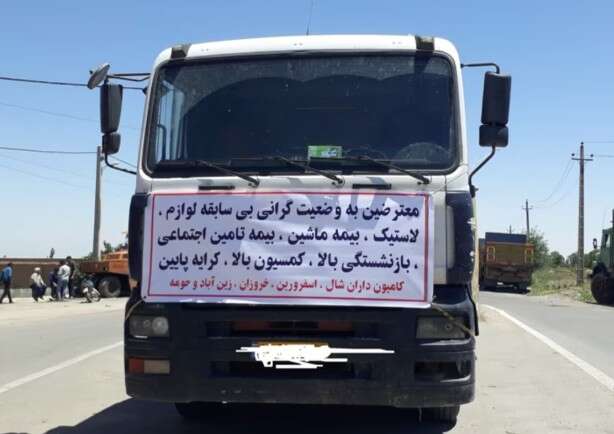
As Iran's regime continues to defy the United States, the Islamic Republic's economy is showing alarming signs of economic collapse. Truck drivers in several Iranian cities have launched strikes without government authorization, protesting worsening fuel shortages and soaring vehicle maintenance costs.
"Expenses have only kept rising since the war, while freight rates keep falling," one truck driver told Iran International.
Drivers attached protest signs to their trucks, while videos circulating online showed entire parking lots filled with commercial vehicles standing idle as part of the strike.
Iran has also experienced a wave of rolling blackouts in recent days as power plants struggle with shortages of fuel and natural gas. Workers from the national electricity company staged a demonstration in Tehran to protest disruptions to electricity services.
Iranian President Masoud Pezeshkian sought to set an example by welcoming journalists to his office at the presidential compound in Tehran, where he sat in near-total darkness. Pezeshkian told reporters that the lights had been switched off to conserve electricity.
"If we join hands and act as one, we will get through this winter stronger," the president told Iranian state television.
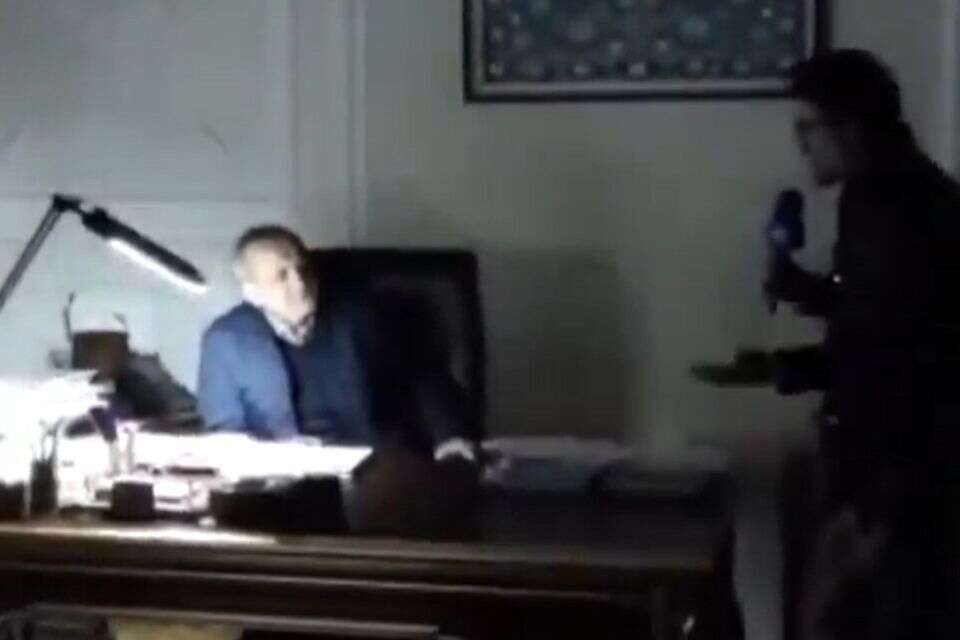
Iran's national electricity company, Tavanir, announced that residential and commercial customers would face regular scheduled power outages. Meanwhile, the head of a parliamentary oversight committee warned that prolonged electricity shortages could push unemployment above one million.
Tavanir CEO Mohammad Allahdad said Saturday, Nov. 21, that the restrictions were necessary because of difficulties supplying fuel to power plants. Customers could face outages lasting up to two hours every other day, he said.
If temperatures fall further, the blackouts could increase to two hours a day.
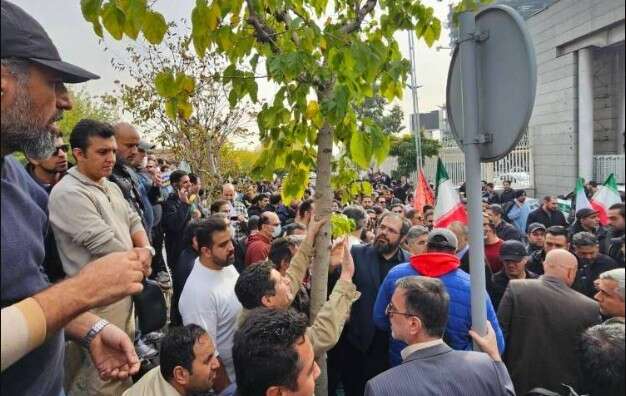
The renewed outages come two months after the end of summer, just as the colder season begins. Rising household demand for natural gas to heat homes is placing additional pressure on supplies, leaving power plants struggling to secure enough fuel.
Mohammad Bagher Ghalibaf, speaker of Iran's parliament, said: "Reforming energy consumption is the most urgent and important issue facing the country, and these reforms must begin with the gas sector, not gasoline."