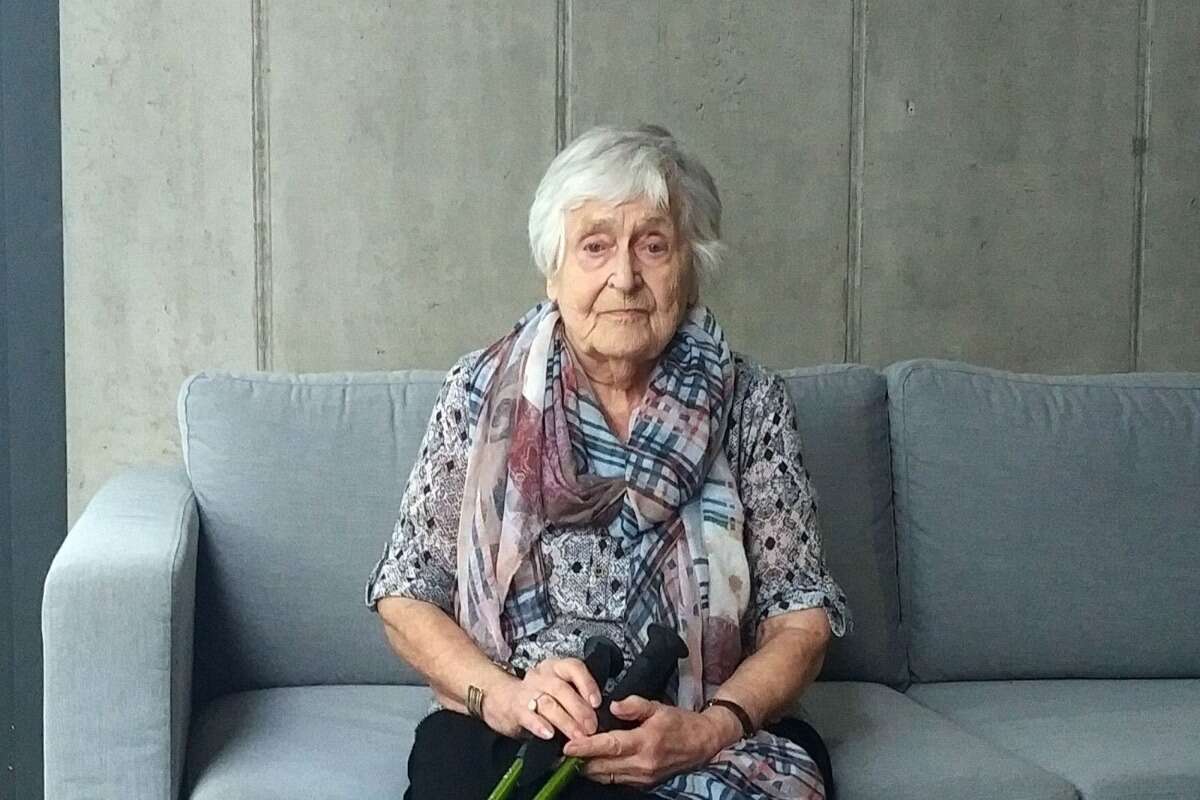
Lydia Tischler, an Auschwitz survivor turned leading child psychotherapist, died at 97 on Thursday, November 19, The Jewish News reported. The Highgate resident had received an MBE (Member of the Most Excellent Order of the British Empire) only months earlier, honoring her contributions to commemorating the Holocaust and to child psychology.
Born in 1929 in Ostrava, Czechoslovakia, Tischler endured two years in the Theresienstadt ghetto before accompanying her mother and sister to Auschwitz. Her mother was killed in the gas chambers, while Tischler and her sister Rutka survived and were sent to a forced labor camp.
Back in Theresienstadt, she cared for orphaned children, work that shaped her later career. After liberation in 1945, she came to Britain through the Windermere rehabilitation program and was reunited with her father.
Tischler trained under Anna Freud and spent 23 years at the Cassel Hospital helping children with psychological difficulties. Later she returned to Czechia, her native country, to establish a training program for child psychotherapists, an achievement she counted among her proudest, and she continued working until her final months.
Her story was recorded in "Freud, Hitler and Me," and published in January 2025 through The Fed's My Voice project, which preserves Holocaust survivors' life stories. Tischler warned in a film The Fed produced last year, that "fear and hatred of the 'other', of people who are not like us and who we imagine threaten our identity, is what allows something like the Holocaust to happen."
Michael Newman OBE, chief executive of the Association of Jewish Refugees (AJR), said: "Lydia Tischler's life was one of extraordinary courage and achievement. Having endured unimaginable persecution and the loss of her mother during the Holocaust, she came to Britain as a teenage refugee and went on to transform her experiences into a lifetime of service to others.
"Her pioneering contribution to child psychotherapy, both in Britain and in her native Czechia, is a remarkable legacy."
Bea Lewkowicz OBE (Officer of the Most Excellent Order of the British Empire) interviewed Tischler in March for the AJR's Refugee Voices Testimony Archive and said: "Interviewing Lydia was an immense privilege. I was struck by her remarkable memory, intellectual clarity, humor and her extraordinary capacity to reflect on a life shaped by both profound loss and exceptional achievement.
"She spoke with particular pride about returning to Czechia to train a new generation of child psychotherapists. Despite everything she had endured, she had found a way to give something back to the country of her birth."
Lewkowicz added: "When I asked what message she wished to leave for future generations, her response was characteristically profound: 'Don't project your hostility into the other. Take responsibility for it and don't act on it.'"
The Fed's My Voice project paid tribute too, describing Tischler as having "a sharp mind, ever-present wit and a determination to tell her Holocaust story so that people would understand the psychological mechanisms that could make such horrors happen." The organization added: "Lydia will be deeply missed by everyone who knew her."
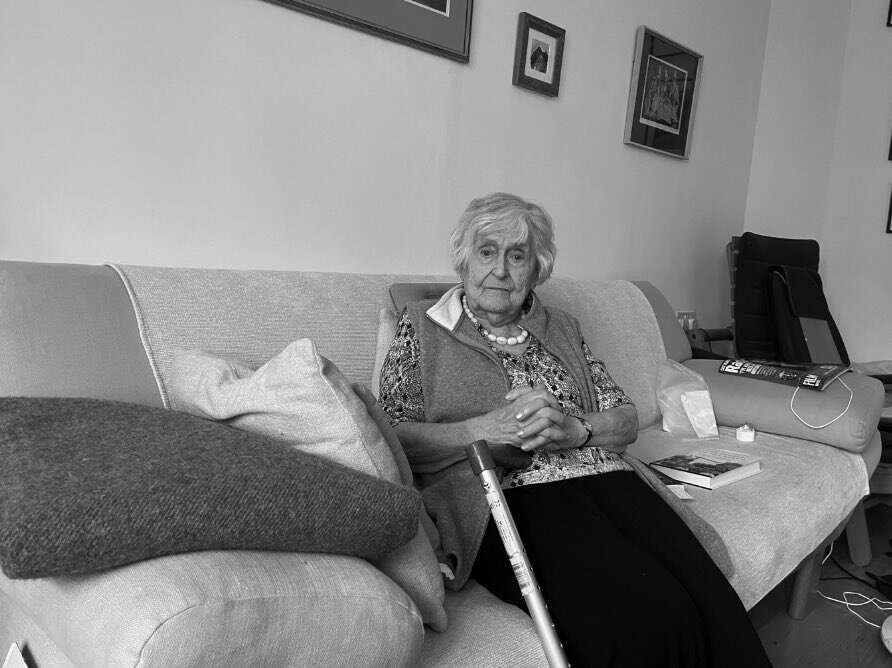
Tischler once said of aging: "I prefer my legs are weak and my mind is sharp. I can get walking sticks for my legs, not for my mind!"