Tuesday Nov 24, 2026
NEWSLETTER
www.israelhayom.com
  • Home
  • News
    • Israel
    • Israel at War
    • Middle East
    • United States
  • Opinions
  • Jewish World
    • Archaeology
    • Antisemitism
  • Lifestyle
    • Food
    • Travel
    • Fashion
    • Culture
  • Magazine
    • Feature
    • Analysis
    • Explainer
  • In Memoriam
www.israelhayom.com
Home Science & Technology

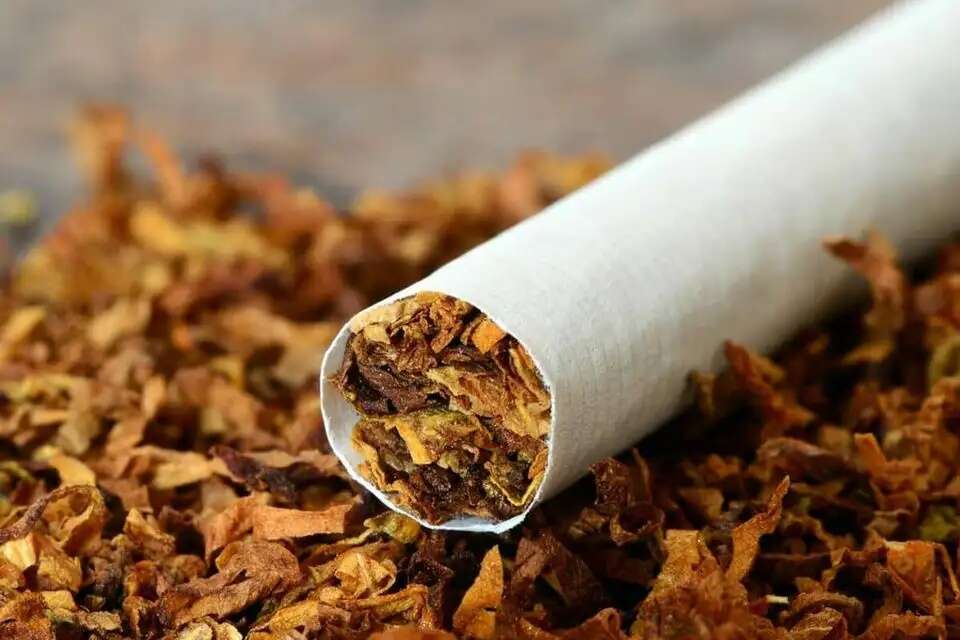
Scientists successfully produce cancer drug from tobacco leaves

An international research team led by the University of Copenhagen has successfully produced paclitaxel, a widely used cancer drug, in living plant leaves by reconstructing its entire biosynthetic pathway: "Almost every woman with breast cancer will receive this drug at some point."

by  ILH Staff
Published on  11-24-2026 12:43
Last modified: 11-24-2026 14:50
Scientists successfully produce cancer drug from tobacco leaves

Scientists produce cancer drug in tobacco plants

Share on FacebookShare on Twitter

Researchers at the University of Copenhagen have led an international team that successfully reconstructed the complete biosynthetic pathway of paclitaxel, a major cancer treatment, producing the drug in living plant leaves. The breakthrough, detailed in a new study published in the scientific journal Nature Chemical Biology, demonstrates that the entire drug-production process can be reproduced in a host plant, with measurable yields. It also provides a genetic blueprint that could eventually enable industrial-scale production in other biological systems.

The achievement marks a milestone in a decades-long scientific effort to reduce dependence on slow-growing yew trees as a source of the drug.

A relative of the tobacco plant

For their experiment, the researchers selected Nicotiana benthamiana, a close relative of tobacco, because of its rapid growth and suitability for laboratory research.

According to the scientists, reducing the cost of the drug and making it more widely accessible were the primary motivations behind the breakthrough. "Our biggest motivation was the question of whether we could contribute to society by making this drug cheaper," said Professor Sotirios Kampranis. "Almost every woman with breast cancer will receive this drug at some point," Kampranis added, emphasizing the potential public health benefits of making production simpler and less expensive.
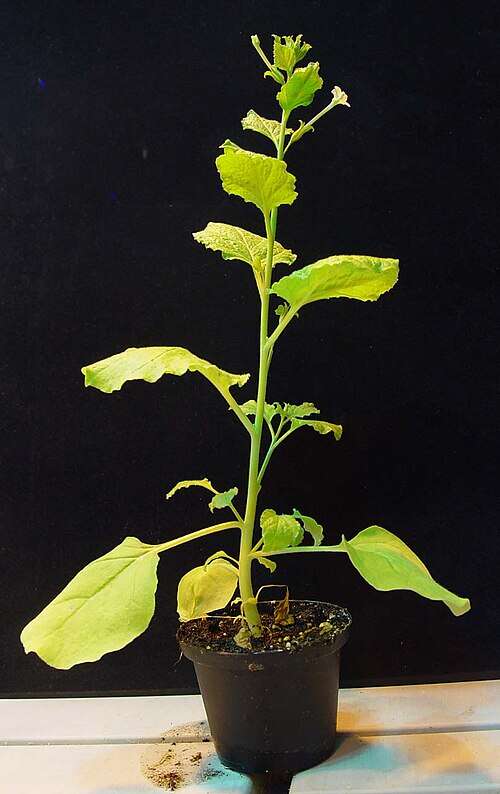
Nicotiana benthamiana , מתוך ויקיפדיה
Nicotiana benthamiana. Photo: Wikipedia

According to the researchers, producing active pharmaceutical compounds in plants can be significantly more cost-effective, potentially offering major benefits in countries where medical treatments are not comprehensively covered by public health care systems.

To achieve the breakthrough, the scientists mapped and reconstructed the natural biosynthetic pathway through which paclitaxel is produced in yew trees. They identified 20 genes encoding different enzymes and introduced them into tobacco leaves using soil-dwelling microorganisms.

The team then tracked the chemical process by isolating eight intermediate compounds and one byproduct, using structural analysis to determine the precise function of each enzyme and the sequence of reactions involved.

By optimizing the enzymes and carefully designing how the genes were introduced, the researchers increased paclitaxel production from 0.104 micrograms per gram of dried leaves to 61.05 micrograms, a 587-fold increase. That concentration is comparable to the amount of paclitaxel naturally found in yew tree bark.

A prototype for future production

The researchers stressed that the tobacco relative was chosen as an experimental platform, rather than with the intention of limiting future pharmaceutical production to greenhouses. "The research has very little to do with the tobacco plant and much more to do with understanding how the drug is produced," Kampranis explained.

The central achievement, according to the professor, is that the genetic blueprint can now be transferred to other production systems. The experiment relied on introducing genes into plant leaves to produce temporary expression of the paclitaxel biosynthetic pathway.

This approach allowed the researchers to test and validate their scientific design rapidly, without having to establish a permanent, genetically stable production system within the plant itself.


Tags: Breast Cancercancer

Related Posts

Megaspeed affair's hidden hand – Nvidia chip smuggling web still runningReuters

Megaspeed affair's hidden hand – Nvidia chip smuggling web still running

by Shachar Shapiro

While Alice Huang, the former mistress of Nvidia founder Jensen Huang, was the face of the Megaspeed affair that led...

Nvidia chips and the Chinese military: What did Jensen know?REUTERS/Ann Wang; Taryn NG / AFP);

Nvidia chips and the Chinese military: What did Jensen know?

by Erez Linn

In latest fallout from the Nvidia-China saga, NYT investigation shows that Alibaba's links to Megaspeed – and by extension to...

NVIDIA plans massive tech campus in Israel, boosting AI innovationREUTERS

Alarming study exposes AI models repeatedly misidentify civilians, schools as targets

by Erez Linn

Across nearly 400 Ukraine-style drone simulations, models that initially refused to target civilians often relented when told it was a...

Menu

Analysis 

Archaeology

Blogpost

Business & Finance

Culture

Exclusive

Explainer

Environment


Features

Health

In Brief

Jewish World

Judea and Samaria

Lifestyle

Cyber & Internet

Sports


Diplomacy 

Iran & The Gulf

Gaza Strip

Politics

Shopping

Terms of use

Privacy Policy

Submissions

Contact Us

About Us

The first issue of Israel Hayom appeared on July 30, 2007. Israel Hayom was founded on the belief that the Israeli public deserves better, more balanced and more accurate journalism. Journalism that speaks, not shouts. Journalism of a different kind. And free of charge.

All rights reserved to Israel Hayom

Hosted by sPD.co.il

  • Home
  • News
    • Israel at War
    • Israel
    • United States
    • Middle East
    • Sports
  • Opinions
  • Jewish World
    • Archaeology
    • Antisemitism
  • Lifestyle
    • Food
    • Travel
    • Fashion
    • Culture
  • Magazine
    • Feature
    • Analysis
    • Explainer
    • Environment & Wildlife
    • Health & Wellness
  • In Memoriam
  • Subscribe to Newsletter
  • Submit your opinion
  • Terms and conditions

All rights reserved to Israel Hayom

Hosted by sPD.co.il

Newsletter

[contact-form-7 id=”508379″ html_id=”isrh_form_Newsletter_en” title=”newsletter_subscribe”]

  • Home
  • News
    • Israel at War
    • Israel
    • United States
    • Middle East
    • Sports
  • Opinions
  • Jewish World
    • Archaeology
    • Antisemitism
  • Lifestyle
    • Food
    • Travel
    • Fashion
    • Culture
  • Magazine
    • Feature
    • Analysis
    • Explainer
    • Environment & Wildlife
    • Health & Wellness
  • In Memoriam
  • Subscribe to Newsletter
  • Submit your opinion
  • Terms and conditions

All rights reserved to Israel Hayom

Hosted by sPD.co.il