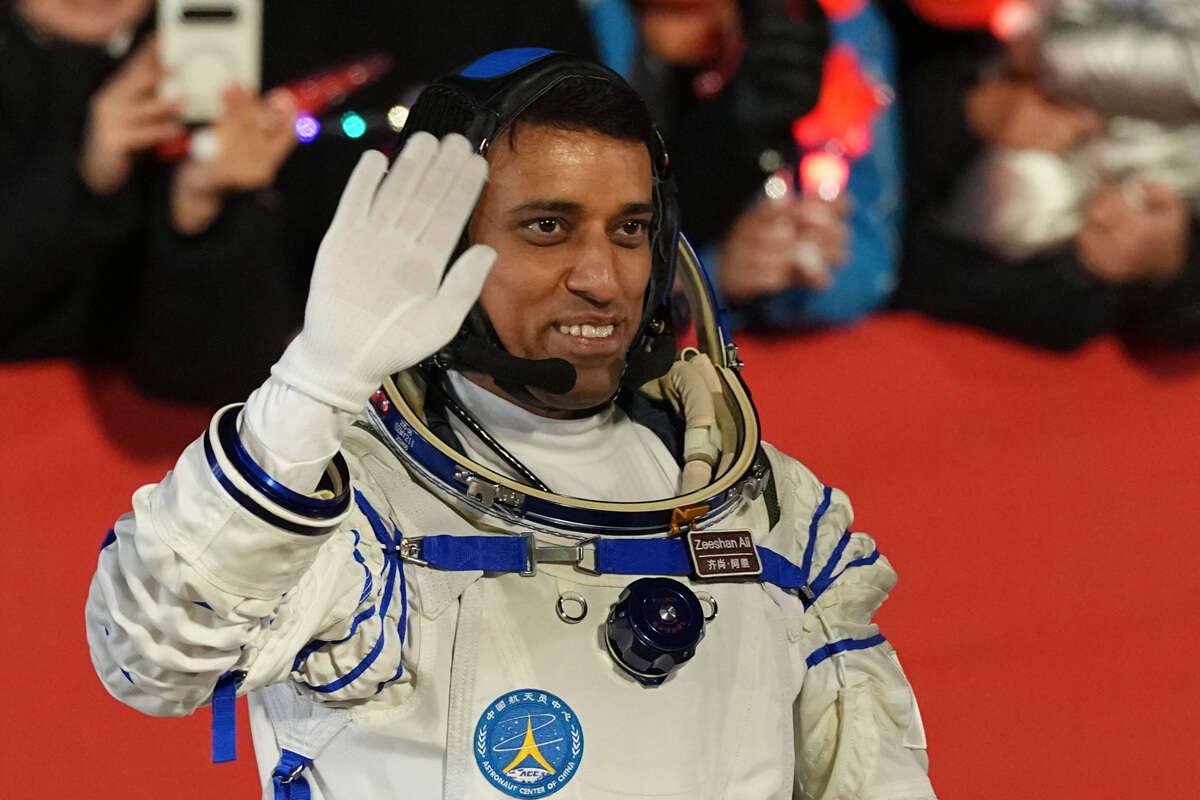
Pre-dawn cheers filled Islamabad's space agency auditorium on Wednesday as Pakistan Air Force pilot Muhammad Zeeshan Ali launched from northwest China on Shenzhou-24, becoming the first foreign astronaut on a Chinese mission and the first non-Chinese visitor to the Tiangong station, AFP reported. Hundreds of officials, scientists, and students watched the broadcast as Pakistan's national anthem played.
🚀🇵🇰 HISTORY MADE! PAKISTAN REACHES SPACE! 🌌
Pakistan's first astronaut, Muhammad Zeeshan Ali, blasts into space aboard China's Shenzhou-24! 🇵🇰🤝🇨🇳
Historic celebrations at SUPARCO Islamabad as Pakistan marks a proud milestone in space exploration! ✨
#PakistanChina https://t.co/Pb6yyqqTiv
— awaam (@PakPulse786) November 25, 2026
"I feel goosebumps just seeing the launch," physics and astronomy student Zainab Abbasi told AFP at the Space and Upper Atmosphere Research Commission (SUPARCO) headquarters. "I could have never imagined that so soon in my life I would see a Pakistani astronaut go to space," the amateur astronomer added. Unlike adventurer Namira Salim, who made a suborbital flight in October 2023, Ali is the first Pakistani in orbit and will return after one week via the docked Shenzhou-23 capsule.
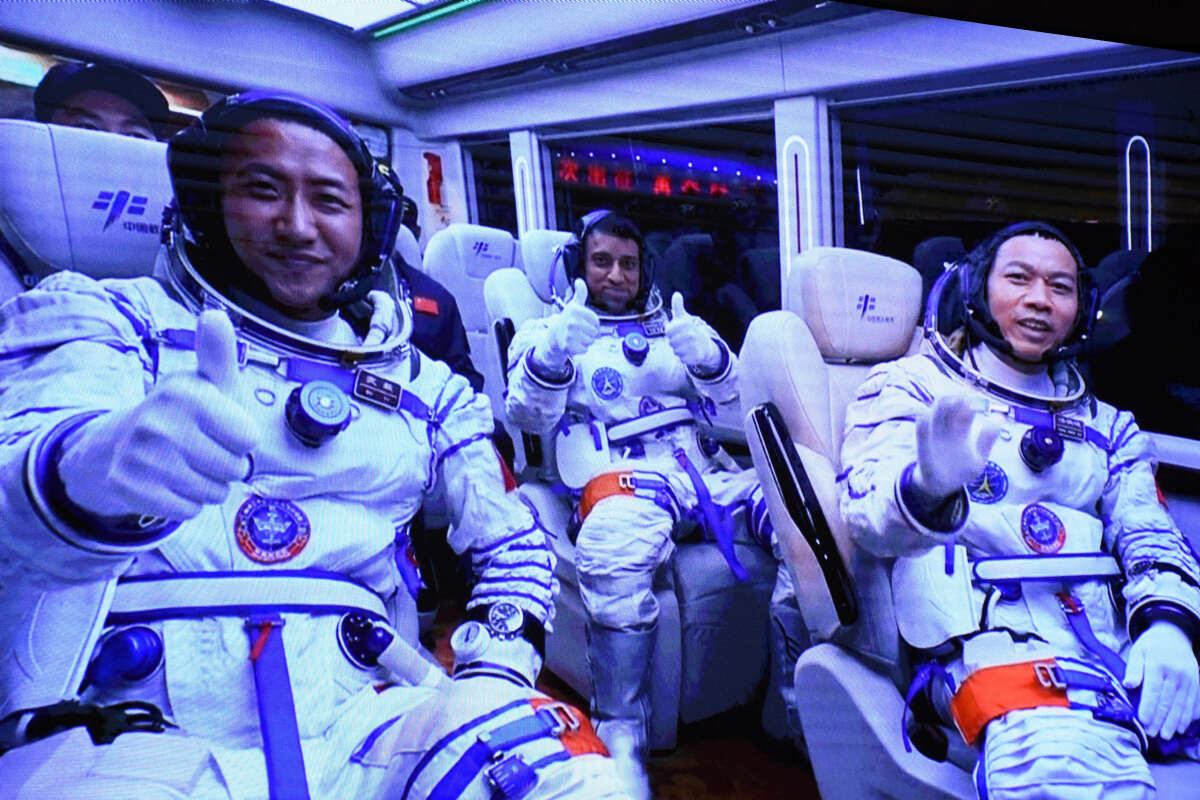
SUPARCO chief Muhammad Yousaf Khan had worried about turnout for the 5:18 am (0018 GMT) launch. "But now I see there isn't a seat left," he said amid spectators waving Pakistani and Chinese flags, adding, "That shows how attached everyone is to our astronaut, this mission and the hard work behind it." Having launched six satellites in 30 months, he noted: "With every launch our hearts were pounding, hoping it would succeed and the satellite would do everything it was designed for. But today we all feel something different."
Video: Pakistani astronaut becomes first foreigner to board China's Tiangong space station / Credit: Reuters
Chosen from over 50 applicants and 19 finalists tested in China alongside navy candidate Khurram Daud, Ali completed seven months of centrifuge and underwater training to conduct four university-proposed experiments on microalgae, self-healing materials, and quinoa. Following a February 2025 training agreement with Beijing, Institute of Space Technology (IST) professor Raza Akbar described building independence from China – after Pakistan's space program began in 1961 and launched Rehbar 1 in 1962 – as a "gradual process". "Initially we collaborate... we get the technology, we get the mentorship, and collectively we develop," he said.
Fellow IST academic Amna Ijaz Aziz was visibly moved by the flight. "You've made history for all of us," she said, before adding, "I'm already seeing your name, and children learning about you in our future classes."