Iran dragging Middle East into a dangerous standoff
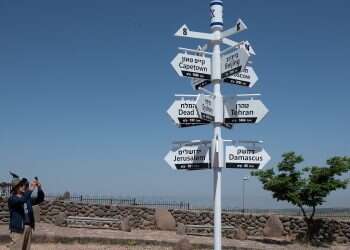
Tehran has been threatening its Arab neighbors, the international oil market, and Israel as it attempts to squeeze out of the chokehold of US sanctions.
The upcoming meeting of US, Russian and Israeli national security advisers in Israel has taken on added significance as once-concealed disagreements between Russia and Iran move out into the open.
In light of the impasse in the indirect Iran-US negotiations, an upsurge in Iranian terrorism is expected, against Israel via Syria and the Gaza Strip, and against the Persian Gulf states.
Iran is hoping to pressure the US into easing sanctions via terrorist attacks. The US will have to deal with the ayatollah regime a serious blow, not only to deter it but to prevent future escalation.
While the agency, which has long been accused of promoting incitement against Israel and perpetuating the Palestinian refugee problem, says its mandate will end only when the Israeli-Palestinian conflict is settled, UNRWA’s very existence is a factor that prevents any resolution.
Tehran views the Trump administration as "tougher" than its predecessor, which may push them to more extreme actions. While the hope is that Tehran will be deterred from its ongoing aggression, some are warning that war could still erupt.
The oil tanker attacks on Thursday and the four in May are evidence of Iran's considerable efforts and quite impressive ability to conduct military operations in the Persian Gulf under the nose of the US Navy – almost completely without leaving a trace.
As Labor Leader Avi Gabbay, who drove the party to a historically abysmal performance in April's election, prepares to vacate his seat and the party. Once a force to be reckoned with in Israeli politics, Labor is staring at an uncertain future. Still, some insiders dismiss the notion of merging with Meretz ahead of the September election and vow to rebuild Labor.
When the ideological Right ruled out an opportunity to gradually promote its ideas, preferring instead to splinter into smaller parties and sit in the opposition, the Oslo Accords were only a matter of time.
The Lebanon-based Shiite terrorist group is under increasing pressure from all sides, and while Israel has operational leeway in the northern sector, it must remember that no one is infallible and that the enemy is watching, learning and evolving in ways that may prove highly challenging.
The first issue of Israel Hayom appeared on July 30, 2007. Israel Hayom was founded on the belief that the Israeli public deserves better, more balanced and more accurate journalism. Journalism that speaks, not shouts. Journalism of a different kind. And free of charge.
All rights reserved to Israel Hayom
Hosted by sPD.co.il
[contact-form-7 id=”508379″ html_id=”isrh_form_Newsletter_en” title=”newsletter_subscribe”]