

1,300-year-old menorah pendant discovered at Temple Mount
Researchers believe the artifact was worn by a Jewish individual who traveled to Jerusalem despite Byzantine-era restrictions barring Jews from the city.
Israel Hayom is a media organization founded on the belief that the Israeli public deserves better journalism—more balanced, more accurate, and more reliable. Journalism that speaks rather than shouts. Journalism that is trustworthy, objective, and matter-of-fact. A different kind of journalism, offered free of charge. The first print edition was published on July 30, 2007, and in 2010 Israel Hayom became the Israeli newspaper with the highest weekday readership. The newspaper’s publisher is Dr. Miriam Adelson. Its Editor-in-Chief is Omar Lachmanovitch, and its founding editor is Amos Regev. Israel Hayom’s Hebrew and English websites, as well as its Android and iOS applications, provide around-the-clock news coverage, exclusive content, breaking news and updates, analysis and commentary, video, podcasts, and live broadcasts. The digital platforms of Israel Hayom include news and opinion channels covering culture and entertainment, lifestyle, technology, sports, business and consumer affairs, health, military affairs, food, Judaism, tourism, and automobiles. In 2021, a new Hebrew-language website and mobile application were launched to provide users with a fast, up-to-date, secure, and convenient experience. The content of the newspaper’s print edition is also available online through a daily digital edition and can be received via newsletter. “The Israel Hayom Clique,” the publication’s exclusive benefits club, offers website users discounts and special promotions on products and services. Israel Hayom welcomes feedback, criticism, and suggestions for improvement from its readers. You can contact the organization by email at hayom@israelhayom.co.il

Researchers believe the artifact was worn by a Jewish individual who traveled to Jerusalem despite Byzantine-era restrictions barring Jews from the city.
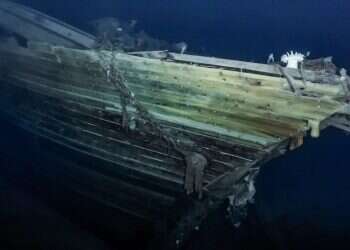
The ship, which carried approximately 11 million gold and silver coins, was estimated by Sky News to be worth about $20 billion and earned the nickname "the Holy Grail of shipwrecks."

The 3,300-year-old tomb is currently in its most fragile state since its discovery in 1922. Experts believe the cause lies in a sudden flood in 1994 that struck the Valley of the Kings and inundated the tomb.

The Golan region, where the synagogue is located, was formerly a Jewish area during the Roman and Byzantine periods – from the first century BCE until the 7th-8th centuries CE.

A metal detector operator accompanying the expedition, passed near a large stone when his device began signaling the presence of metal. "The device went crazy, I couldn't believe it – gold coins started appearing one after another," Lipsman recounted.

Revolutionary archaeological discovery reveals sophisticated water management system built during severe environmental challenges.


Greek inscription notes the name of a market oversight official from the Hellenistic period. Researchers aim to identify the weight’s origin city based on the mammal's illustration.

"The inscription on the coin – 'For the Redemption of Zion,' replacing the earlier 'For the Liberation of Zion' – indicates a profound change of identity and mindset, and perhaps also reflects the desperate situation of the rebel forces about six months before the fall of Jerusalem on Tisha B’Av, the 9th of the Hebrew month of Av; in August of the year 70 CE," Dr. Yuval Baruch, excavation director for the Israel Antiquities Authority, said.

After nearly a century of archaeological silence, the ancient stones of Sebastia are speaking again as Israeli excavators uncover remarkable evidence of the grandeur that once defined Samaria, the biblical capital of the Kingdom of Israel.

"When digging in ancient Samaria, you are touching the Bible with your hands. Living in Samaria is not just a right, it's also a duty to protect the most sacred biblical sites – the cradle of the Jewish people's homeland, the cradle of human civilization," said Yossi Dagan, the head of the Samaria Regional Council.