Israel Hayom is a media organization founded on the belief that the Israeli public deserves better journalism—more balanced, more accurate, and more reliable. Journalism that speaks rather than shouts. Journalism that is trustworthy, objective, and matter-of-fact. A different kind of journalism, offered free of charge.
The first print edition was published on July 30, 2007, and in 2010 Israel Hayom became the Israeli newspaper with the highest weekday readership. The newspaper’s publisher is Dr. Miriam Adelson. Its Editor-in-Chief is Omar Lachmanovitch, and its founding editor is Amos Regev.
Israel Hayom’s Hebrew and English websites, as well as its Android and iOS applications, provide around-the-clock news coverage, exclusive content, breaking news and updates, analysis and commentary, video, podcasts, and live broadcasts.
The digital platforms of Israel Hayom include news and opinion channels covering culture and entertainment, lifestyle, technology, sports, business and consumer affairs, health, military affairs, food, Judaism, tourism, and automobiles.
In 2021, a new Hebrew-language website and mobile application were launched to provide users with a fast, up-to-date, secure, and convenient experience.
The content of the newspaper’s print edition is also available online through a daily digital edition and can be received via newsletter.
“The Israel Hayom Clique,” the publication’s exclusive benefits club, offers website users discounts and special promotions on products and services.
Israel Hayom welcomes feedback, criticism, and suggestions for improvement from its readers. You can contact the organization by email at hayom@israelhayom.co.il
The emotional discourse about the deal with Hamas plays into the hands of its leaders, who are eager to sow discord between us. Policy makers must ignore the background noise and focus on the essence: preventing incentives for our enemies to recreate October 7, that is to say: their elimination.
Pro-Palestinian reins have been loosened in Europe and the United States, leading to a wave of protests in cities and on campuses. Despite what we have been told, it is, in fact, safer to be Jewish in the right-wing-dominated countries of Poland and Hungary than in a liberal democracy like the US these days.
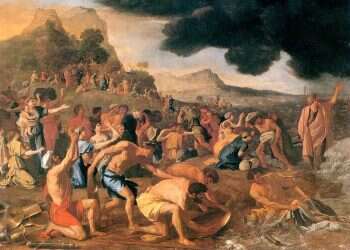
The Amalekites' historical attack following the Exodus parallels modern efforts to undermine an embattled IDF battalion through internal Israeli division.
Biden’s effort to form a unified coalition against Iran serves as evidence of the necessity of a military alliance. Netanyahu stands at a fateful crossroads as a unique window of opportunity is opening to create a new Middle East.
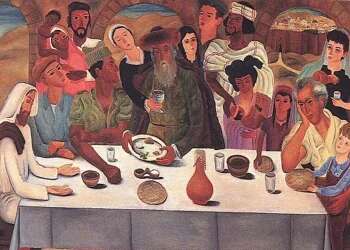
This Passover is different from that Passover and from many Passovers that preceded it. The chapters that our ancestors wrote, especially those collected into the Passover Haggadah, are chapters about a people born without a protective force and land, chapters of sanctuary and destruction and persecution and exile, while the chapters we write in recent generations are chapters of revival and sovereignty and heroism and independence and the ingathering of the exiles here, on the soil of the homeland, in the Land of Israel.
Somehow, even on the issue of humanitarian aid, Israel has found itself in an absurd reality: On the one hand, it has succumbed to American pressure, but on the other hand, it is being attacked by those very same US officials on the claim that it is starving 2.2 million people.
Will this put an end to the direct confrontation with Iran, and will we return to fighting "only" against its proxies? The ball is in Iran's court. So long as the 85-year-old supreme leader is in power, a direct confrontation will remain just a matter of time.
The Haggadah is not a frozen document, but rather a generic text that holds an idea that is renewed from time to time. From ancient Egypt, where the Hebrew slaves told the story of the ancestors' exodus from exile, to the modern exodus from Egypt, which is the State of Israel.
Even in the Regional Cooperation Department of the IDF's Strategic Division, they were burning the midnight oil in the late hours on Saturday and early Sunday. The language used in those hours was Arabic, and the content of the conversations was intelligence updates based on developments before, during, and after the attack. More than one country was on the line with the Israeli officers – and not all have formal ties with Israel.