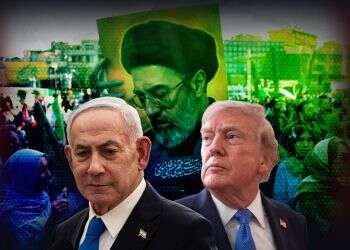
U.S. President Donald Trump did not surprise. Given his ongoing and piercing criticism of the Iran nuclear deal, and in light of the uncompromising positions of the two new senior players in his cabinet, Secretary of State Mike Pompeo and National Security Adviser John Bolton, it could have been assumed the White House would not re-certify the regime in Tehran for an additional 120 days. This is due not only to the inherently flawed nature of the nuclear deal, but the recent increase in Iran's subversive activities in the region, and in Syria in particular.
In his announcement, Trump noted Israel's exposure of Iran's efforts to produce a nuclear bomb, which contributed to the realization that the current agreement could not be fixed. As a result, the American superpower knew it had to minimize the damage and withdraw immediately, and at the same time reimpose sanctions on the ayatollahs.
Trump enumerated the crimes of the Iranian regime, from the nuclear arena through conventional weapons and on to its terrorist activity. In one stroke, he put an end to this dismal chapter of the flawed deal signed under the enthusiastic leadership of then-President Barack Obama.
Trump's dramatic announcement could further deepen the rift between Washington and the U.S.'s traditional allies in Europe, who made every effort to convince him to keep the deal in place. The move also has significance for the other players, whether allies or bitter enemies. For Israel, Trump's unequivocal statements reflect not only his strong support in the face of the grave and immediate threat from Iran poses to its security, but a commitment to act against Iran with severe punitive measures that will deal a heavy blow to its already shaky economy and to its military power until it decides to abandon the path of terrorism.
North Korean dictator Kim Jong Un is also following what transpires with great interest. On the eve of his historic summit with Trump, the principal lesson that should have been burned into Kim's consciousness by now is the realization that Trump will not rush to sign any agreement that does not include solid guarantees for North Korea's total nuclear disarmament, something that was lacking from the Iran deal.
Time will tell if the U.S.'s withdrawal from the Iran nuclear accord brings about the establishment of a new, stable, denuclearized regional order in the Korean Peninsula.