- The crop burners. One thing we have learned from the history of our resurrection in our homeland is that people who intentionally set fire to our fields are no "innocent protesters," rather terrorists seeking our destruction. The story in a nutshell: By the sweat of our brow we sow and cultivate, and then they set fire/terrorize/steal out of hatred – the gist of the Israeli-Arab saga for over 80 years. It began with the onset of the Arab Revolt against the British Mandate (1936-1939), which comprised attacks on British government and military institutions, and of course murderous attacks against Jews. The British ultimately came to realize that Jewish communities could not be left unguarded, leading to the creation of the Special Night Squads. By this point, in the eyes of the British as well, setting fire to fields in particular and arson attacks, in general, were perceived as acts of war."Every night we would take up positions in far-off fields to prevent the sabotage of phone lines and train tracks, the arson of crops and the oil pipeline," recounted Yosef Margalit from Kibbutz Sarid, one of the founding members of the Haganah's Field Companies. In a book commemorating Yisrael Sterelovitch, a member of Sarid, it said: "In the evening we received notice that the barley fields at Jaida [today, Ramat Yishai] are on fire, and that it was Sarid's turn to set up an ambush."
- The naïve among us. "Many of the people who approached the border fence and clashed with soldiers, using only their bare hands, rocks and their desperate sense of righteousness, weren't armed," wrote Ram Cohen in this very paper to describe the rioters on the Gaza border. It was the reincarnation of Mahatma Gandhi himself and his white-robed peaceful masses – not a riotous mob shouting "death to Israel." Fact: They approached the fence armed "only" with rocks. Oh, and kites. Yes, these kites were let loose to drop flames on Jewish fields. But they're "just" kites, no? The black smoke people were forced to breathe – the result of setting fire to their tires. The Kerem Shalom border crossing was also set ablaze, resulting in severe damage to the natural gas and fuel pipelines serving the people of Gaza. But why trouble ourselves with facts? After all, "No one raises his children to sacrifice them to an early death," Cohen wrote, elegantly avoiding using the word "shahid" (martyr in Arabic). Cohen is worried our hearts have hardened to our enemies' suffering. No mention of the other side's humane and altruistic nature: "He who becomes compassionate to the cruel will ultimately become cruel to the compassionate" (Midrash Tanhuma).
- The silent Zionists. Apparently, despite Operation Protective Edge, the underground terror tunnels and all the missiles fired at Jewish communities, many young families still want to come live in the area. The Eshkol Regional Council has added 2,000 new residents since the summer of 2014. The Shaar Hanegev Regional Council has added around 1,500 (316 families). These thousands of young Israelis, and many others who relocated to other nearby areas, are the silent Zionists. They came to the Gaza periphery in search of communal, meaningful life. To have children and raise them. To sow and harvest. They have one hope: that among their neighbors in Gaza a life-seeking force will arise to overcome the force trying to destroy our lives.
- "Great" Britain. It didn't oppose the U.N. Human Right's Council resolution to investigate Israel's actions on the Gaza border; the same Britain that rewarded terror when the aforementioned Arab Revolt came to an end. In a sudden about-face from the Balfour Declaration, it introduced the White Paper of 1939, essentially reversing the promise to establish a Jewish national home and, in practical terms, immediately imposed severe limitations on Jewish immigration. For refusing to help Jews fleeing persecution in the 1930s, its hands are drenched in blood. It appears Great Britain hasn't learned a thing.
- 50 of the 62 Palestinians killed on "American Jerusalem Embassy Day" were members of Hamas. Across the globe and even in Israel, there were those who declared a day of mourning. They have apparently gone mad.
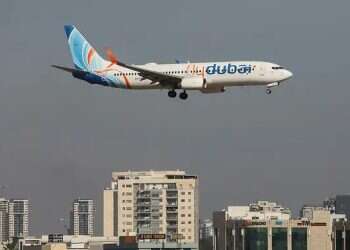
Flydubai flights to Israel suspended for 6 days
Following the apparent terrorist attack on Tel Aviv flight, Emirati carrier's operations will be halted for nearly a week. Israel...