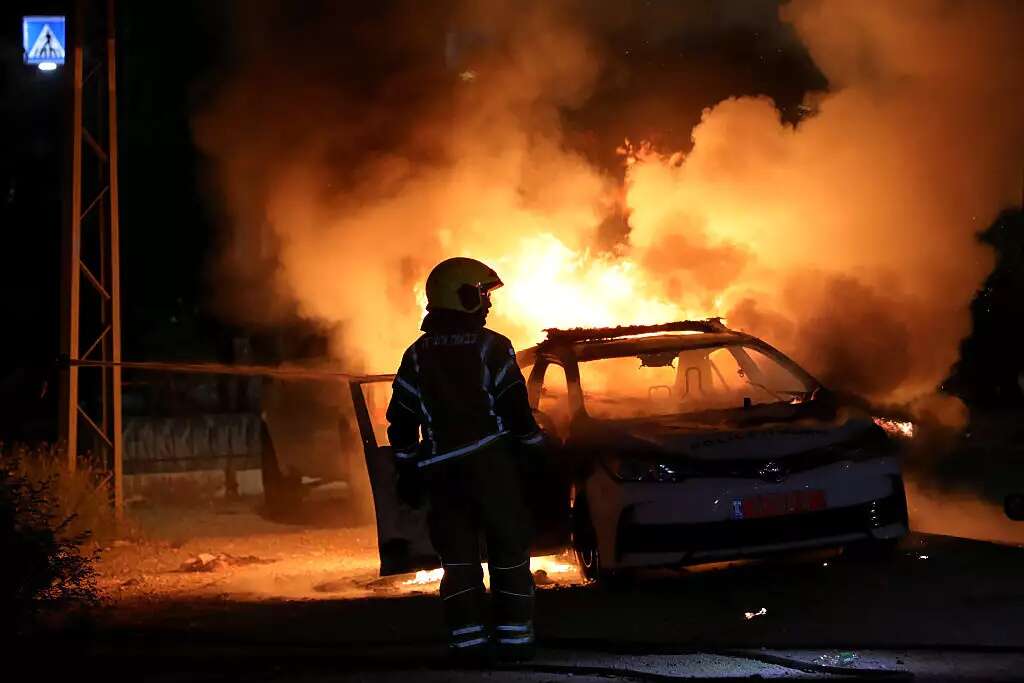
"Memory is a rosy thing," Shlomo Artzi once sang, and in keeping with his observation, only a few people noticed that these days mark five years since the riots carried out by Israeli Arabs during Operation Guardian of the Walls. Even more troubling, only a few understand that even today, the threat of a pogrom still hangs over the heads of Jews in Israel, exactly as it did in May 2021, when Arab rioters brutally attacked Jews at hundreds of locations across the country.
The violent antisemitic rampage shook Israeli society. Jews beaten, synagogues set on fire, roads in southern Israel controlled by Arab gangs, all these cracked the deceptive belief that "everything will be fine" when it comes to the nationalist and Islamist extremism simmering in the Arab sector.
But over time, the shock faded.
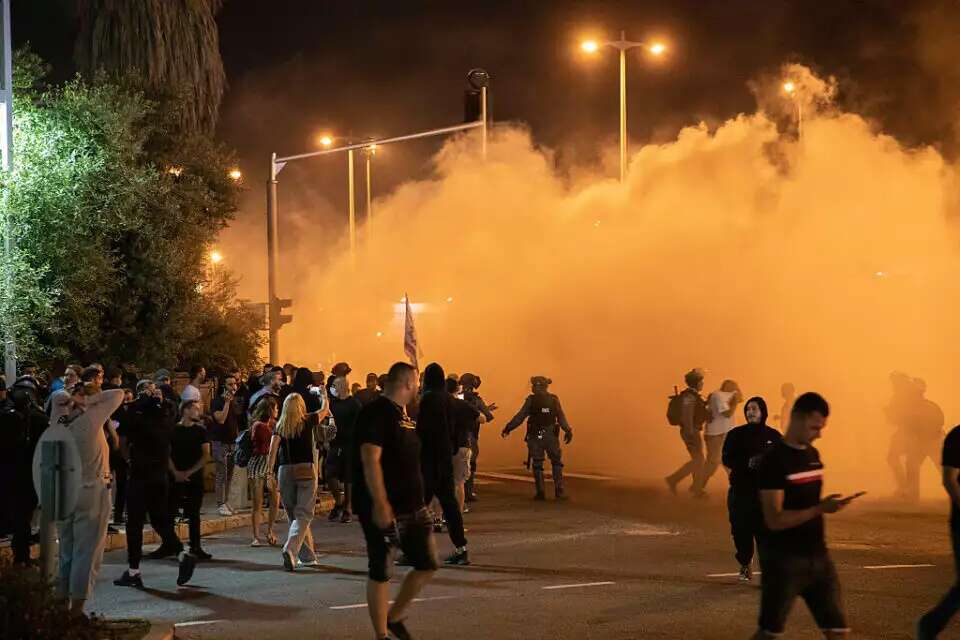
The pogroms of May 2021, and above all the lack of readiness to provide an immediate and forceful response to the rioters, gave rise to the demand for the establishment of a National Guard so that, next time, the riots would be met with an iron fist. Such an operational body was indeed established (though in a more limited and constrained format than necessary), and it now operates nationwide through three regional brigades. Is that enough? Absolutely not. One can only hope that the National Guard will be there when we need it, serving as the last barrier between the rioters and Jewish civilians. But it is incapable of preventing the riots from recurring in the first place.
The riots were born of a combination of two factors: anti-Zionist and antisemitic views that had spread through the Arab sector in Israel, and the absence of fear of punishment. Unfortunately, there is no avoiding the conclusion that both still exist, and that does not bode well. If proof was needed that hatred of Jews had not gone anywhere, we saw its expressions after the Oct. 7 massacre. Posts of support, some written by teachers, doctors and others, appeared immediately after the atrocity, while the bodies of the slaughtered Jews had still not been identified or buried. This phenomenon cannot be dismissed as the work of "a handful of extremists," because the mainstream of the Arab sector did not denounce or ostracize those who wrote the posts in real time, and at most remained silent. Silence means consent, certainly when it comes to Oct. 7-style horrors.
The Guardian of the Walls riots did not repeat themselves in October 2023 for one reason only: Potential rioters among Israel's Arabs were gripped by fear at the time. In the public atmosphere after the massacre, it was clear to them as well that any additional attempt to harm Jews, unlike in May 2021, would be crushed immediately with a heavy hand. In other words, deterrence works. Those who could ignite the next pogrom stayed home, but they did not change their nature.
For deterrence to be maintained and not fade, appropriate punishment is required, and above all the sense that punishment is inevitable. After May 2021, no such feeling was created. The facts bear this out: According to data from the Israel Police Investigations Division, some 3,200 people were arrested during the riots, but indictments were filed against only 574 suspects. The others returned home with the sense that Jews could be attacked without anything bad happening to them. After the Oct. 7 massacre, deterrence returned because police arrested those who published inciting posts and those who waved Palestine Liberation Organization flags, but today it is weakening again. Anyone curious to know what will happen when the fear disappears entirely is invited to look at the archive footage from May 2021.