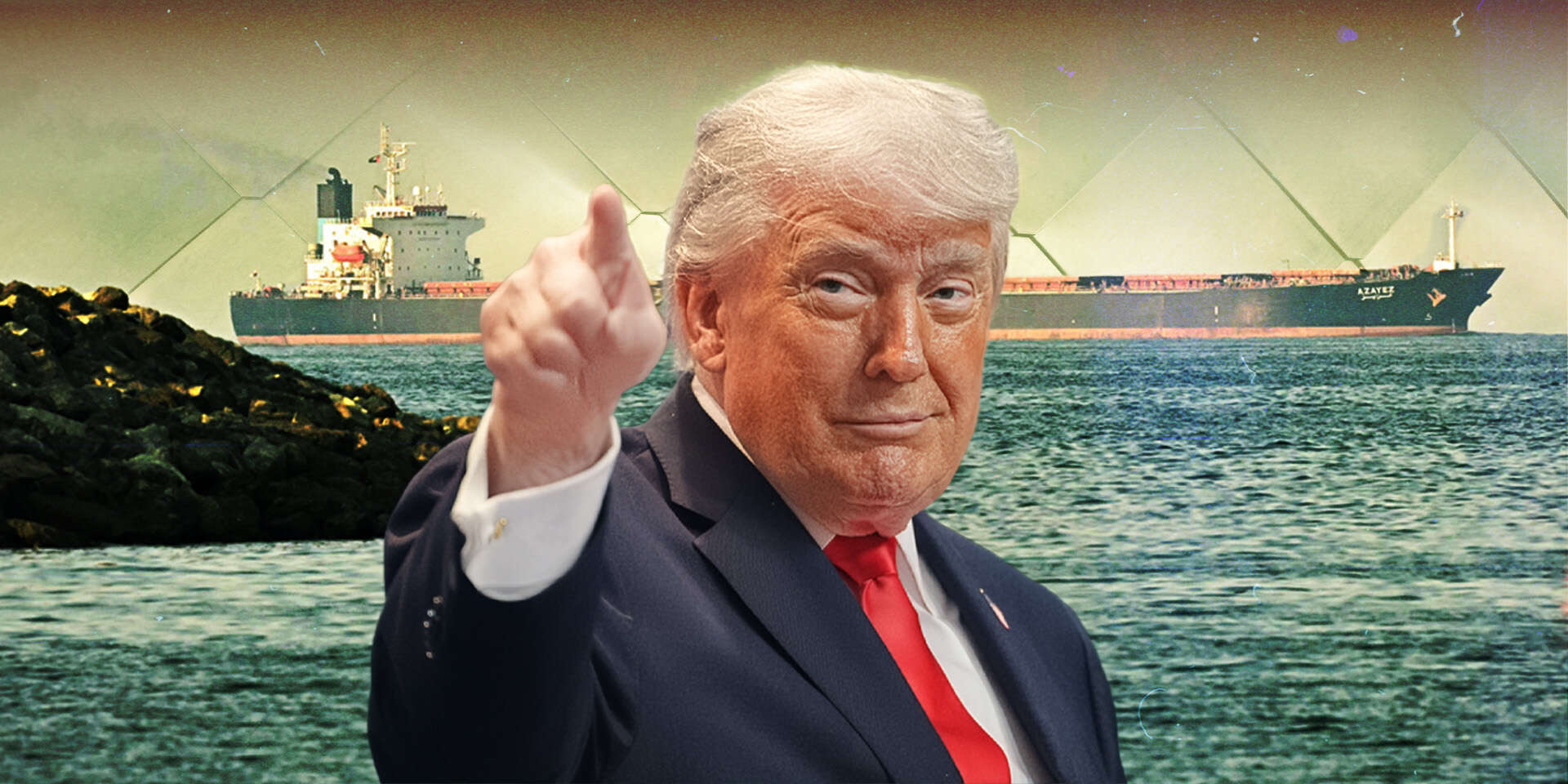
For many years, we have not known, in Israel, in the Middle East and indeed around the world, a situation in which so much depends on the will and decisions of one man, US President Donald Trump.
The power Trump has accumulated in his hands, certainly within the American system, political, diplomatic and, of course, military, is unprecedented. It enables him to make far-reaching decisions that few presidents before him dared to make without anyone inside the administration daring to challenge them or question their reasoning. Trump's decision to go to war with Iran, and before that to strike Venezuela, are proof of this.
And as great as the burden on Trump's shoulders is, so too is the difficulty of predicting his moves. For us in Israel, all that is left is to wait each day for the early afternoon here, the morning hours in Washington, when President Trump wakes up and embarks on a stream of posts that reveal his mood and his intentions, at least as of the moment they are posted.
In a historic decision that surprised many, Trump went to war with Iran. But with the same resolve and forcefulness with which he launched the war, he decided after a month to end it prematurely and try to achieve through diplomacy what he had failed to achieve on the battlefield.
With the announcement of the ceasefire, Trump began conducting fruitless negotiations with the Iranians that are going nowhere. The gaps between the two sides' positions are impossible to bridge unless one side waves a white flag, and it is unlikely to be Iran. In Tehran, the hard-line camp has gained the upper hand, and it is not prepared, as is well known, to consider any compromise.

After all, from the Iranians' perspective, Trump was the one who blinked first when he decided to halt the fire, thereby revealing weakness. If that is the case, all they need to do is survive at any cost, stand their ground and refuse to yield. In the end, they believe, Trump, under pressure at home and abroad to end the war, will be the one to give in.
But over the past week, Trump has sharpened both his posts and his threats against Iran in a way that may suggest he has become convinced the Iranians are stringing him along and that the negotiations he is conducting with them are pointless. Trump's posts indicate that he is losing patience, and after all, forbearance and patience have never been qualities associated with him. At the same time, however, he himself or his envoys continue to conduct intensive negotiations with the Iranians through a host of mediators, chief among them Pakistan.
This raises the great question of where Trump is headed, given that Iran has no intention of budging even slightly from its positions.
One option before him is to continue his current course: no peace and no agreement, but also no war. This would be in the hope that tightening the noose around Iran would weaken the regime that rules it. The problem is that Iran is playing for time, investing all its efforts in trying to survive until the storm passes and Trump completes his term. Iran could also escalate its attacks on the Gulf states, attacks that have drawn no response from the US.
The other option is a return to high-intensity war, as Trump repeatedly threatens. After all, the US military buildup in the region continues unabated, indicating a desire to preserve the military option and not give it up. It is also entirely possible that the volatility in Trump's posts is nothing more than an attempt to mislead the Iranians regarding his true intentions.
Finally, the third option, and the worst of all for Israel, is that Trump has had enough and has decided to disengage from the war and from the Persian Gulf. Instead of renewing the fighting, he would seek to sign an agreement with the Iranians at any price, in what would amount to waving a white flag and surrendering to Iran and its demands.
Trump has already proved in the past that he can surprise and do the right thing. All that remains is to hope he does so this time as well.