

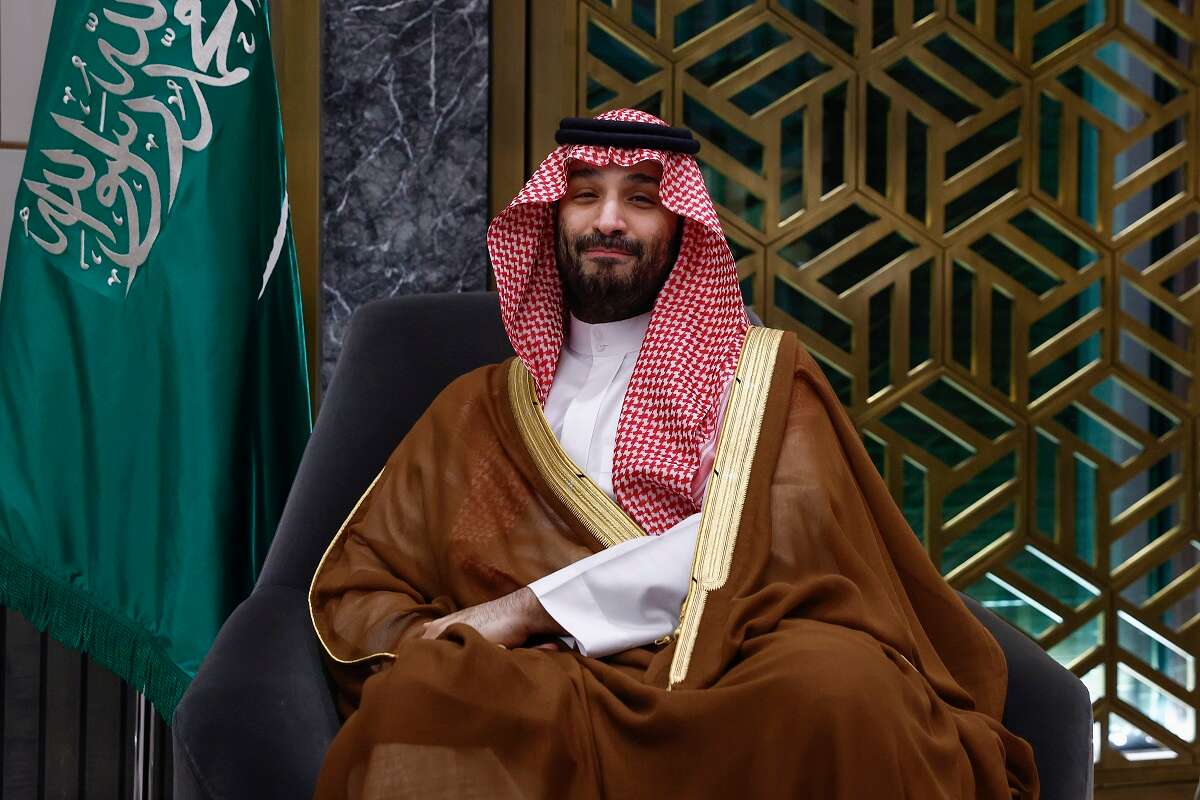
A kind of emerging regional axis is now linking Turkey, Egypt, Saudi Arabia, Qatar and Oman. These countries are jointly pressing the Americans to refrain from striking Iran, to negotiate with it, and not to support the popular uprising there. Have Saudi Arabia and Egypt really been tempted into shielding Iran? If so, this would mark a fundamental shift.
Until recently, Iran's quasi-imperial Shiite ambitions were seen by Saudi Arabia and its Sunni partners on the Arabian Peninsula, with the exception of Qatar, as a primary threat. They even hoped Israel would help them neutralize Iran's nuclear and ballistic programs and the threat of terrorism emanating from Tehran. This was one of the reasons behind the Abraham Accords. They feared what they saw as the misguided ambition of the US under Barack Obama and Joe Biden to "moderate" the aggressive Islamist regime and thereby "stabilize" the Middle East through a supposed "balance" between Iran and its rivals.
Until recently, Saudi Arabia and its partners, the United Arab Emirates and Bahrain, held a more realistic view than the Obama and Biden administrations. In 2017, for example, their fear of Iran drove them to impose a blockade on Qatar, and together with Egypt they severed diplomatic relations and trade with Doha and banned travel to the country. The rift stemmed from Qatar's cooperation with Iran's Shiite Islamism and its support for Sunni Islamists, who also threaten Saudi Arabia, the UAE, Bahrain and Egypt.
This was also the backdrop to tensions with Turkey. Like Qatar, Turkey's Islamist government supported the Muslim Brotherhood in Egypt and the Gulf, as well as in Jerusalem and among the Palestinians, and did not take a stand against Iran. Now it appears that instead of Saudi Arabia joining the Abraham Accords with Israel, Riyadh may be moving to help rescue Iran from the US and Israel, together with Turkey and Qatar, the standard-bearers of Sunni Islamism.
Saudi illusions are hardly surprising. Recently we have seen their alliance with the UAE also begin to fray. Historically, the Saudis have been dubious allies, oscillating between conservative isolation and, at times, adherence to the extreme Wahhabi Islam at the core of the Saudi dynasty, and attempts to appease rising forces of the moment such as pan-Arabism or leftist radicalism. More broadly, they have played a complex, many-faced game with Sunni Islamism.
But beyond Saudi Arabia's traditional volatility, what has driven Saudi Arabia and Egypt, specifically now, to come to the aid of their flailing enemy Iran? Perhaps it is Iran's very weakening after recent blows, leading them to believe, mistakenly, that the Iranian threat has been removed and that it is preferable for Iran's regime to survive. They may fear that Iran's collapse would destabilize its neighbors.
They remember how the rise of the Islamic State in Iraq after the fall of Saddam Hussein sowed chaos not only in Iraq but also in Syria. Moreover, this pro-Iran shift in Egypt and Saudi Arabia may also be attributed to Israel's growing strength. Israel's recent victories, partial as they may be, are turning it into a growing threat in the perception of Egypt, Saudi Arabia and Turkey. A hegemonic US-Israel alliance is not something they welcome.
This helps explain, for example, Egypt's insistence on preventing the migration of Gazans through its territory. Cairo wants a threat from Gaza to continue tying down Israel's strategic attention and thereby weakening it. Preserving the "Palestinian issue" is not what matters to Egypt; restraining its powerful neighbor is. This may also be the underlying motive behind the conduct of Saudi Arabia and Turkey. From their perspective, it is preferable to preserve a balance with weakened but not eliminated Islamists in Iran. They also want to keep the hundreds of thousands of people in the Gaza Strip as a sword hanging over Israel's head, and as a means of appeasing their own anti-Israel publics.
It is not only Saudi fickleness that is familiar, but the broader upheaval of alliances across the Middle East. Israel was once an ally of pre-Khomeini Iran and pre-Erdogan Turkey, and in a single historic moment those relationships turned into mutual threats. But Saudi Arabia is an even less reliable ally. Its demands regarding the Palestinians are intended only to weaken us after we have, in its view, removed the Iranian threat. We must not fall into the Saudi trap.


