After massacring members of the Alawite community and Druze, Syrian President Ahmad al-Sharaa turned to deal with the Kurdish minority, now the only remaining obstacle to the establishment of an Islamic State of Syria. This is a state that enjoys a warm embrace from the international community, and especially from the US, while relentlessly persecuting its minorities. The new Syrian constitution adopted by al-Sharaa only recently formally guarantees freedom of worship for all religions. In practice, however, al-Sharaa views Alawites and Druze as heretics who, under Islam, deserve death. The Kurds, for their part, are seen as an ethnic minority that threatens Syria's unity and territorial integrity, and therefore al-Sharaa offers them a stark choice: surrender or die.
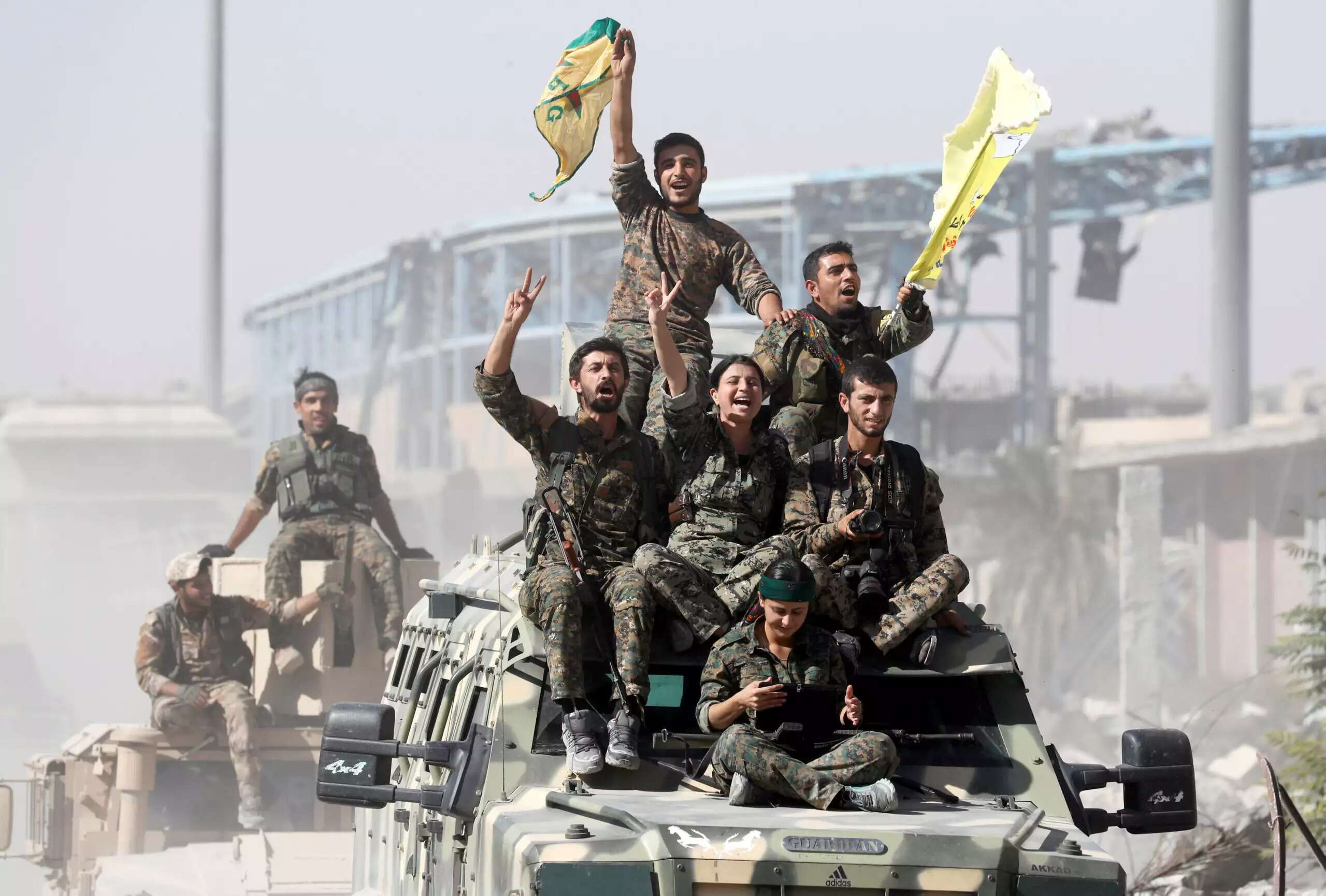
Over the past decade, the Kurds have maintained an autonomous administration in their areas of residence in northeastern Syria. For the first time, they enjoyed civil rights long denied to them by the Syrian state, as well as stability and a degree of economic security. All of this was made possible by US protection.
This was not a gift from Washington to the Kurds, but a fair exchange for the assistance they provided the US in its war against the Islamic State. It was the Kurds, and no other actor in the Middle East, who fought on the ground in America's war against ISIS, at a time when Ahmed al-Sharaa, then known as Abu Mohammad al-Julani, belonged to the jihadist camp and regarded the US as an enemy.

But the Kurds have done their part, and now they are no longer needed. The Americans, meanwhile, have found new partners who can guarantee the continued flow of oil from the fields of northern Syria. These partners are Ahmad al-Sharaa and his patron, Turkish President Recep Tayyip Erdogan. Erdogan views the Kurds as an existential threat, fearing that Kurdish national identity could spill over from Syria into Turkey itself, where roughly a quarter of the population is Kurdish. Needless to say, the Turkish government denies its Kurdish citizens national rights, persecutes them, and even kills them.
More than 30 million Kurds live across the Middle East, in a region stretching from the Iranian highlands through Iraq and Syria and into Turkey. They are a people with a history, a cultural and historical heritage, and a national identity that cannot be denied. Yet the international community refuses to recognize the Kurds as a people or to grant them national rights or a state. Regional powers, led by Turkey, Iran and even Iraq, repress them. In recent decades, following the US invasion of Iraq and the outbreak of the Syrian civil war, the Kurds raised their heads and promoted Kurdish self-rule in Iraq and Syria. Now, however, it appears that the door to independence has been slammed shut, and they are destined to return to second-class citizenship in the countries where they live.
The world is uninterested. It directs its energy toward attacking Israel over the Palestinian issue. Thus hypocrisy thrives: no for the Kurds, yes for the Palestinians, while the Kurds are abandoned to their fate.
Israel has followed the Kurdish struggle for survival with sympathy for many years and has even assisted them in the past, for example during their fight against Saddam Hussein in Iraq. But the Kurds are far from Israel's borders, and Israel has other, more urgent problems.
What truly matters is the American position, driven by interests that currently compel Washington, in its own view, to embrace al-Sharaa and Erdogan and to abandon the Kurds.
The Kurds are discovering what we have long known: only the strong survive in our region. Unfortunately, they failed over the years to unite their ranks and overcome internal divisions and factionalism. Still, not all is lost. When the Syrian army attempts to enter Kurdish cities and towns, and not only oil fields and empty desert areas, it may encounter Kurdish resistance far fiercer and more determined than anything seen so far.
The Kurdish story is not over. Even if this attempt to advance identity and independence fails, the Kurdish question will continue to smolder beneath the surface, like glowing embers waiting to ignite at the next opportunity.