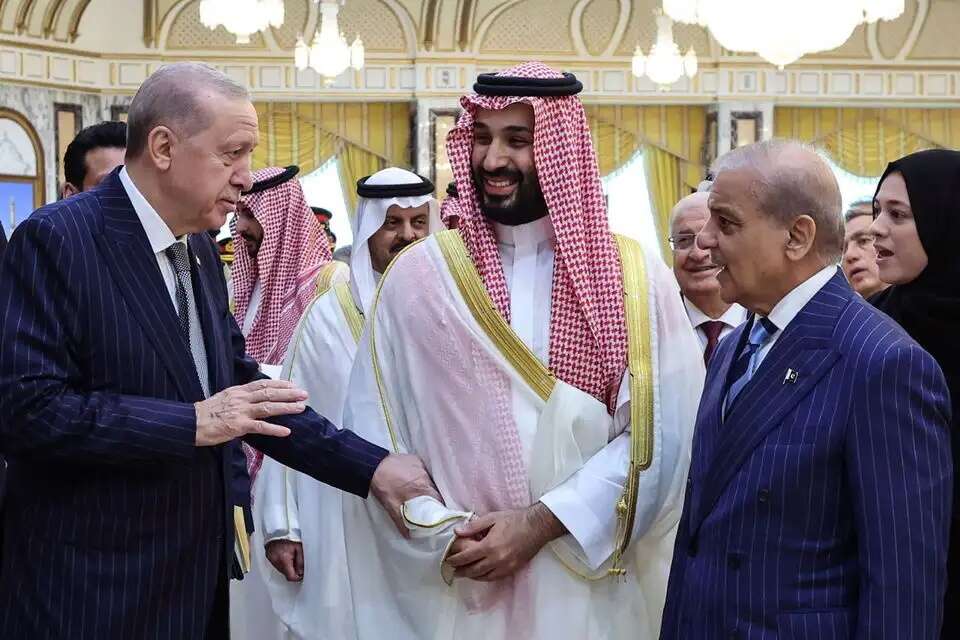
On August 7, 2026, Saudi Arabia, Turkey and Pakistan signed the Mecca Joint Defence Agreement - and Riyadh signed away discretion. The pact treats an armed attack on any one of the three as an attack on all, yet leaves force commitments, activation thresholds and escalation control undefined.
Riyadh has accepted Turkish and Pakistani wars. Ankara and Islamabad have not accepted Riyadh's. The Saudi test is Iran: its missiles, proxies, the Houthis and maritime coercion. Defending Saudi territory is not enough. Riyadh must retain the freedom to strike Iran and sustain escalation.
Turkey will not underwrite that freedom. Ankara needs Iran alive. Turkey's contradiction is structural: Western enough to be armed, financed and consulted; revisionist enough to remain indispensable. Full alignment would destroy the scarcity Ankara sells.
Turkey trades with Tehran, contains it and monetises its isolation. A functioning Iran buffers Kurdish momentum, refugee pressure and energy disruption while preserving Ankara's brokerage premium between Iran and the West. Iran is most useful to Turkey pressured, dependent and intact. The Iran war exposed the hierarchy. A US-Israeli option for a Kurdish ground front from Iraq into Iran could have converted air superiority into territorial pressure on the regime. Ankara quashed it. A Kurdish advance under Western air cover would reverberate across Iran, Iraq, Syria and Turkey. Ankara preferred the survival of a regime hostile to the Gulf and Israel to a Kurdish success dangerous to Turkey.
Turkey can supply drones, munitions and training. It will not help Riyadh break the Iranian system producing the threat. Its utility ends where Saudi victory begins. Erdogan backed the Saudi campaign in Yemen in 2015, then pivoted after the Qatar crisis. Turkish territory and firms later channelled Quds Force finance and procurement to the Houthis. Houthi disruption manufactures scarcity: every shock at Bab al-Mandab and Suez reprices Ankara's Trans-Caspian Middle Corridor. Tehran arms the pressure; Ankara monetises the rerouting.
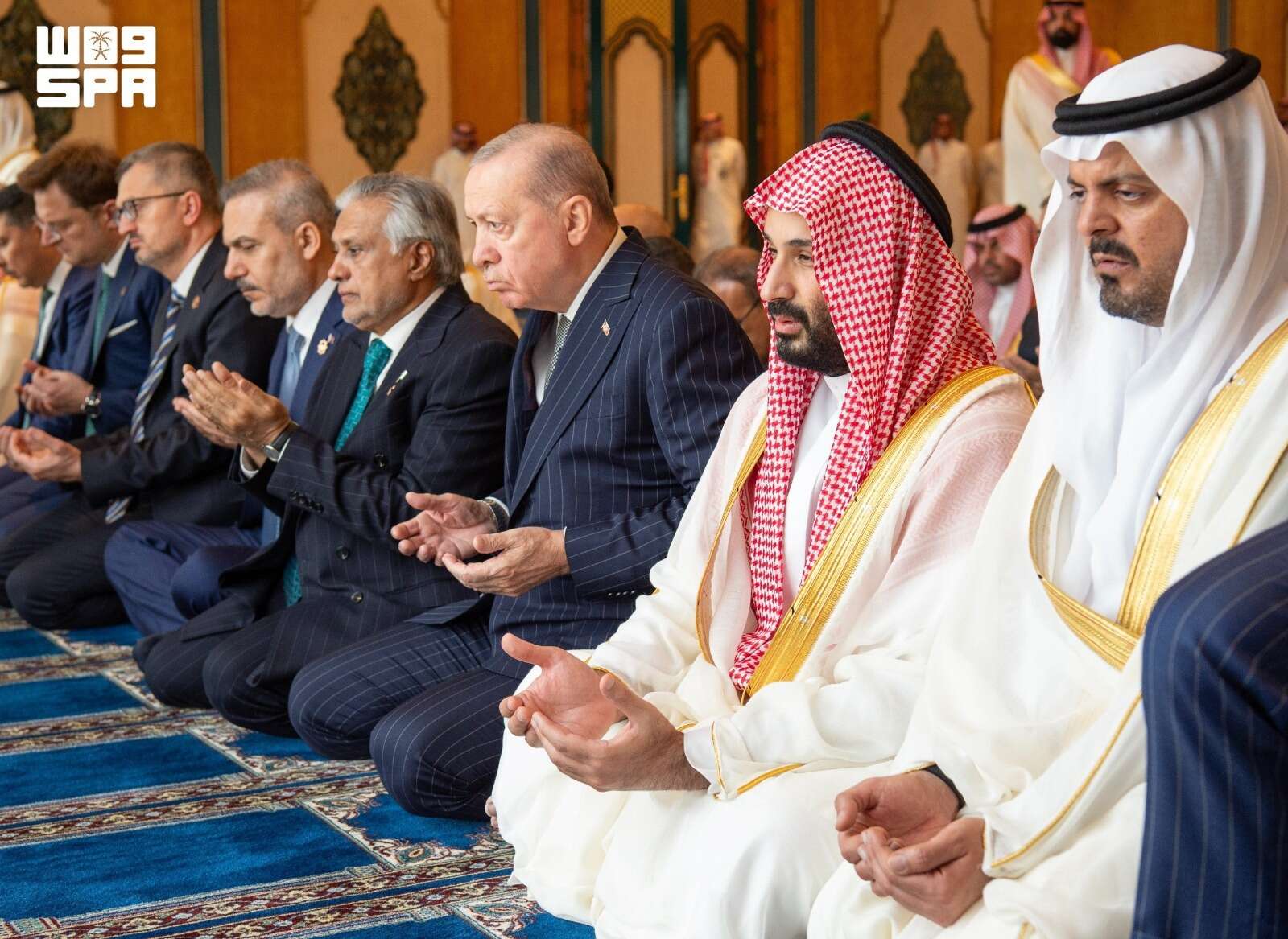
After Houthi missiles targeted the Turkish-owned Anadolu S in November 2024, Mohammed Ali al-Houthi called Turkey a partner, not an enemy. Erdogan condemned U.S.-British strikes on Houthi positions and praised their defence. The Houthis are Iran's proxy and, in effect, Turkey's unofficial navy. Riyadh has now made their other beneficiary its guarantor.
Pakistan offers Riyadh more force and the same ceiling. Islamabad deployed roughly 8,000 troops, JF-17 fighters, drones and air defence to Saudi Arabia. Yet Pakistan already had a mutual defence agreement with Riyadh when Iran attacked the Kingdom this year. Islamabad reinforced Saudi defence. It did not attack Iran. It mediated, while pressing Washington for restraint on Israeli strikes so negotiations with Tehran could continue.
Pakistan shares a sensitive border with Iran, carries domestic sectarian exposure, needs regional energy stability and derives brokerage value from preserving access to both Washington and Tehran. Pakistan can defend Saudi Arabia. It cannot help Riyadh win by destabilising Iran.
Riyadh is paying in sovereignty for subcontracted security. It buys capability; Ankara and Islamabad gain permanence and veto. Saudi Arabia's Vision 2030, Mohammed bin Salman's programme to build a post-oil investment and logistics power, is a sovereignty project. The pact outsources strategic discretion. Saudi Arabia did not diversify its security. It diversified the states entitled to constrain it.
The Gulf Cooperation Council (GCC), which groups Saudi Arabia with Bahrain, Kuwait, Oman, Qatar and the UAE, already possesses the guarantee Riyadh went to Mecca to buy. Its Joint Defence Agreement treats an attack on one member as an attack on all, backed by joint defence mechanisms and a Unified Military Command. Only weeks before the new pact, amid Iranian attacks on Gulf territory, the GCC reaffirmed that its members' security was indivisible. Saudi Arabia has now duplicated that defining promise with two non-Gulf powers.
When its leading power buys the same guarantee elsewhere, a collective-defence organisation becomes a forum. Mecca is the GCC's death certificate as the Gulf's security guarantor. Riyadh has licensed every smaller member to seek parallel guarantees. Qatar already has one.
During the 2017 Gulf crisis, Ankara supplied Qatar with the strategic depth that helped Doha resist Saudi pressure and later institutionalised its military presence there. Saudi Arabia has now imported Qatar's protector into its own security perimeter. The next Saudi-Qatari crisis will place Ankara inside both sides' security architecture.
Mecca imports Turkey's double bind into Saudi security: Ankara gains alliance permanence without surrendering the relationships that make alignment conditional. NATO protects Ankara while it preserves relationships and pressure tools that contradict allied interests. Qatar built the same model inside the GCC, using protection as cover for autonomy and consensus as leverage. Riyadh rejected Emirati autonomy and purchased Turkish-Pakistani constraint.
The UAE built in southern Yemen the security layer Riyadh needed: local forces, maritime reach and a buffer against Houthi expansion. When Emirati-backed actors crossed Saudi political red lines, Riyadh moved against them; Abu Dhabi withdrew, leaving Riyadh to inherit the burden of the system it had dismantled. Abu Dhabi protected Saudi interests more effectively than Riyadh protected its own. Saudi Arabia replaced the Gulf partner containing the Houthis with Turkey, which benefits from their disruption, and Pakistan, which will defend the Kingdom while preserving Iran.
Vision 2030 depends on making Saudi Arabia the indispensable bridge between India and Europe. The India-Middle East-Europe Economic Corridor (IMEC) gives that ambition post-oil permanence: Gulf ports, Saudi territory as the land bridge to the Mediterranean, rail, energy, data and investment.
The pact weakens both ends. Riyadh is asking India to trust a corridor through a Kingdom that has made Pakistan's security its obligation. The next India-Pakistan crisis will force a choice: backing Islamabad damages Indian trust; neutrality devalues the treaty. IMEC requires Saudi predictability; Mecca imports Pakistani contingency. Corridor finance prices political durability alongside distance.
Turkey is building the rival geography. Its Trans-Caspian Middle Corridor moves Asian trade through Central Asia, the Caspian and Azerbaijan into Turkey and Europe, bypassing Russia while shifting the gatekeeper to Ankara. Red Sea disruption raises its value. Turkish territory and firms have also served Houthi finance and procurement networks while the Houthis' attacks divert traffic from Bab al-Mandab and Suez. Tehran arms the pressure; Ankara monetises the diversion.
The Middle Corridor makes Turkey the gate. IMEC makes Saudi Arabia the bridge. Riyadh has made the gatekeeper its security partner while weakening the bridge it needs India to trust.
Greece and Cyprus sit on the eastern Mediterranean flank of the same connectivity contest, developing ports, power and digital links that reduce Turkish gatekeeping. The pact rewards the alliance behaviour Athens and Nicosia have spent years warning NATO about: take the protection, preserve the contradiction, monetise the veto.
For Jerusalem, the Mecca pact changes the Gulf, not its freedom of action. It is no Islamic NATO: no unified command, common enemy hierarchy or shared escalation authority. Jerusalem built its operational architecture around the Gulf, not through it: Saudi cooperation is useful; Saudi consent is irrelevant. Riyadh was never in Jerusalem's decision chain. Ankara and Islamabad are now in Riyadh's.
Trump taught Ankara and Islamabad that contradiction pays: Turkey bought Russia's S-400 air-defence system, obstructed NATO and kept Moscow and Tehran close. Trump moved to lift the sanctions and reopen the F-35 programme. Pakistan's army chief, Field Marshal Asim Munir, restored access to Washington without closing channels to Iran, China or the Gulf. Ambiguity became leverage. Washington rewarded it. Riyadh bought it. Mecca is the treaty version of strategic self-denial.
Riyadh put Ankara and Islamabad in the room where Saudi wars are decided and called it protection. Their leverage begins where Saudi freedom of action ends.
Shay Gal is Founder and Principal of Line of State, a strategic practice working with governments, institutions and decision-makers on strategy, risk, access and security decisions in high-stakes environments.