Looking back at the year that has ended, Israel's national reckoning is struggling to come to terms with the battlefronts that remain open. The expectation that these fronts should be brought to a close stems from the natural human desire for a stable life, free of anxiety and worry about what tomorrow may bring.
That yearning lies at the heart of the Rosh Hashanah prayers as they have developed over centuries in the traditions of Jewish communities. Rosh Hashanah's meaning as the Day of Judgment repeatedly emphasizes the precariousness of all the conditions on which the lives of individuals, societies and states depend. As the Musaf prayer says: "And concerning the countries, it is said on this day which is destined for the sword and which for peace, which for famine and which for plenty; and all creatures are remembered, to be inscribed for life or death. Who is not remembered on this day?"
The entire universe hangs in the balance on this day before the judgment of the Creator. That chilling message echoes in the haftarah for the first day of Rosh Hashanah, in Hannah's prayer: "The barren woman has borne seven, while she who had many children has languished. ... The Lord makes poor and makes rich; He brings low and also raises up." Everything is subject to change, with hope for the poor man who may become wealthy and anxiety for the rich man who may lose everything.
This perspective shakes the human pretension that we can guarantee the conditions of the future through our own power in the face of fate. Recognizing the fundamental impermanence of everything familiar and seemingly secure provides a different framework for considering complaints about open battlefronts. If everything is inherently exposed to the unpredictability of fate, then even a front that appears to have been closed can suddenly reopen tomorrow. From this perspective, it is precisely the supposedly closed front that carries the danger of complacency.
What history teaches us
It is worth asking when the State of Israel has ever truly managed to close a war front in a way that guaranteed stability.
It did not happen after the 1967 Six-Day War, which was followed almost immediately by the War of Attrition on several fronts. To some extent, it did happen after the 1973 Yom Kippur War, through the disengagement agreements brokered by US Secretary of State Henry Kissinger in Sinai and the Golan Heights. At the time, this was made possible by a temporary balance in the international order created by the Cold War.
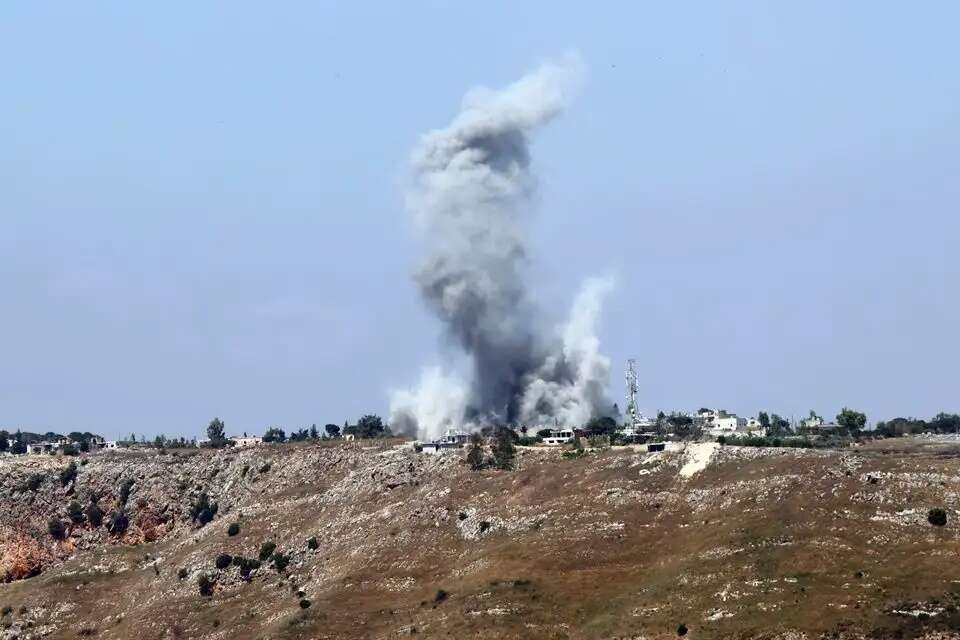
But it certainly did not happen in the First Lebanon War. By contrast, the Second Lebanon War in 2006 ended after just over a month with the appearance of a diplomatic resolution, but the seeds of future disaster were already embedded in that outcome. Despite the relative quiet enjoyed by northern Israeli communities, Hezbollah exploited the situation to build up its military capabilities on an unprecedented scale in preparation for the next war.
No force was capable of enforcing UN Security Council Resolution 1701, which was intended to keep armed Hezbollah forces out of the area south of the Litani River. Not the Lebanese Armed Forces, not the UN force and not the Israel Defense Forces, which feared an escalation that would shatter the quiet.
Once this is understood, one can begin to see advantages in a battlefront that remains openly unresolved. On Oct. 7, 2023, we learned just how dangerous the illusion of a closed war front can be. When everything around us is changing and vulnerable to unpredictable developments, it is dangerous for political and military leaders to operate under the false assumption that reality is moving along a stable track that can be predicted and controlled.
Faith in the state, and its collapse
The malfunction that forced Israel's desalination plants to shut down last week offers an important lesson about the limits of scientific and technological solutions. The widespread assumption had been that, with the development of desalination capabilities, the State of Israel had freed itself from water scarcity and from the fear of famine familiar in the land of Canaan since the days of Abraham. It was as though the Holy Land's ancient dependence on rain from heaven and the grace of God had finally come to an end.
Then came an unexpected disruption caused by uncontrollable natural forces. The shutdown of the desalination system threatened within two days to destroy the entire agricultural crop of the western Negev and once again expose the State of Israel to shortages of water and food.
It was a major lesson in the limitations of the modern promise that, so long as human beings are guided by reason and by responsible experts in a properly functioning state, they can attain a meaningful degree of foresight and control over the conditions essential to their existence.
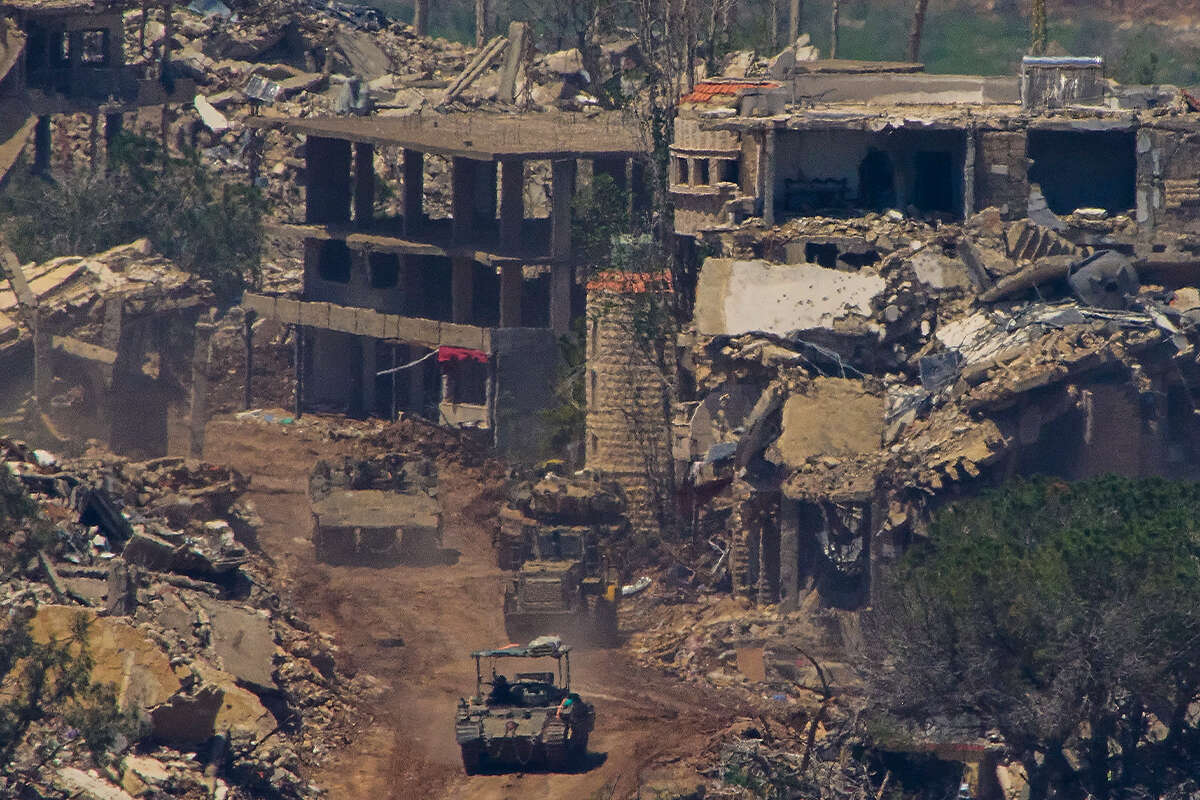
This is precisely where the magnitude of the shock that struck Israeli society on Oct. 7, 2023, comes into focus. Given the scale of the disaster, there is certainly justification for the frustration and sense of abandonment felt by citizens when they discovered the helplessness of the military and the state. Yet a realistic perspective should also remind us that well-run modern states repeatedly fail when confronted by mass disasters, whether a tsunami in Japan, Hurricane Katrina in New Orleans or the Sept. 11 attacks in the United States.
What all these events have in common is the crisis of expectations they produce. They expose the gulf between the modern state's promise to use reason and science to control even the arbitrary forces of nature or the outbreak of war, and earthly reality, which remains open to surprise.
That is why intelligence surprises in the security sphere are so destabilizing and generally lead to commissions of inquiry. After all, we entrusted our fate to responsible experts capable of "foreseeing what is to come." If they failed, the assumption is that there must have been some negligent failure that can be identified and corrected.
The illusion of control
French philosopher Paul Virilio, in his book Critical Space, published in 1984 and far ahead of its time, addressed the significance of the great accident for modern humanity.
He described how rational and scientific thought sought to gain control over the world of phenomena, aspiring even to control what cannot be controlled. Yet, in his view, surrendering to the grandiose promises of technology and science would ultimately produce a far-reaching catastrophe, an "integral accident," that would transform not only humanity's understanding of technology but might also bring modern thought itself to an end.
He was, of course, neither preaching nor hoping for such an accident. Rather, his pessimistic assessment of technology's role and centrality in building humanity's capacity to control the full range of human and natural activity led him to conclude that humanity was on course to experience an accident on a scale never before known. In a world becoming ever more dependent on networks of global interconnections, he argued, the likelihood increases that accidents occurring in one place will affect many others, even where there is no obvious or direct physical connection between them.
That is, for example, what has been taking place in recent months through the global connection between the fighting in the Strait of Hormuz and the economic upheaval it has generated around the world. In such conditions of crisis, the expectations modern people place in science and the state collide with a defiant reality, to the point that even citizens of a modern state may begin to harbor profound doubts about the state's ability to deliver what it promised.
In the war against Iran, even the United States, as a global superpower, is confronting the fading of the old world order that took shape after World War II and has been steadily eroding ever since. Over the past year, meanwhile, no stable new world order has emerged.
In this reality of global uncertainty, the ancient human anxiety embedded in the Rosh Hashanah prayers acquires an immediate and contemporary dimension this year, yearning for good tidings and, despite everything, continuing to believe in the possibility of a better future.