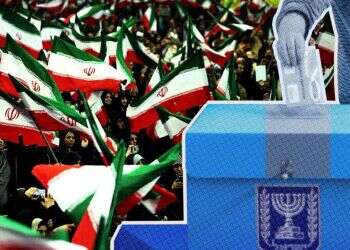
The nation-state law, which legally defines Israel as the nation-state of the Jewish people, does not have the power to protect Israel's Jewish status on its own.
This Basic Law does not have the power to fend off the enormous pressures being exerted on Israel from within and without in an effort to strip the Jewish state of its unique Jewish character. As important as the law may be, the Jewish national identity is just a means of achieving Judaism's chief goal: to serve as a social and liberal cultural role model.
Judaism first appeared some 4,000 years ago as a defiant cultural initiative, rebelling against the Mesopotamian culture of enslavement. Abraham's morality, the lessons from which can be found all over the Book of Genesis, the Ten Commandments that were derived from these values, and the complementary Jewish mitzvot (613 commandments given in the Torah) all comprised a liberal challenge to the era's Code of Hammurabi, which sought to perpetuate the "natural" slave-enslaver culture that dominated the region and the world until Judaism challenged it.
Jewish liberalism survived for thousands of years, despite consistent efforts to eradicate it or replace it (initially with Hellenistic-Roman liberalism, and later with non-liberal Christian values or with Islam, Communism and Nazism). While Europe was mired in changing cultures, which resulted in an endless sequence of religious, royal, imperial and ideological tyrannies, Jewish communities within Europe maintained a democratic structure. The Jews' observance of Jewish law prevented the establishment of religious and political tyrannies within these communities.
In retrospect, it turns out that the establishment of the Jewish state was not enough to prevent yet another wave of exerted efforts to impose progressive liberal values – a recycled iteration of the old Hellenistic liberalism – on the Jews. Legislation will not make Israel more Jewish than it was, and instead of staving off the cultural assault being waged against it, it is ironically providing ammunition to those who reject Israel's right to exist as a Jewish state.
In contrast, a thorough, extensive conversation on the essence of liberal Jewish culture and its ethical values, and on the polar differences between Jewish liberalism and progressive liberalism, could prove to be an important contribution.
This is a conversation that society in Israel should have started long ago. It would have provided a practical and purposeful angle to the important words once uttered by Israel's first Prime Minister David Ben-Gurion, who said, "Western democracy is not enough. Being a Jew is not just biological, it is also a conscious decision to be moral and ethical. We possess a special Jewish character and we need to share it with the world. The values of life and freedom are deeply rooted within us, more than they are in Western democracy."
The current onslaught of progressive liberalism on Israel poses an opportunity for change, with the help of public discourse. It may be the most important conversation we've ever had here, and it could lead to the formulation and adoption of an Israeli "ethical code." This code would unite religious and secular Israelis, as those who do not live religious lifestyles are often disconnected from the values of Judaism and know little of its moral values. It would also unite Jews and members of Israel's non-Jewish minorities, because the morality preached by the Jewish prophets would only benefit the minorities.
A deep and open conversation in Israeli society about the roots of modern liberalism and the difference between the Jewish view and the progressive-Hellenistic one could contribute immensely to the ethical-cultural conflicts in other democratic countries and to Jewish communities outside Israel as well. This conflict is the number one cause of rifts in Western democratic societies. It is the main reason behind the unprecedented rise in anti-Semitism and anti-Israelism in these societies recently.