In Altneuland, there is an episode centered on a debate over whether non-Jews should have the right to vote in the new society. In Theodor Herzl's seminal novel, the camp supporting equal rights defeats the camp seeking to reserve those rights for Jews alone. That is no accident.
The hardly concealed message of Altneuland is that without openness and cooperation between Jews and non-Jews for the benefit of everyone living in the land, there can be no model society. Political scientist Shlomo Avineri, in The Making of Modern Zionism, also noted that Herzl portrayed Rabbi Geyer as having originally been an anti-Zionist before converting to a narrow, fanatical form of Zionism. Was Herzl not suggesting that both extremes were harmful to the Zionist enterprise?
Against the stifling sense of political inevitability surrounding talk of a "third bloc," the emerging partnership between Ra'am Chairman Mansour Abbas and former Yesh Atid MK Yoav Segalovitz, and the prospect of a Jewish candidate running on the slate of an Arab party, are especially important precisely because of their audacity and because of the horizon they open up. Talks between Abbas and Segalovitz over such an arrangement are indeed underway ahead of Israel's October 27 election.
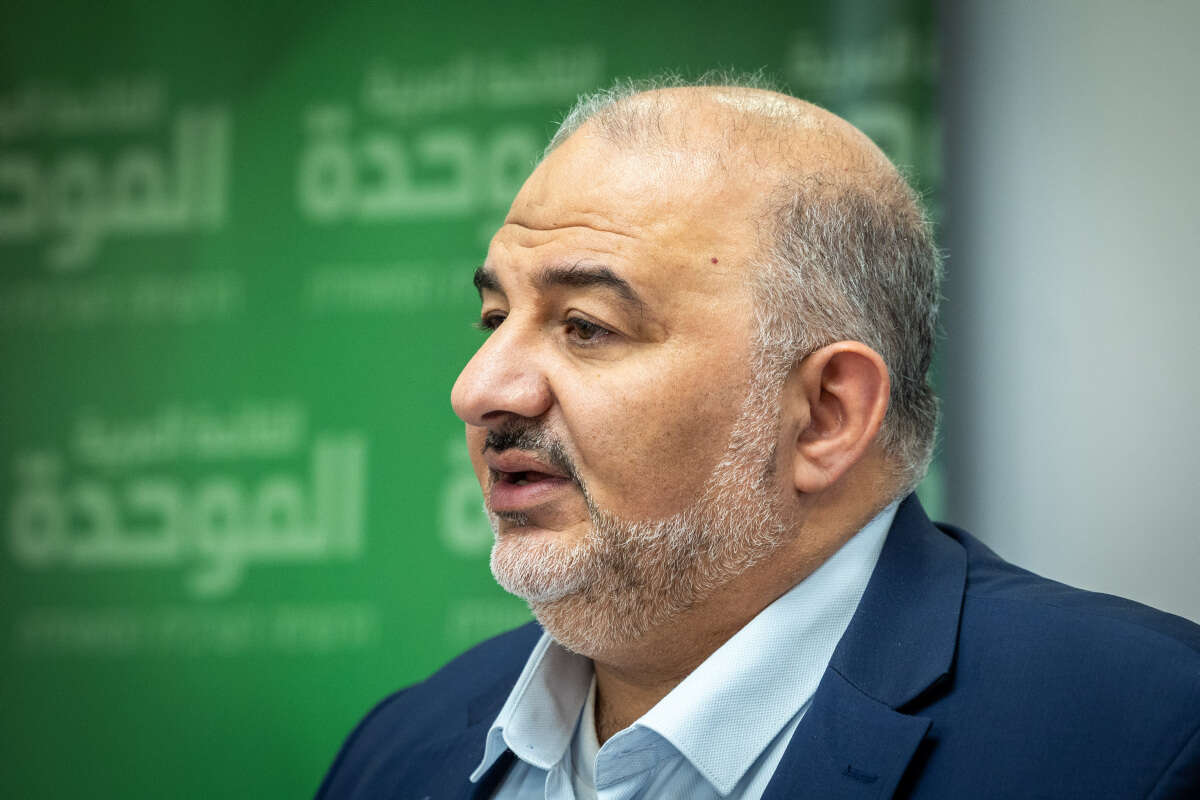
I understand, of course, why there is demand for a "Zionist government" that will ensure equality in shouldering the national burden, given the appalling contempt Prime Minister Benjamin Netanyahu and his obedient proxies have shown toward Israel's military reservists. But correcting that injustice is being accompanied, dangerously, by the rejection of the outstretched hand of a courageous and imaginative Arab leader in particular, and by an often condescending disregard for the Arab public in general. Arab citizens make up roughly one-fifth of Israel's population, yet remain outside the mainstream political field of vision. They are a very large and very present minority whose problems are mounting and whose pain is deepening. Jewish Israelis who imagine those problems will forever remain confined within the Arab community are dangerously shortsighted.
So while military conscription and unity among the Jewish people in Israel are the hottest political issues of the moment, and are unsurprisingly spawning one political framework after another, they are also obvious and politically comfortable issues. Who among the Jewish Zionist electorate is going to oppose a message such as equality in shouldering the burden? It is a safe bet, and it is the demand of the hour.
But this moment will pass. And there is reason to fear that when it does, we will discover that these consensus banners were not merely very comfortable, but too comfortable, offering no horizon for developing the country for the benefit of all its citizens and no path toward integrating its Arab citizens as well. That is why this partnership is an arrow already being fired toward the election after this one, and perhaps toward the future of the Zionist project in the Land of Israel itself.
Building alliances between Jewish and Arab citizens of Israel is therefore not merely politically wise and culturally groundbreaking. It is also a Zionist act, at least if you consider Herzl a Zionist. And as for the value of such cooperation in halting the catastrophic inflation of a new Israeli Jewish supremacism, growing wild on the hilltops of Judea and Samaria and across social media, I need not say another word.
If you will it, I believe that only courageous cooperation with those Arab citizens who seek it can save us, the Jews living here between the Mediterranean Sea and the Jordan River, from fanaticism, from the hubris of believing we are living through an "age of miracles," from moral decline and, ultimately, from ourselves.
In this respect, Mansour Abbas is both a leader and an opportunity that must not be squandered. It is always possible to search with a flashlight for flaws. But this is a man who condemned the Oct. 7, 2023, attack, who has declared his recognition of Israel as a Jewish state and who, more importantly, has consistently extended a hand to the Jewish public. We must not refuse it. Abbas has repeatedly condemned the Oct. 7 massacre, and he has publicly said that Israel "was born as a Jewish state" and would remain one.