Israel Hayom is a media organization founded on the belief that the Israeli public deserves better journalism—more balanced, more accurate, and more reliable. Journalism that speaks rather than shouts. Journalism that is trustworthy, objective, and matter-of-fact. A different kind of journalism, offered free of charge. The first print edition was published on July 30, 2007, and in 2010 Israel Hayom became the Israeli newspaper with the highest weekday readership. The newspaper’s publisher is Dr. Miriam Adelson. Its Editor-in-Chief is Omar Lachmanovitch, and its founding editor is Amos Regev. Israel Hayom’s Hebrew and English websites, as well as its Android and iOS applications, provide around-the-clock news coverage, exclusive content, breaking news and updates, analysis and commentary, video, podcasts, and live broadcasts. The digital platforms of Israel Hayom include news and opinion channels covering culture and entertainment, lifestyle, technology, sports, business and consumer affairs, health, military affairs, food, Judaism, tourism, and automobiles. In 2021, a new Hebrew-language website and mobile application were launched to provide users with a fast, up-to-date, secure, and convenient experience. The content of the newspaper’s print edition is also available online through a daily digital edition and can be received via newsletter. “The Israel Hayom Clique,” the publication’s exclusive benefits club, offers website users discounts and special promotions on products and services. Israel Hayom welcomes feedback, criticism, and suggestions for improvement from its readers. You can contact the organization by email at hayom@israelhayom.co.il

Thursday Jul 30, 2026
NEWSLETTER
www.israelhayom.com
  • Home
  • News
    • Israel
    • Israel at War
    • Middle East
    • United States
  • Opinions
  • Jewish World
    • Archaeology
    • Antisemitism
  • Lifestyle
    • Food
    • Travel
    • Fashion
    • Culture
  • Magazine
    • Feature
    • Analysis
    • Explainer
  • In Memoriam
www.israelhayom.com
  • Home
  • News
    • Israel
    • Israel at War
    • Middle East
    • United States
  • Opinions
  • Jewish World
    • Archaeology
    • Antisemitism
  • Lifestyle
    • Food
    • Travel
    • Fashion
    • Culture
  • Magazine
    • Feature
    • Analysis
    • Explainer
  • In Memoriam
www.israelhayom.com
Home News

Map proves not all of disputed border town belongs to Lebanon

by  Adi Hashmonai
Published on  04-22-2018 00:00
Last modified: 04-22-2018 00:00
Map proves not all of disputed border town belongs to Lebanon

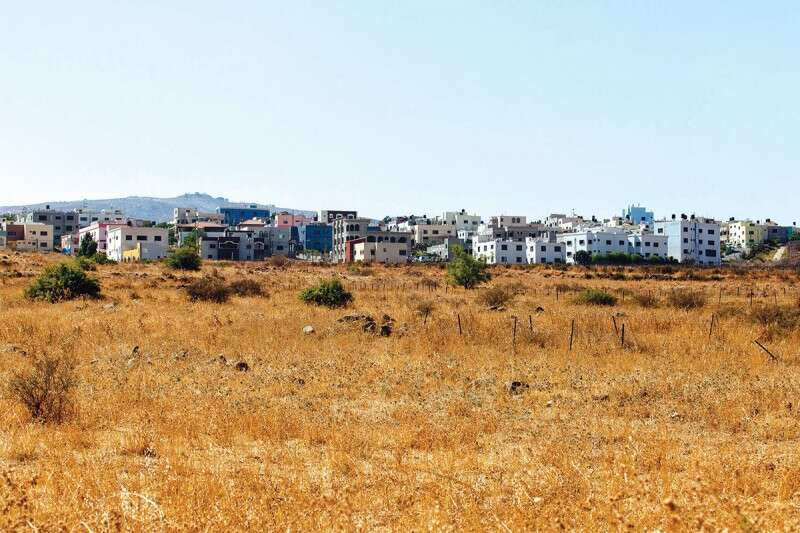
The village of Ghajar

Share on FacebookShare on Twitter

A Syrian map recently acquired by the Tel-Hai College in northern Israel reveals that two years before the 1967 Six-Day War, the disputed border village of Ghajar lay entirely within Syrian territory, contradicting a decision by Israel's Diplomatic-Security Cabinet that the northern part of the village belongs to Lebanon.

"This is a map from the Syrian construction authority from 1965 and we don't know that any other such maps exist in Israel," said Shalom Tarmachi, head of the Tel-Hai College map collection.

"I think Syria took control of the village to divert [a water source], which was one of the reasons for the outbreak of the Six-Day War. At the foothills of the village lie the Wazani springs, which are one of the sources of the Jordan River."

Tarmachi said the Sykes-Picot Agreement of 1916, signed when the French Mandate was in place over what is now Lebanon and Syria, assigned Ghajar to Lebanon. The modern nations of Lebanon and Syria were established in 1943 and 1946, respectively. The residents of Ghajar are Alawite Muslims, as is Syrian President Bashar Assad, and at the time were Syrian subjects. A French Mandate map drawn in 1935 corroborates this.

Ghajar was one of three Alawite villages in the environs of the district city of Quneitra, which is in Syria. When Syria and Lebanon were established as separate states, this changed, and Lebanon gained sovereignty over Ghajar.

"They [the residents of Ghajar] always had economic ties to Lebanon, but the Lebanese never liked them, because they were different. They were Alawites, and there are no Alawites in Lebanon," Tarmachi said.

"Until 1967, they [Ghajarites] were in Lebanon, but this map from the Syrian building agency from 1965 shows that the village actually belongs to Syria."

Prior to the war, Israel was not aware that Ghajar had been transferred to Syrian rule. IDF maps from 1967, which were apparently based on British maps, showed Ghajar as part of Lebanon, which did not fight against Israel in the Six-Day War.

In addition, according to testimonies from village elders, Israel had never occupied Ghajar – residents of the village waved a white flag in the hope that Israel would annex it.

Three years ago, blogger Shlomo Man, whose Naamoush blog is devoted to events on the Syrian Golan Heights in 1967, wrote a post that addressed questions about the nation to which Ghajar had belonged prior to being taken by Israel.

Man's article raises the possibility that the Syrians took control of the village prior to the Six-Day War.

"The Syrians wanted to divert the Wazani stream, which flows below Ghajar, to prevent it from reaching Israel," Man wrote. "The Lebanese were afraid of getting involved with Israel and threw the hot potato to Syria."

Related Posts

US weighs military pullback from Saudi Arabia

Gulf frustrated with US, turns to China to rein in Iran

by Shachar Kleiman and Dudi Kogan

Amid renewed escalation, Gulf states have asked Beijing to apply economic pressure on Tehran and reopen the Strait of Hormuz...

Hamas standoff threatens Gaza stabilization, IDF poised to act

Hamas agrees to hand over heavy weapons as Israel demands full disarmament

by Danny Zaken

The terrorist organization has agreed in principle to transfer mortars, shoulder-fired missiles and heavy machine guns to the technocratic committee....

More than 1,500 migrants enter EU territory in dramatic footage

More than 1,500 migrants enter EU territory in dramatic footage

by ILH Staff

More than 1,500 migrants, including minors, attempted to enter the Spanish enclave of Ceuta in Morocco over the past week,...

Menu

Analysis 

Archaeology

Blogpost

Business & Finance

Culture

Exclusive

Explainer

Environment


Features

Health

In Brief

Jewish World

Judea and Samaria

Lifestyle

Cyber & Internet

Sports


Diplomacy 

Iran & The Gulf

Gaza Strip

Politics

Shopping

Terms of use

Privacy Policy

Submissions

Contact Us

About Us

The first issue of Israel Hayom appeared on July 30, 2007. Israel Hayom was founded on the belief that the Israeli public deserves better, more balanced and more accurate journalism. Journalism that speaks, not shouts. Journalism of a different kind. And free of charge.

All rights reserved to Israel Hayom

Hosted by sPD.co.il

  • Home
  • News
    • Israel at War
    • Israel
    • United States
    • Middle East
    • Sports
  • Opinions
  • Jewish World
    • Archaeology
    • Antisemitism
  • Lifestyle
    • Food
    • Travel
    • Fashion
    • Culture
  • Magazine
    • Feature
    • Analysis
    • Explainer
    • Environment & Wildlife
    • Health & Wellness
  • In Memoriam
  • Subscribe to Newsletter
  • Submit your opinion
  • Terms and conditions

All rights reserved to Israel Hayom

Hosted by sPD.co.il

Newsletter

[contact-form-7 id=”508379″ html_id=”isrh_form_Newsletter_en” title=”newsletter_subscribe”]

  • Home
  • News
    • Israel at War
    • Israel
    • United States
    • Middle East
    • Sports
  • Opinions
  • Jewish World
    • Archaeology
    • Antisemitism
  • Lifestyle
    • Food
    • Travel
    • Fashion
    • Culture
  • Magazine
    • Feature
    • Analysis
    • Explainer
    • Environment & Wildlife
    • Health & Wellness
  • In Memoriam
  • Subscribe to Newsletter
  • Submit your opinion
  • Terms and conditions

All rights reserved to Israel Hayom

Hosted by sPD.co.il