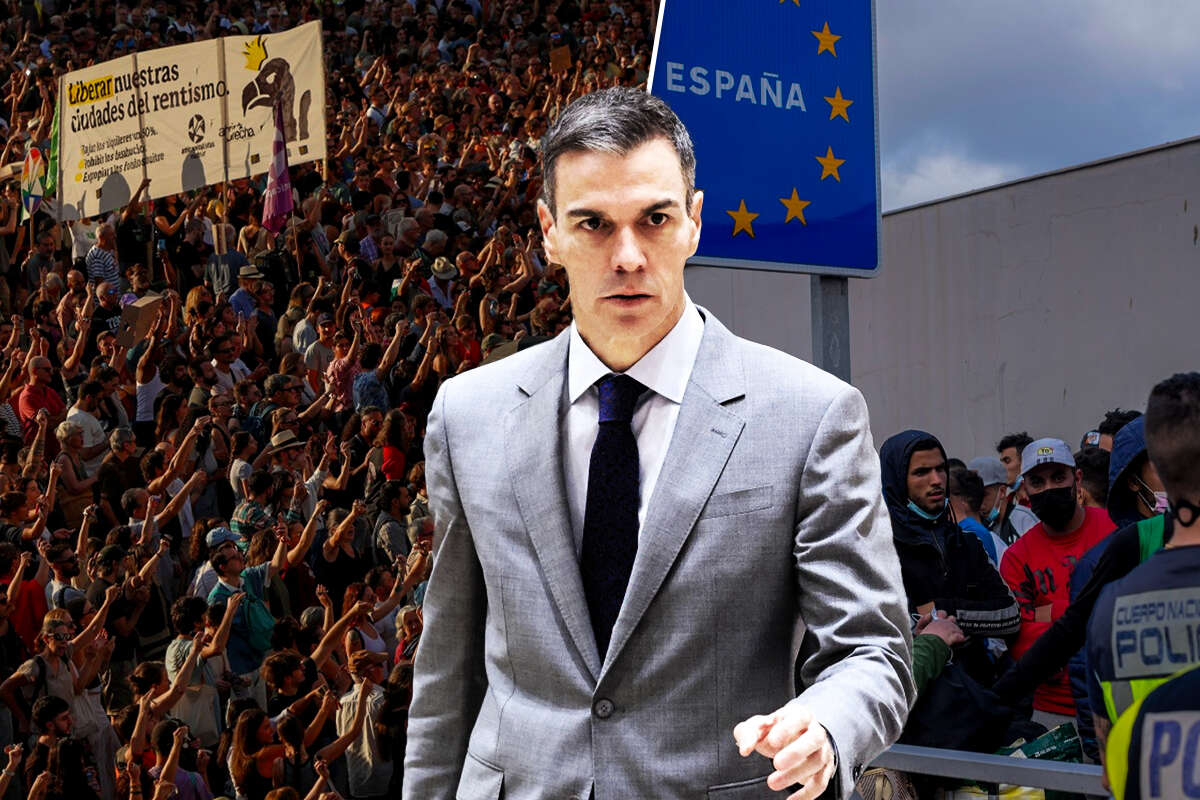
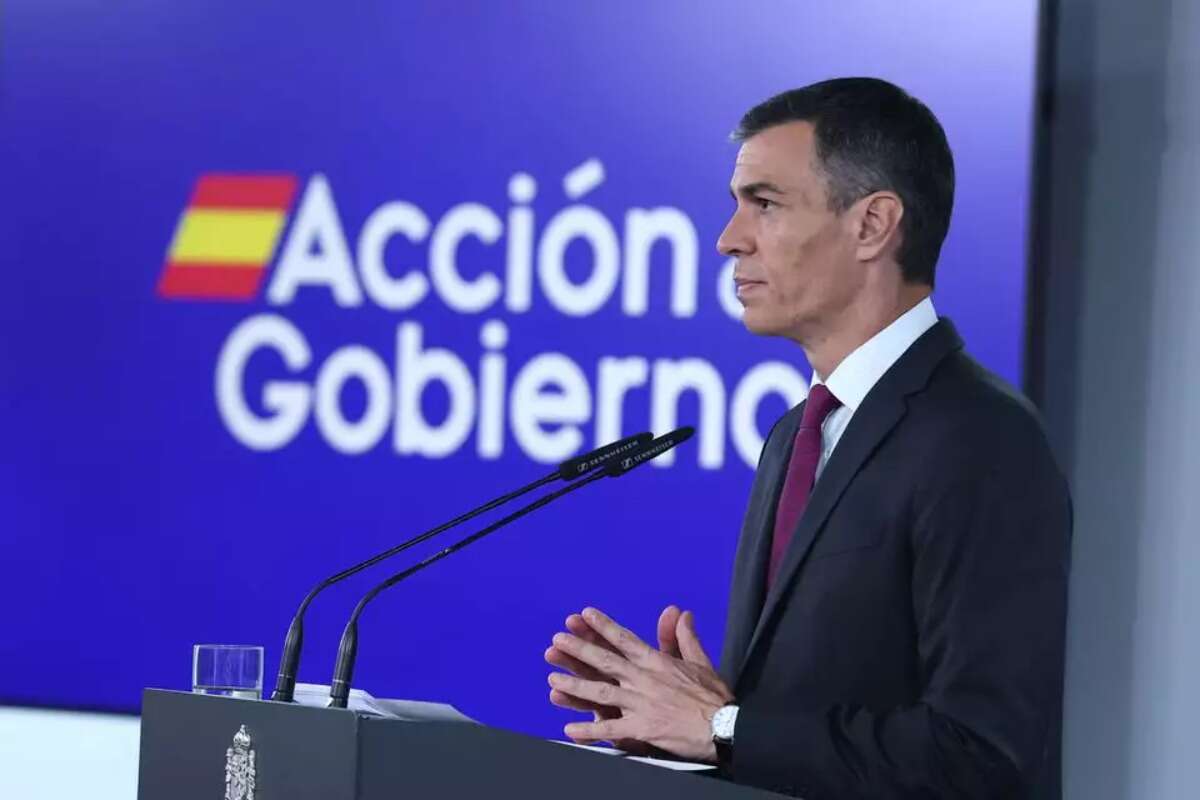
For three years, Spanish Prime Minister Pedro Sánchez, perhaps best known in Israel as "Europe's most anti-Israel prime minister," has led a minority government that has been on shaky ground since its inception. On the morning of Oct. 5, Sánchez appeared at his office in the Moncloa Palace, the Spanish prime minister's official residence, and announced live on television that he had decided to dissolve parliament and call a snap election for Nov. 29.
The announcement followed a dramatic chain of events that began on Sept. 23, when an 87-year-old woman was evicted from her Madrid home after a legal battle with the investment fund that had purchased her apartment.
María del Carmen Abascal, known as Maricarmen, had lived in the apartment for more than seven decades. The investment fund wanted to raise her monthly rent from 440 euros to 1,650 euros, even though her pension amounted to just 1,350 euros a month. Images of police carrying her out of her home on a stretcher sparked a wave of protests across Spain, culminating in a tent encampment in Madrid's famous Puerta del Sol square.
Public pressure eventually forced the investment fund to abandon the rent increase and agree to let Abascal return home. But on Oct. 7, one day before she was due to sign a new lease, she died in the hospital where she had been receiving treatment since the eviction.
The government reacted with something approaching panic. Housing was supposed to be at the heart of Sánchez's socialist agenda, yet the crisis had only worsened over the previous three years. Just six days after the eviction, on Sept. 29, the government approved two emergency decrees aimed at tackling the crisis, including a ban on evicting vulnerable tenants and a freeze on real estate investment funds' activities.
On Oct. 2, the government attempted to push the emergency measures, dubbed the "Maricarmen Decree," through parliament. But Sánchez's minority government depended on an almost impossible coalition of parties, including Junts, the Catalan separatist party that had supported him in exchange for concessions to the independence movement but remains economically right-wing. Junts joined the conservative People's Party (PP) and the nationalist right-wing Vox party in voting down the decrees, arguing that they would "reduce the supply of rental housing and drive up prices."
On the face of it, the protests should have damaged Sánchez. The housing crisis had intensified during his eight years in power, and the Right was quick to point out that Maricarmen had been evicted under his government.

But after the decrees were defeated, Sánchez spotted an opportunity. Public anger was also turning against the parties that had blocked the measures, and he decided to put housing at the center of the election campaign, portraying the Right as the force standing in the way of a solution.
"Spain must decide whether it wants to join the wave of the far Right or remain a bastion of social justice," he said in his speech announcing the election.
The move was seen as a high-risk gamble, with Sánchez's Spanish Socialist Workers' Party (PSOE) trailing in almost every opinion poll. It was also regarded as his last chance to reverse a prolonged slide in support ahead of elections that had originally been scheduled for next summer.
Much of that decline has been driven by corruption scandals involving members of his family and close political allies. His brother was convicted in July in a case involving his appointment to a public-sector position, while a decision was made in September to put his wife on trial on suspicion of influence peddling and embezzlement. Former senior figures in his party have also become embroiled in corruption scandals.
At the same time, the government has faced fierce criticism over its immigration policies. In April, it approved a sweeping program to grant legal status to migrants living in Spain illegally. By the end of June, some 1.2 million applications had been submitted, more than twice the expected number.
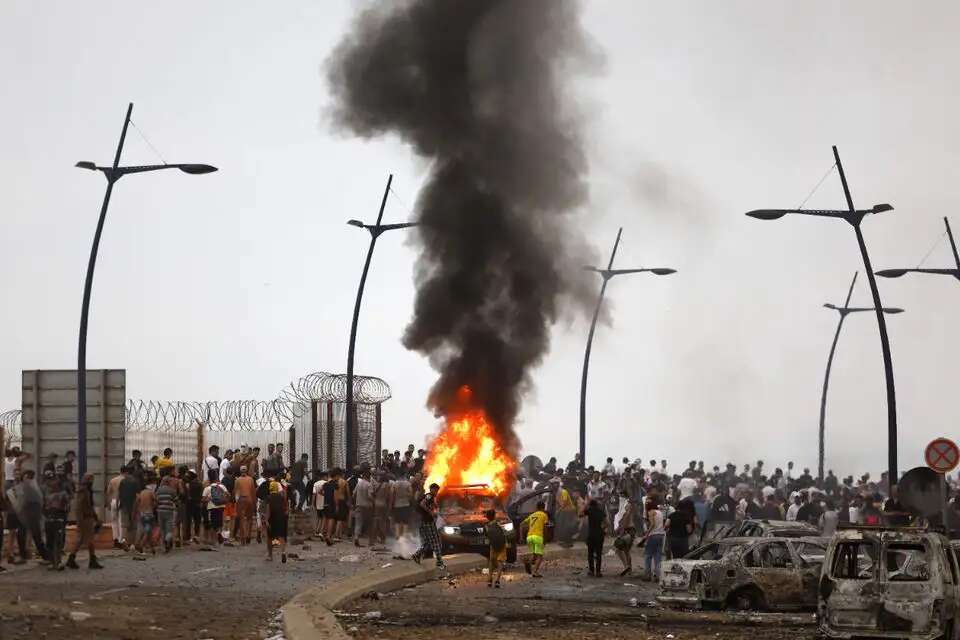
In late July, approximately 72,000 migrants crossed from Morocco into Ceuta, Spain's enclave on the North African coast, over two days. Most were returned within hours, but thousands remain there to this day. In a September poll by El País, 63% of Spaniards gave the government a negative assessment of its handling of the crisis.
Critics linked the two developments, a claim the government rejected. Sánchez, who was once ousted as leader of his party only to reclaim the position and has remained in power since 2018 despite predictions of defeat in the 2023 election, is now entering the biggest political survival battle of his life. And although the odds appear stacked against him, everyone knows better than to bet against Sánchez.
Will Spain's anti-Israel prime minister remain in power?
So far, the polls offer little indication that Sánchez's gamble is paying off.
A Sigma Dos poll for El Mundo, published on Oct. 19, put the PP ahead with 31.5% of the vote, compared with 25.3% for the PSOE. The Socialists were projected to win between 101 and 106 seats, down from the 121 they secured in 2023. Together with Vox, the Right would comfortably exceed the 176 seats required for a parliamentary majority. The biggest shift is in support for Vox, which is projected to double its representation in parliament, largely at the PP's expense.
The sole outlier is the government-run Center for Sociological Research (CIS), whose poll put the Socialists ahead with 34%, compared with 22.2% for the PP, a result no other polling institute comes close to replicating.
Juan Caldés, Public Affairs and Advocacy Manager for the European Jewish Association (EJA) in Spain, believes Sánchez will not survive the election. "I think he will most likely lose," he says.
According to Caldés, "there is a whole series of events that Spaniards will not forget when they go to the polls," from the Ceuta crisis and the nationwide power outage to the devastating floods in Valencia and a deadly train crash. "No one took responsibility for any of these disasters and incidents," he adds. Caldés expects "an ugly campaign until Nov. 29," during which Sánchez will "play the housing card."
Israel, in his view, will not be a central campaign issue. "People here will be talking about housing and immigration."
When it comes to Spain's Jewish community, however, Caldés expresses deep concern. He says most Spaniards make no distinction between Jews and Israelis, raising fears that hostility could escalate from verbal attacks to physical violence. "If Sánchez wins, many Spanish Jewish friends of mine have told me they will seriously consider making aliyah (immigrating to Israel) or moving elsewhere," he says. By contrast, he believes a PP victory "would be good. They are more pro-Israel and pro-Jewish."
Elías Levy, editor-in-chief of the Jewish news website Enfoque Judío, is more cautious. Interviewed immediately after the election announcement, he was reluctant to write Sánchez off. "I'm not betting against him just yet. I've seen him climb out of political holes before," he says.
Levy sets out a clear benchmark. "If Sánchez is still projected to win around 100 seats in two weeks, I'll say he has no chance of being elected. If he rises to 120, he'll have a considerable chance. In 2023, he formed a government with 121."

Two weeks have passed, and Sánchez is still stuck at roughly the same level. According to Levy, Sánchez has been forced to move further left to prevent Sumar, the far-left political alliance, from "stealing his voters." In doing so, he has turned the housing crisis into a political asset. "He saw a housing crisis, developed a plan to turn it to his advantage and minimize the damage," Levy says.
Indeed, the day after announcing the election, the government reapproved the housing decrees, which include 21 measures designed to benefit tenants. This time, a vote is scheduled for Nov. 12 in the Congress' Permanent Deputation, the parliamentary body that continues to operate after the legislature has been dissolved. There, the government does not depend on Junts.
The government expects the first decree to pass, but the second, which provides for the automatic extension of rental contracts, is expected to be defeated. The vote is scheduled for the day after a nationwide strike over housing and the day before the official election campaign begins.
Levy also links the future of Israeli-Spanish relations to Israel's Oct. 27 election. "If Netanyahu remains prime minister, we are heading toward a real crisis," he says.
According to Levy, if both Israeli Prime Minister Benjamin Netanyahu and Sánchez remain in office, relations could deteriorate to the point of being severed entirely, as Sumar has demanded. The arrest warrant issued against Netanyahu by the International Criminal Court in The Hague only complicates matters further, while "Netanyahu is a deeply unpopular figure in Spain."
The best scenario, Levy believes, would be a change of leadership in both countries. "If PP leader Alberto Núñez Feijóo is elected and Netanyahu is replaced, relations will flourish," he says.
Such a development could allow the two countries to restore their ambassadors and resume diplomatic dialogue. Israel has had no ambassador in Spain since May 2024, when it recalled its envoy from Madrid following Spain's recognition of a Palestinian state. In March this year, Spain formally terminated the appointment of its ambassador to Israel.
Even so, Feijóo "will not rush to meet Netanyahu or repeal the law boycotting settlement products," Levy says, although there would certainly be "a change in atmosphere."
Three years of what critics describe as one-sided positions taken by the Spanish government and media have left their mark. In a poll conducted in 2025, 82% of Spaniards said they believed Israel was committing genocide in Gaza, 70% supported European Union sanctions against Israel, and 78% backed recognition of a Palestinian state.
"We are coming to the end of a bad 20-year period, and the last 10 years have been extremely difficult," says Ángel Mas, president of Action and Communication on the Middle East (ACOM), an organization that fights antisemitism and the Boycott, Divestment and Sanctions (BDS) movement in Spain while working to strengthen ties with Israel. "Sánchez is the most radical prime minister Spain has ever had, truly the Chávez of Europe."
Mas points to the entry of far-left parties into the government in 2020 as the first major turning point, followed by what he describes as the government's weak condemnation of the Oct. 7, 2023, Hamas massacre in Israel, with some members of the governing coalition even legitimizing and celebrating the attack. "Sánchez has placed himself at the head of the world's most radical protesters and introduced anti-Israel laws. Today, Jews and supporters of Israel in Spain are effectively portrayed and branded by their own government as accomplices to genocide," he says.
Nevertheless, Mas believes that "relations between Israel and Spain have to improve because they cannot get any worse. But that doesn't mean they will be good."
Mas also explains why he is exercising restraint ahead of the election. He will not ask politicians close to him to speak out about Oct. 7, he says, "because it would simply hurt them electorally." If Vox wins a large number of seats, he believes, it will push a right-wing government toward improving relations with Israel, the US and NATO, just as the far-left Podemos and Sumar parties have pushed the current government against Israel.
Mas also sees reasons for optimism. "Spain is not inherently an antisemitic country," he says. "Although the last three years have severely damaged Israel's image in the eyes of Spaniards, when I walk down the street carrying an Israeli flag, I don't have any problems."
He places his hopes in the younger generation and in demographic trends. "Young people are voting for Vox in large numbers, and Vox is pro-Israel. Most immigrants come from Latin American countries, and most of them have no problem with Jews. They don't bring severe antisemitism with them from their countries of origin," Mas explains. "Demographics are still protecting us. Spain is not France or Ireland. There is something to work with here, and people to work with, to build a better future."