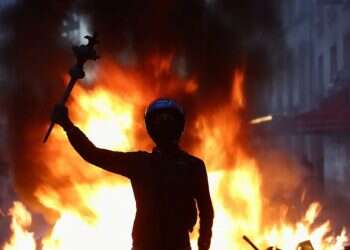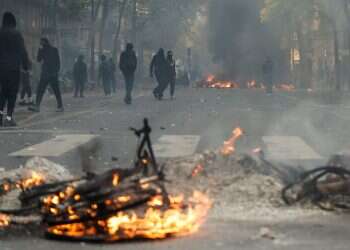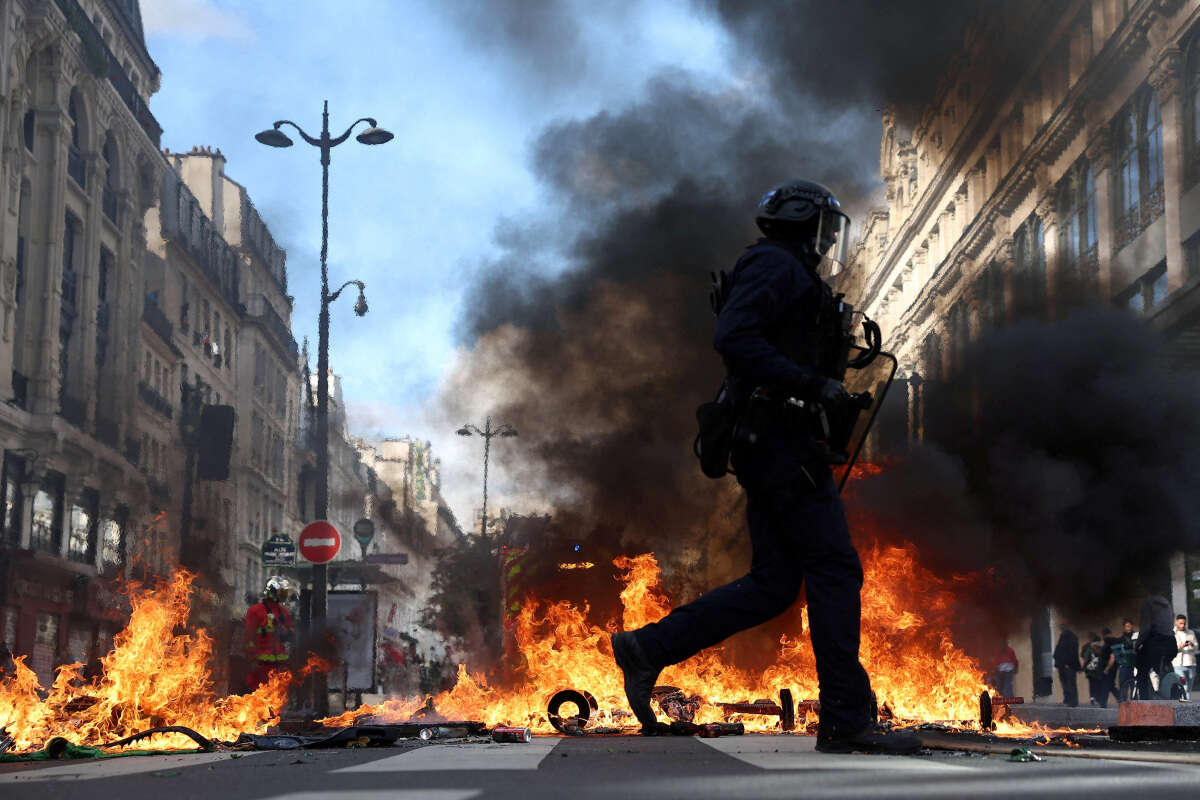
French Prime Minister Sébastien Lecornu announced a partial nighttime curfew in various cities across the country on Monday, in an effort to stop the riots and looting that followed student and labor union protests.
While the French government pinned the riots on the far left, right-wing politicians and leaders abroad told a different story, pointing to immigration and radical Islam. "You can see their faces, you can hear their voices... you know who this is and you know where it comes from," Éric Zemmour, one of France's far-right leaders, said. Nice Mayor Éric Ciotti, a Marine Le Pen ally, didn't mince words on X. "Yes, these riots are a kind of French intifada!" he wrote. "At the riots, you see more Palestinian flags than French ones."
Authorities in Marseille, France's third-largest city, declared a ban on public gatherings from noon until 8:00 p.m. A statement from the Bouches-du-Rhône district in the Provence region said the order took effect immediately and would be enforced by law enforcement authorities.
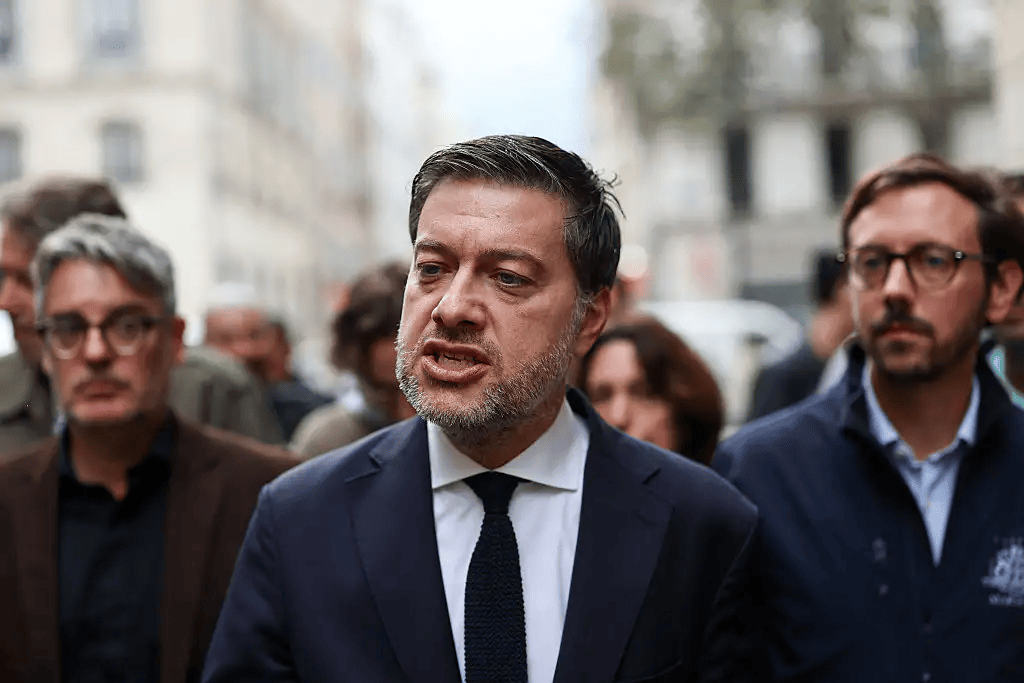
Marseille's mayor, socialist left-winger Benoît Payan, criticized the government Monday morning, arguing that the police's method of operation did not allow for the riots to be properly handled. "A police force that's thin on resources and manpower puts its own officers, as well as high school students, at risk," the mayor said defiantly against the government, hours before Interior Minister Laurent Nuñez was due to visit the southern city. "Meanwhile, the rioters have been left almost completely unchecked. That's the reason, to the country's misfortune, that all of this has been caught on video in Marseille."
The mayor also complained about the official figures on rioters provided by the authorities and said, "I thought I heard a ridiculous figure of 30,000 rioters and 30 businesses vandalized in Marseille. What does that actually mean? 1,000 rioters per business? Where exactly are we, then? At a circus? That's not what the Republic was meant for."
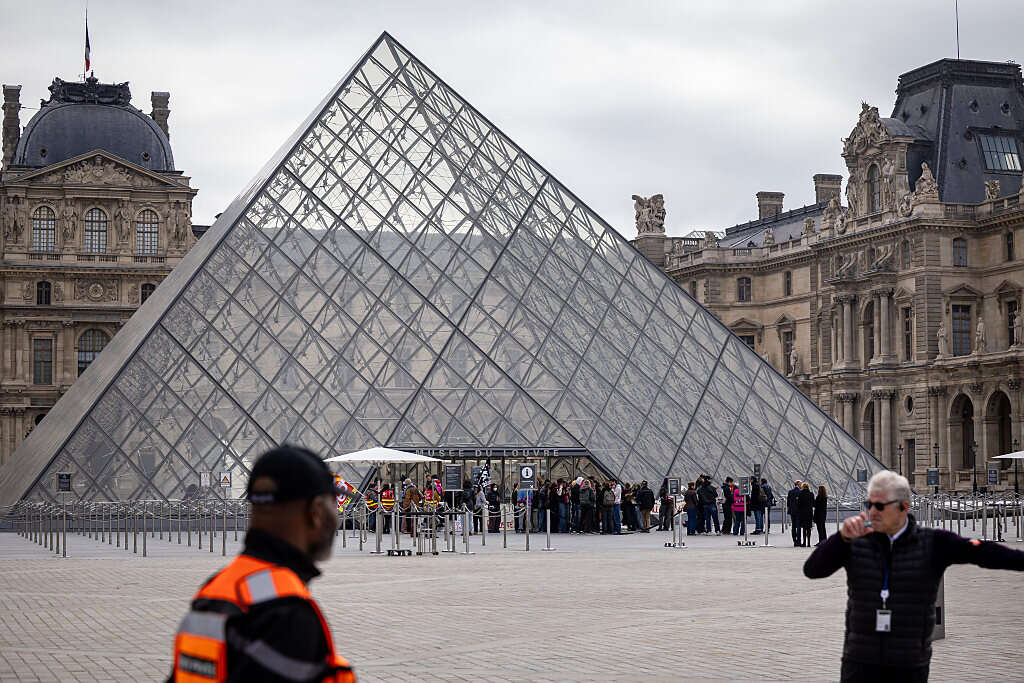
In Paris, groups of students and activists from the CGT labor union blocked the entrance to the Louvre Museum, where they clashed with angry tourists who had bought expensive tickets to the famed museum and were now barred from entering. The protesters distributed flyers in English and French explaining why they were blocking the entrance to the museum.
An unprecedented looting spree
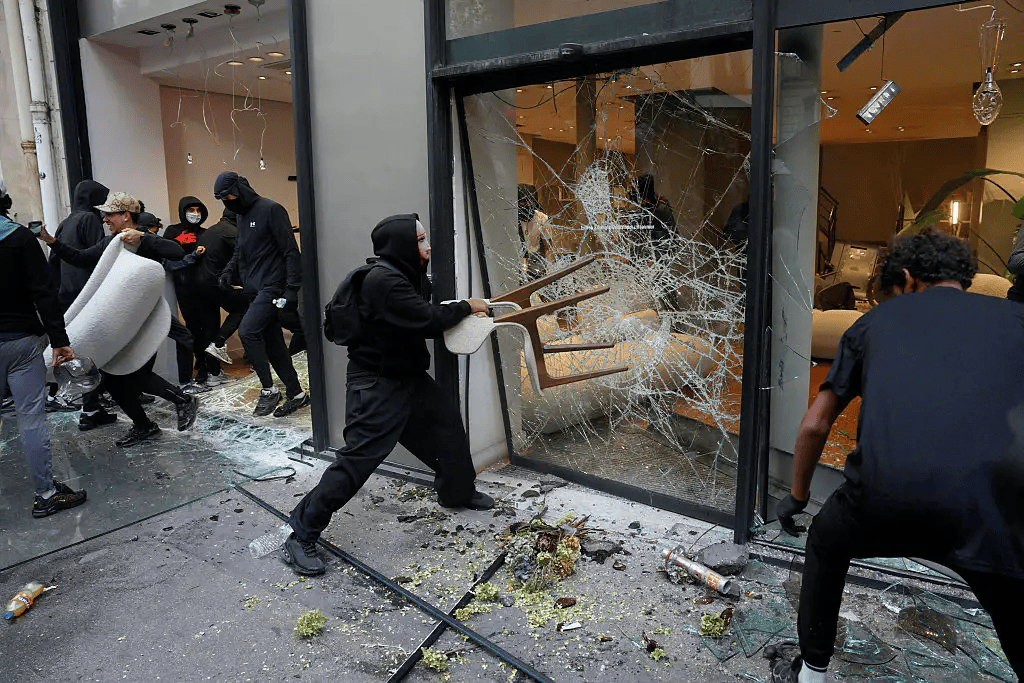
Less than a day after the riots that shook France, business owners and citizens alike are beginning to discover the scale of the widespread looting spree that broke out since Saturday, on the sidelines of protests against the cost of living. According to Alexandre Bompard, president of the French Federation of Commerce and Distribution (FCD, an industry trade group) and CEO of the Carrefour supermarket chain, about 1,500 businesses were directly affected, with damage estimated at "several hundred million euros." In an interview with the French news outlet LCI, Bompard stressed that it is still "a bit early" to determine the exact scope of the damage, and that the sum could still rise.
Mass protests took place across France over the weekend. According to the French Interior Ministry, about 550,000 people took part nationwide, of whom about 110,000 were in Paris. Protest organizers, however, claimed the total number of participants reached about 800,000. But what began as a protest against the cost of living deteriorated overnight into widespread rioting and a loss of control. More than 2,000 people were arrested, and hundreds were injured, many of them police officers and members of the French security forces.
The rioters spared almost no major city in the country, and many stores were looted and vandalized. In Paris, a store belonging to the luxury brand Céline was looted on Rue Montaigne, near the Champs-Élysées, alongside other businesses, including additional luxury brand stores. In Lyon, according to media reports, stores belonging to The Kooples, Hugo Boss, Jott, Lancel, Sephora and Nike were hit, as well as a branch of the Boulanger chain, which was partially burned.
In Marseille, a Louis Vuitton store was hit, and according to the local chamber of commerce, more than 600 businesses in the city center were damaged, twice the number of businesses affected during the 2023 riots. In Bordeaux, on Rue Sainte-Catherine, the city's main shopping street, stores belonging to Decathlon, Intersport, Apple Store, Nocibé and Snipes were looted, and the display windows of Galeries Lafayette were smashed.
The Galeries Lafayette group announced that its branches were hit in Paris, Bordeaux, Chambéry, Nantes, Perpignan, Rennes and other cities. Electronics, clothing, cosmetics and optical stores were also looted in Rennes, Nantes, Clermont-Ferrand and elsewhere. Among other incidents, damage was reported at a Fnac branch in Nantes and at Orange stores in Rennes. The AFP news agency described groups of dozens of young people, dressed in black and wearing ski masks, running through the streets carrying shoeboxes, phones and bags full of merchandise.
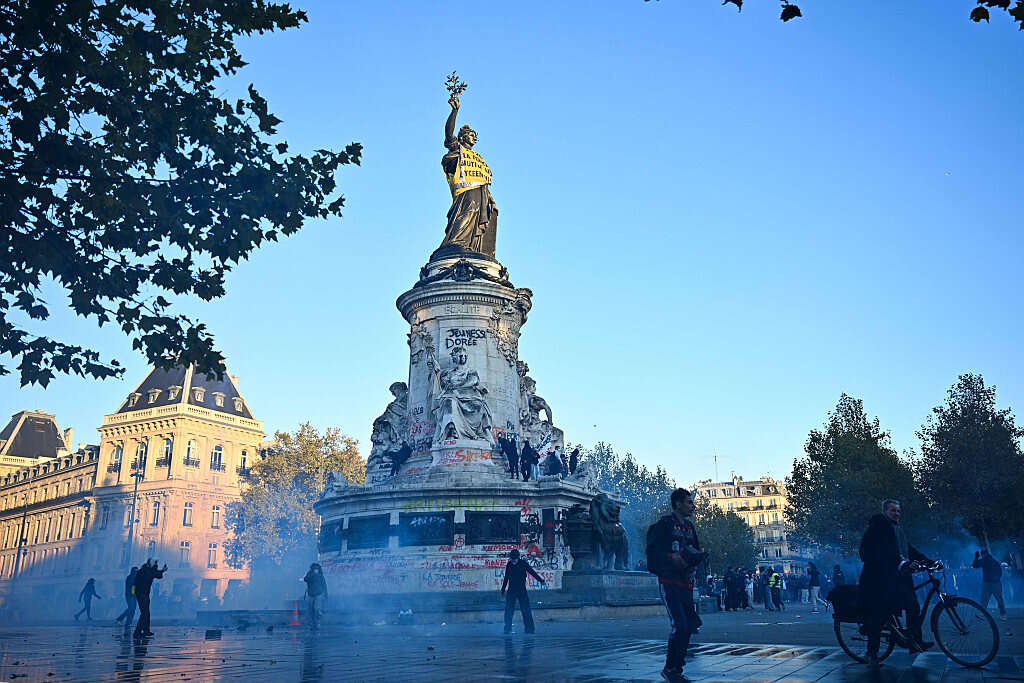
The looting spree did not end Saturday and continued into the night between Sunday and Monday. On Sunday, Paris police reported 108 arrests in the city, 66 of them in the evening hours, and noted that about 30 stores were looted in Paris alone. Clashes between police and protesters continued around Place de la République, with officers using water cannons and tear gas. Police said those involved were "mostly young people from the suburbs looking for opportunities to loot."
In Lyon, a group of about 50 young people, most with their faces covered, tried to smash the display window of a Lacoste store. Police intervened at the scene and stopped the attempt from continuing.
Business owners mobilize to defend themselves
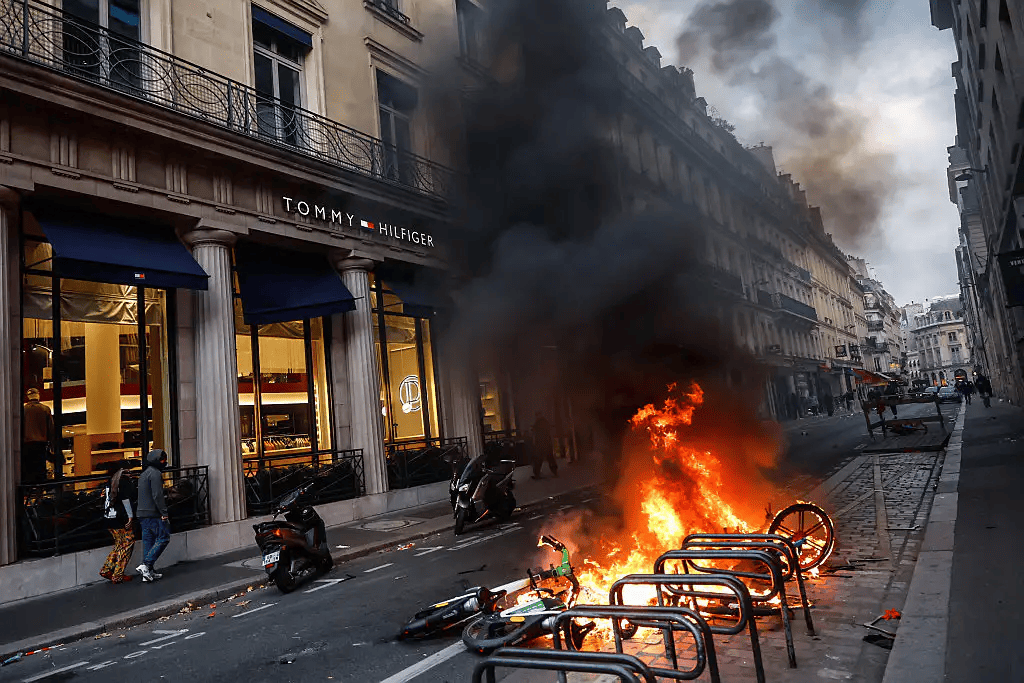
Amid the looting, store owners across France are taking steps to protect their businesses. Some are sleeping in their stores, others are hiring security guards, and some are arming themselves with defensive tools, including baseball bats. "When you see what happens at night, it's unsettling. This is what the lives of shop owners look like in 2026. Soon there won't be a single merchant left around Place de la République," said Uri, a store owner in central Paris, to the newspaper Le Parisien.
Uri and Rachel are a couple who own five stores, some of which were damaged after looters broke into several of them. They are now waiting for a response from their insurance company, which has not yet been able to respond to their inquiries. According to Uri, he didn't sleep a wink all night, while looters passed by his store on their way to other targets.
Fred, a toy store owner in Paris, also described a chaotic reality in which he and his partner, Maurice, take turns standing guard.
"Maurice held down the fort in the store from 2:00 p.m. until five in the morning on Sunday, and then I came to relieve him. We bring each other food at the store," he said. According to him, many stores in his neighborhood were looted, including a tobacco shop whose owner was beaten while trying to prevent a theft. "We were at the mercy of the vandals from 6:30 p.m. until three in the morning, without a single police officer around. I saw them leaving with shopping carts full of merchandise from other people's stores. Thirty years of work and investment in a business can vanish in thirty seconds."
Fred added that some business owners in the area are arming themselves with protective tools. "Some of our neighbors have baseball bats, and others have weapons that fire rubber bullets, hoping that will help scare off the thieves," he said.
The last straw
The French government also began the morning trying to deal with the fallout from the riots. Commerce Minister Serge Papin convened an emergency meeting at 9:00 a.m. at the Ministry of Economy with representatives of merchants, retail chains, craftspeople and restaurant owners, alongside representatives of banks and insurance companies. The purpose of the meeting was to begin formulating a response to the heavy damage and to examine compensation procedures for business owners.
According to Bompard's initial estimate, the president of the French Federation of Commerce and Distribution, the damage to businesses amounts to several hundred million euros, though the estimate may be updated as the scale of the damage becomes clearer. Bompard called for speeding up the compensation process, to allow business owners to resume operations as soon as possible and prevent further damage.
"Our retailers need faster compensation procedures, like what happens in the case of natural disasters," he said. "Beyond the material damage, there are lost days of revenue, extended closures and ongoing expenses. At the same time, insurance policies don't systematically cover losses resulting from business disruption. For very small businesses, whose cash flow is already under pressure, this violence could be the last straw."
Meanwhile, business owners in France are working to get their stores back up and running quickly, among other things ahead of the busy shopping period before Christmas. In the retail sector, there are concerns that a prolonged recovery and continued uncertainty will hurt revenue during the crucial end-of-year period. "A return to calm and normalcy is essential ahead of the end-of-year sales," said Yohann Petiot, CEO of Alliance du Commerce, an organization representing department stores, clothing retailers and shoe store chains.