Recent reports that Iran has deployed missiles in western Iraq speak of the Islamic republic's attempts to entrench itself militarily in the region.
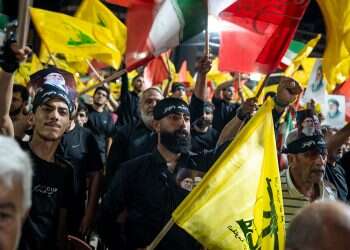
While Tehran has denied the reports and says they aim to undermine Iran's ties with its neighbors, it is hardly a secret that Iran is trying to increase its influence across the so-called "Shiite crescent," which stretches through Yemen, Bahrain, Iraq, Syria and Lebanon, and has an offshoot in the Gaza Strip.
Iran's Quds Force, the Revolutionary Guards' elite extraterritorial black-ops arm, has been tasked with overseeing this mission, which enjoys an annual budget of billions of dollars despite the economic hardships plaguing the Islamic republic.
The regime in Tehran had hoped to be in a different position by now, especially in the Syrian arena.
However, Israel's substantial counter-operations over the past year have thrown a wrench in their plans, so it stands to reason that the Iranians have temporarily shifted their focus to Iraq, where it is less dangerous for them to operate.
This is most likely also why Iran deployed missiles in western Iraq. The 1991 Gulf War may have taught us that any missiles in that area pose a clear and present danger to Israel, but the reality is far more complex.
Iran wants to control Iraq, which is the scene of a fierce battle between pro-American and pro-Iranian forces. Controlling Iraq means more than money and power; it means continuous land access between Iran and the Mediterranean nations. From Iraq, Iran would be able to have direct, more effective influence on Syria.
Israel is not the only one threatened by these entrenchment efforts. Saudi Arabia and the emirates are high on Iran's list of objectives, as are the moderates in Iraq.
Above all, Iran wants to undermine the United States, which challenges all of Iran's regional interests.
For this reason, it is likely that the reports of the Iranian deployment in western Iraq sought to send a message to the U.S., at a time when Washington is considering pulling its troops from Syria.
It was also a message to France, Britain and Germany, illustrating how while they are scrambling to salvage the 2015 nuclear deal in the wake of the U.S. withdrawal, Iran is sparing no effort to undermine their regional interests.
International coordination is vital to stop the Iranian plan in its tracks. Israel cannot accomplish this unilaterally, not only because chances of an Israeli strike in Iraq are slim (so as not to hinder U.S. interests) but mainly because this is a long-term game that requires a balance of carrots and sticks only the world's powers can provide.
If world powers stay on the sidelines, Iran will forge on with its plan, including the development of local missile production capabilities.
However, one must remember that it is highly doubtful that the Iranian missiles deployed in western Iraq would be launched at Israel anytime soon. This option does exist, but its likelihood is slim as Iran still prefers to wage a covert campaign against Israel, rather than an overt one.
Much like in the theater, where a gun seen in the first act will be fired in the third, Iran is planning ahead. Once it reintroduces the threat of having missiles in western Iraq trained at Israel, it will undoubtedly deploy long-range missiles in Yemen that will also allow it to threaten Israel.