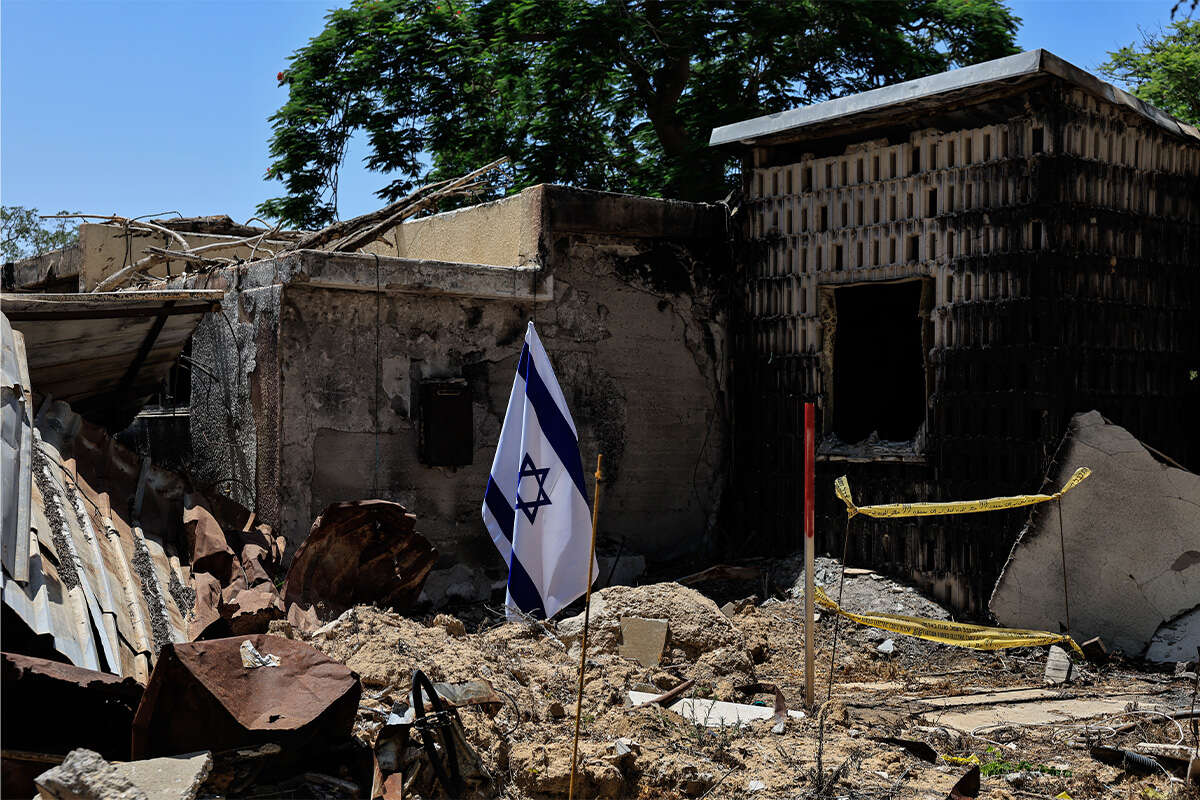
As the third anniversary of October 7th approaches, it's hard to imagine that three years have already passed since the fateful day that will remain forever etched in the mind of every Israeli and Jew worldwide.
For many, it seems as though three years haven't passed at all, as if it were just yesterday when the world as they knew it came crashing down. Time has stood still ever since, and they remain stuck on October 6th, 2023, in survival mode, living each day as it comes, trying to heal, move forward, and reach a new 'normal', while knowing that life will never be normal again.
It's interesting that the anniversary of this tragic historic day coincides with the Jewish holidays, casting a dark cloud over what should - in normal circumstances - be a joyful time. Although many choose to celebrate, refusing to give in to the enemy's desire to break our spirit, it's impossible for the holidays not to be mired by the heaviness. But I also don't think it is a coincidence that these two significant events coincide - not just because the enemy attacks us when we're most vulnerable.
This time of year represents a symbolic time in the Jewish calendar when we look back on the past year and reflect on what could've been done differently, our takeaways, and the lessons we've learned.
If we look back over this past year, what has changed? What have we learned?
Even though we have seen a surge of unity and Jews coming together worldwide since October 7, there is still so much division among our nation, and much that hasn't changed. Many of the same patterns and mistakes are being repeated, which is not only frustrating but disheartening to witness.
Rosh Hashanah and Yom Kippur are about repentance, forgiveness, and learning from our errors - but they also represent new beginnings, goals and resolutions; reflecting on the past while looking forward.
This Yom Kippur, as I was sitting in shul, I had two very different experiences which made me reflect on what it means to be a Jew (living in Israel).
That morning, I arrived in shul, weak and exhausted after a relatively long walk. The shul was packed but I finally found a chair and was relieved to sit. Not even two minutes later, an older lady approached me and informed me that I couldn't sit there because I was "blocking" the aisle.
Although the aisle was extremely wide, no one was passing, and I clearly wasn't blocking anyone, she insisted that it was shul policy. Frustrated, I handed over my chair and traipsed upstairs, where I found plenty of available seats.
The experience aggravated me, however, as I just couldn't understand how a fellow Jew could act this way, and on Yom Kippur of all days!! Of course, this lady was simply following the rules, but still - the interaction reflected poorly and made me feel excluded on a day when I should have been feeling warmth, unity, solidarity, and Jews looking out for one another.
Only a few hours later, I attended another shul, this time at an outdoor service closer to my home. This shul appeared to be egalitarian or conservative, but there was no set or defining label. Looking around, I was happy to see a very diverse and colourful group of people.
To my right were several secular people, there for their annual shul visit but nevertheless completely invested in the service. To my left were a few religious Jews who appeared to be of a similar level of observance to me, and further back were a few black-hatted men wearing a tallit (prayer shawl). A young boy wearing a striped kippah was giving out siddurim and handed me one with a bright smile.
I was also pleasantly surprised to see Israeli flags hanging on the walls and surrounding wooden beams, right beside rainbow-coloured LGBTQ flags. As the service came to an end, the shofar sounded, and we began singing a powerful rendition of Hatikva, our voices rising in unison - a beautiful selection of the religious, secular, and all those in-between.
Standing there surrounded by Jews of every kind, I thought to myself: This, this is what it's all about. Surely we can aspire to live like this throughout the year, not just today? Surely we can put aside our daily squabbles and focus outward instead, on the bigger issues at hand - facing our enemies together?
We have enough enemies surrounding us. Why do we need to fight among ourselves?
We have just celebrated Sukkot. Sukkot marks the time when our ancestors were completely dependent on God to protect them from their enemies. This is not so unlike times today. I remember last Sukkot, when the last hostages had just been released, and the one before that, when we were still fighting for their release. This year, many former hostages, victims, survivors and their families sat in their sukkot, reunited with their loved ones at last, but still suffering silent battles.
In just a few weeks, on October 27, the Israeli elections will be held and we will have the opportunity to hold accountable those who failed us on October 7, by voting wisely and electing a new government.
I personally am praying for a full investigation into the failures on October 7 as it is imperative that our leaders are held accountable. But I also pray for the healing of my brothers and sisters, for an end to terrorism, and for my future children to grow up in a more open and tolerant society.
As the elections approach, let us choose our leaders carefully but also our battles wisely. Let us remember the bigger picture: what we are fighting for and who are our true enemies? Do the means justify the ends? What kind of future do we want to pave for our children?