Three years have passed since that Black Saturday. The war is still not over, the lessons have still not been fully learned, and questions that many are afraid to ask still hang in the air.
Israel Hayom's reporters and commentators take an in-depth look at the events and try to understand where Israel went wrong. Their answers are unlikely to make you feel any safer.
What decision could have changed the course of the war?
What decision in the first days of the war, when Israel still enjoyed overwhelming international support, could have completely changed the course of the conflict?
Itay Ilnai:
On the evening of Oct. 11, 2023, Israel's defense establishment presented the Diplomatic-Security Cabinet with a dramatic proposal: Take advantage of the US backing and international support, which were then at their peak, and launch a direct attack on Hezbollah in Lebanon.
By then, Israeli decision-makers were already familiar with the plans involving Hezbollah's pagers and walkie-talkies. A meeting was also due to take place that evening between senior Hezbollah figures, including Secretary-General Hassan Nasrallah, and senior Iranian officials. It was a golden opportunity to eliminate Nasrallah and crush his terrorist army.
Then-Defense Minister Yoav Gallant and then-IDF Chief of Staff Lt. Gen. Herzi Halevi pushed with all their might for an attack. Gallant still tells anyone willing to listen that it was the right thing to do. But Prime Minister Benjamin Netanyahu, backed by the two new ministers who had joined the government, Benny Gantz and Gadi Eisenkot, opposed it.
Ultimately, the attack did not go ahead, and Israel's major offensive against Hezbollah was postponed by a year.
It is impossible to know what would have happened had Israel eliminated Nasrallah in October 2023 rather than a year later. But the Oct. 11 decision reflects the strategy Netanyahu adhered to throughout all three years of the war: deal with the enemies sequentially, first Hamas, then Hezbollah and then Iran.
In my view, that decision proved to be the right one.
Yoav Limor:
Israel should have made two decisions at the beginning of the war.
The first was to work together with the international community on a plan for ending the war, the so-called "day after," under which Gaza would be governed by a different Palestinian government rather than Hamas.
The second was to launch a worldwide public diplomacy campaign that would lay the groundwork for explaining and defending Israel's war in Gaza.
Had those two things been done, we could have greatly reduced the scale of the international damage Israel is now having to contend with. More importantly, Hamas would have ceased to rule Gaza long ago.
Lilach Shoval:
It is not certain that the course of the war could have been changed completely, but had Israel decided to attack in Lebanon on Oct. 11 as planned, there is no doubt the war would have looked entirely different, especially for residents of northern Israel, who were forced to live away from their homes for about two years.
In southern Israel, a different course of action, taking control of the entire Gaza Strip in the opening days, might also have changed the course of the campaign and shortened it dramatically. In practice, however, the decision was made to operate sequentially rather than on multiple fronts simultaneously.
Even if Israel had simply decided in those first days what end state it wanted to achieve in the Gaza Strip, it might have been able to reach that objective more effectively.
Has Israel really abandoned the failed conception?
Has Israel's political leadership truly changed its conceptual DNA, or are we still managing reality according to the same basic assumptions that collapsed on Oct. 7?
Itay Ilnai:
A senior officer who was at the heart of the Oct. 7 failure told me something chilling: "One of our fundamental moral failings was that the IDF did not prepare to win wars. It prepared to postpone them."
Throughout Netanyahu's many years as prime minister, Israel did indeed try, to the best of its ability, to avoid military confrontations. That strategy acquired a name: the policy of containment.
That policy, which was deeply embedded in Netanyahu's DNA and filtered down from him throughout the defense establishment, steadily eroded Israeli deterrence.
But following the shock of Oct. 7, the approach changed by 180 degrees. From that day onward, everyone at the top of Israel's leadership understood that in the Middle East, Israel had to start behaving like the neighborhood bully.
That has happened since then in Gaza, Lebanon, Iran and even Doha, the capital of Qatar. Time and again, and quite literally through military strikes, the political leadership sent the world the same message: Israel has taken the gloves off.
Yoav Limor:
As long as a state commission of inquiry is not established, none of the relevant parties, first and foremost the political leadership, can truly say they have learned the necessary lessons.
Even today, three years after the disaster, the political leadership continues to operate with flawed staff work while repeatedly excluding ministers and senior defense officials from key decisions.
Israel's total dependence on the United States, and the fact that decisions are being made in Washington rather than Jerusalem, are also dangerous for Israel and could leave it facing situations that jeopardize its security.
Lilach Shoval:
It is difficult to assess the political leadership, certainly during an election period.
At the same time, we are already seeing restrictions imposed by the political leadership on the military for considerations that may well be justified.
For example, during the latest months of fighting in the north, the IDF was forced to limit its responses even after soldiers were hit, in order not to anger the Americans. Restraint has also been imposed on it in the Gaza Strip.
On the other hand, the word "deterrence" is being used less frequently, and Israel has repeatedly demonstrated that it does not hesitate to attack when necessary, including by carrying out pre-emptive strikes.
Whether this represents a genuine change will only become clear over time.
Is the IDF really protected against the next failure?
Is today's IDF truly protected against the next catastrophic failure, or are only luck and tactical success on the ground preventing another disaster?
Itay Ilnai:
No. The IDF is not protected against the next failure.
Deep changes have been made in the military and in Israel's other security agencies since Oct. 7, but the military world contains a paradox no one has yet managed to solve: The more comfortable, in control and powerful you feel, the more vulnerable you become to surprises and failures.
Over the past three years, at a very heavy price, the IDF has regained its confidence and achieved a strategic advantage over all its enemies. That is precisely what is filling commanders and soldiers with a sense of success, and rightly so.
But human nature can be treacherous. It is precisely when you feel invincible that the walls protecting you begin to crumble. Fifty years may have passed between the IDF's major failures, but no one can guarantee that the next one is not just around the corner.
On Oct. 7, we all learned to be more humble. It would be wise for that feeling to stay with us, and especially with the IDF's commanders and soldiers.
Yoav Limor:
Oct. 7 taught us that there is no such thing as being completely protected or completely prepared, and that we must always question our assumptions and look for what we do not understand and do not know.
But the fact that the military investigated itself and drew lessons, and the fact that the IDF's entire chain of command has changed, provide some grounds for hope that the lessons have been learned and internalized.
Even so, the IDF also needs a state commission of inquiry. Above all, it must ask itself every day where the next surprise might come from.

Lilach Shoval:
The IDF can never be completely insulated from the next disaster. That is the central lesson of both Oct. 7 and the 1973 Yom Kippur War.
The IDF must always begin with the assumption that it does not know everything, and it must prepare according to the enemy's capabilities rather than according to what it believes the enemy intends to do.
In any event, it must always suspect that someone is trying to surprise us, never underestimate the enemy and establish a serious "devil's advocate" team whose job is to challenge prevailing assumptions.
Most importantly, these lessons must be preserved for many years to come, not merely for the next few years.
What could have reduced the scale of the massacre?
What single military action in the first hours of Oct. 7 could have stopped the rampage and reduced the scale of the disaster?
Itay Ilnai:
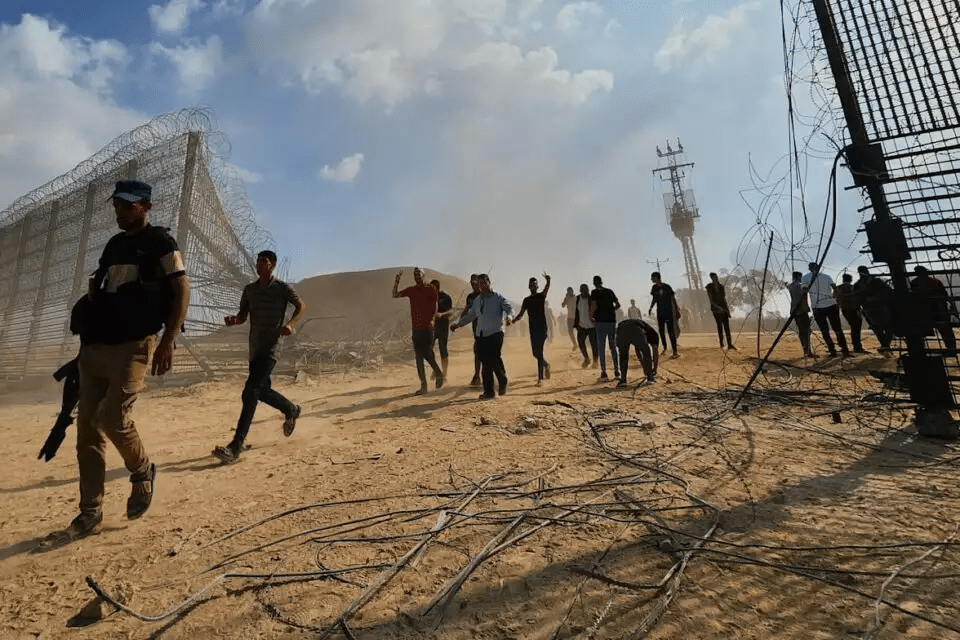
Once Hamas' surprise attack began, there was no single military action that could have prevented it. The desire to search for a magic solution is understandable and human, but it is also pointless and somewhat childish.
At 6:30 a.m. on Oct. 7, Hamas had achieved an advantage over the IDF's Gaza Division in every area. It had more forces on the ground, more weapons and better intelligence.
Given the situation that developed, it is hardly surprising that the division was overwhelmed in less than two hours, that both the IDF General Staff and Southern Command struggled to build a complete picture of what was happening, and that reinforcements rushed to the western Negev took a long time to arrive.
And yet, there were people who proved effective that tragic morning.
It became clear that in almost every case, the depleted local rapid-response security squads managed to reduce, and sometimes completely prevent, incursions into their communities. As a result, over the past three years the rapid-response squads in communities along Israel's borders have been expanded, trained and armed.
The next time someone tries to invade a kibbutz near the Gaza border or in the Galilee, they would do well to remember that they are likely to encounter serious firepower.
In military terminology, this is called defending the force at its base. In the rapid-response squads, they call it protecting your home.

Yoav Limor:
Had the IDF taken command of the Gaza border area earlier from the Gaza Division, which had collapsed, it would have been able to build an accurate picture of the situation more quickly and respond more effectively, including by directing aerial and ground reinforcements where they were needed.
The delay in developing that situational picture significantly prolonged the time it took to regain control of the communities near the Gaza border, costing many lives and leaving many more people to be taken hostage.
Lilach Shoval:
I do not believe there was any single military action that could have stopped the massacre entirely. But there is no doubt that if, during the overnight consultations between the IDF chief of staff, the head of Southern Command and the head of the Operations Directorate, they had raised the alert level for the forces on the ground, reinforced them and placed the Israeli Air Force on alert, a significant portion of the damage could have been prevented.
Once the attack began, the Israeli Air Force should have bombed the terrorists' entry points along the border fence. But that is hindsight. In real time, the chaos was immense and no one understood what was happening.
Israel Hayom reporters and commentators Yoav Limor, Itay Ilnai and Lilach Shoval participated in preparing this project.