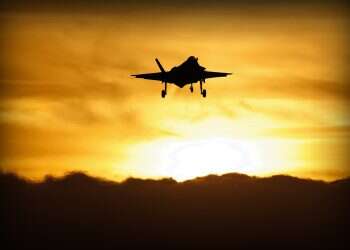
Recent reports that the Iranians have removed their personnel from southern Syria and have transferred their main activity hub from Damascus International Airport to the T-4 airbase in the heart of the Syrian Desert, indicate that the first round of the Iranian-Israeli conflict in Syria has ended in resounding defeat for Tehran.
Some in Israel voiced concern and criticized the government's decision – which the defense establishment had encouraged – to wage a campaign against Iranian entrenchment in Syria. It is a fact, however, that the determination displayed by Israel bore fruit and its objectives were met, without sparking a war on the northern border and while avoiding a diplomatic crisis with Russia.
The important takeaway from the first round is that those who dare, win. Iran blinked first and chose to duck a fight with Israel. It's also possible it didn't want to push its luck in terms of its relations with Bashar Assad and with Vladimir Putin, the patron of the Damascus regime.
This further evidences the limitations of Iran's power and certainly that of its Quds Force, the foreign arm of the Islamic Revolutionary Guard Corps, in Syria. The Quds Force couldn't establish a solid foothold in Syria once Israel began pummelling it and therefore its ability to retaliate, threaten and mainly deter Israel is still limited.
It's not for nothing that Quds Force chief Maj. Gen. Qassem Soleimani wants the current government in Israel to fall. He even believes, according to media leaks, that a strong Iranian response to Israeli attacks in Syria could influence the outcome of the upcoming election in Israel. Iran is possibly behind Palestinian Islamic Jihad's recent attempts in Gaza to spark another clash with Israel on the southern front. The Iranians want to influence the election results in Israel and at the very least deter Israel's leadership from continuing the campaign against them in Syria. In the meantime, this hasn't been working.
As stated, however, this is only the first round. The Iranians won't throw in the towel so easily. Their presence in Syria, alongside their entrenchment in Iraq, Lebanon and Yemen, is a strategic goal for which they have spilled blood and spent billions of dollars. We can assume Iran will persist with efforts to establish a presence in Syria, even if in the country's north, in the hope that the Russians will curb Israel's attempts to uproot them from there as well. After all, in contrast to Israel, Russia doesn't view Tehran's presence in Syria as a threat and believes it can curtail the Iranians.
Meanwhile, Iran last week celebrated the 40-year anniversary of its Islamic Revolution. On February 1, 1979, exactly 40 years ago, Ayatollah Ruhollah Khomeini returned to Iran riding the wave of protests against the Shah's regime and wrested control of the country for him and his cohort of clerics. These have been 40 years of uncompromising fanaticism, increasing international isolation, unrelenting subversion in the region and beyond and burning hatred for the United States and Israel. But more importantly for the citizens of Iran, it has been 40 years of corrupt and violent dictatorial rule that has led the country to the brink of social and economic ruin.
Iran's only dubious achievements over this time, not coincidentally, pertain mostly to its ballistic missiles, which it touts day and night and the latest of which – a cruise missile with a range of 1,300 kilometers (around 800 miles) – was unveiled last week to mark the anniversary of the Islamic revolution. It isn't clear, by the way, if the reports from Tehran are accurate. To be sure, the Iranians tend to distort and exaggerate such accomplishments even when their missiles are far from being operational. What is pertinent, however, is Iran's trend and ongoing intention of manufacturing missiles capable of reaching not just Israel but Europe and in the future the U.S. as well.
The price for these missiles, as we all know, is being paid by the people of Iran; mainly the country's youth who have essentially been sentenced to a life of economic hardship, poverty and ignorance and mostly a lack of hope for a better future. The gap between the Iranian people and their leaders has never been larger and another revolution to topple the regime is undoubtedly only a matter of time. This is still quite a few years away, however, because the ayatollahs, similar to their ally Assad, are willing to kill millions before bidding adieu to the global stage.