

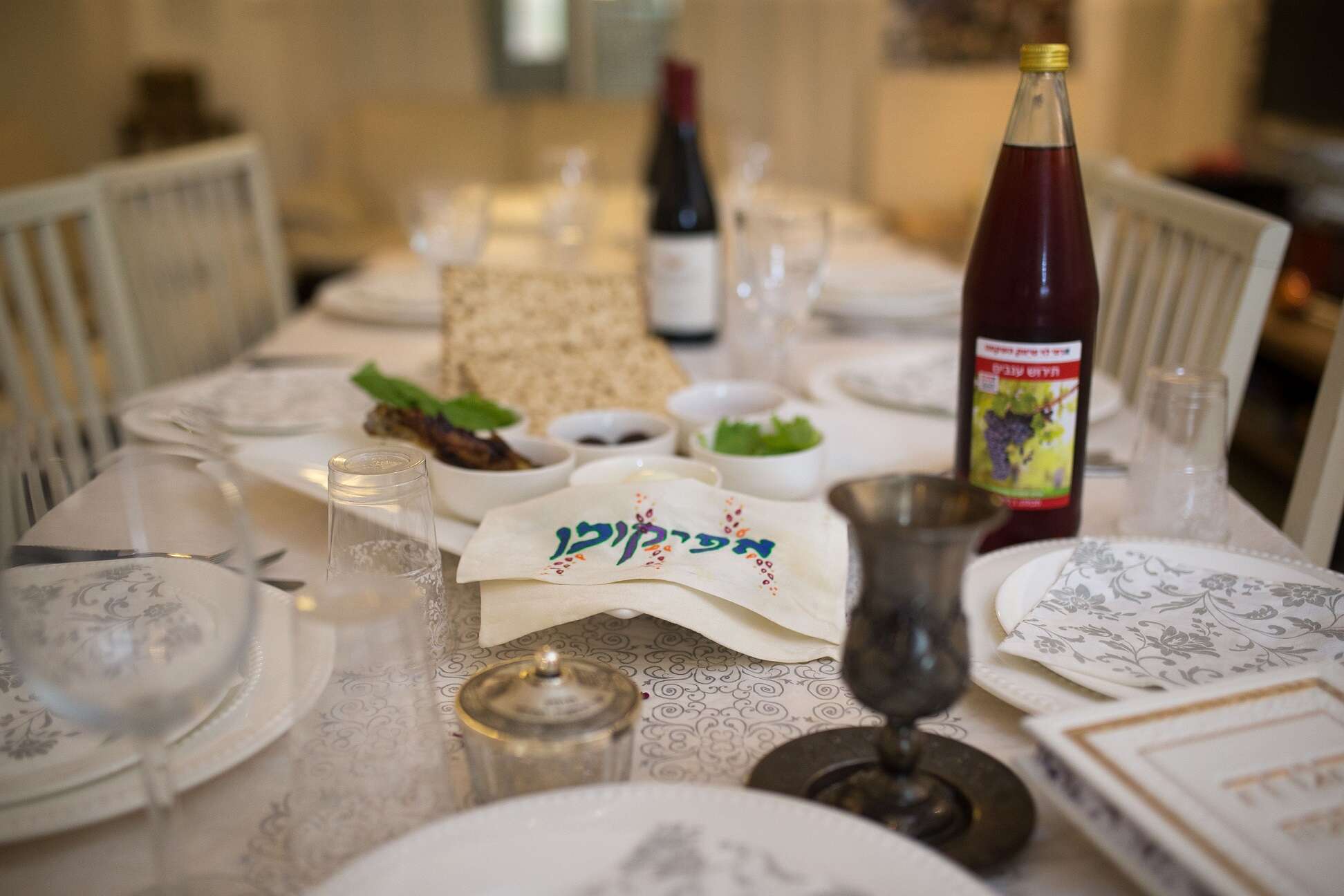
For those who worry about the future of American Jewry, Passover is always a hopeful moment. It remains the holiday that is observed by the bulk of Jews, including a great many of those who are not in any way observant.
According to a survey published in 2014 by the Pew Research Center, 70% of Americans who identify as Jewish attend a Passover Seder. That's far more than those who fast on Yom Kippur (53%), light Sabbath candles, attend religious services or keep kosher. The numbers are even significant for those that Pew labeled "Jews of no religion" in their landmark study of the community published the previous year. According to Pew, fully 42% of those in that fast-growing demographic who have only tenuous ties to faith and peoplehood participate in a seder.
That makes the seder one of the few remaining connections to Jewish tradition for many Jews. Since it is a unique exercise in national memory that transports Jews back to their origins and challenges them not merely to memorialize the Exodus from Egypt, but to have personally taken part in it, that makes the Passover ritual a powerful moment in which a sense of Jewish peoplehood can be reaffirmed even for those to whom the idea is remote from their daily existence.
But the problem is that, as is the case with virtually every other aspect of American society, Passover is becoming a scene of political combat in which the only possible outcome is a widening of the divisions that are already tearing Jews apart.
This goes beyond the uncomfortable dynamic that every family knows all too well by which differences on politics or any other source of conflict need to be put aside if the festive meal is to be survived without arguments that will leave everyone feeling aggrieved and insulted. For the last 50 years, American Jews have been adapting the seder to be a vehicle for their passions for non-Jewish causes.
Beginning with the publication of Arthur Waskow's groundbreaking "Freedom Seder Haggadah" on the anniversary of Dr. Martin Luther King Jr.'s assassination, with each passing year, new variations on the same theme have been forthcoming. That has meant Haggadot fashioned to highlight a multiplicity of causes. Waskow morphed the traditional liturgy into a piece of political advocacy that identified the story of the Exodus with the struggle for racial equality in America. While the cause of Dr. King and civil rights was just, Waskow's clever adaptation sought to promote a brand of leftist activism. Others have followed in his footsteps with seders that turned Passover into festivals of environmentalism, labor activism, rights for immigrants and even sympathy for the Palestinian war against Israel's existence.
This trend epitomizes the dilemma of Jewish educators who want to make Judaism seem relevant to those who regard its rituals, traditions and beliefs as foreign to the way they live. We want to make Passover and its message of freedom and responsibility come alive to an audience that no longer takes its importance for granted. Yet using Judaism in this manner, we run the risk of stripping it of its sacredness, as well as of its basically Jewish nature. In turning Jewish history into an empty metaphor that can be manipulated and distorted, we can render it meaningless except as a sidebar to other secular causes.
But it's no use blaming Waskow or the authors of all the other fashionable efforts to make Passover "relevant" to those who would otherwise think it nothing more than an empty ritual or merely an excuse for a family meal.
Passover liturgy contains more than enough content that encourages universalist interpretations of Judaism, as well as those that are rooted in the particular drama of Jewish history and the emergence of the Jews as a people pledged to the Torah.
Who cannot read the lines about the suffering of the slaves in Egypt without thinking of how relevant this story was to others who struggled for freedom throughout history and in our own day? Nor can we ignore the admonition to remember that we were strangers in Egypt without acknowledging the obligation to understand that others can find themselves in the same plight.
But the same can be said for the predominant theme of the seder, which is focused on the particular struggles of the Jews, their reliance on God, and that the freedom they are given is conditioned on taking on obligations of faith. Those who seek to rewrite or eliminate the traditional reminder that "in every generation they rise against us to destroy us" or the prayer imploring God "to pour out thy wrath" on these enemies of the Jews in order to make it seem less parochial or more welcoming are destroying the essence of Passover.
The Haggadah enjoins us to be sympathetic to immigrants, but it does not obligate any nation to tear down its borders or annul democratically passed laws about citizenship and who may enter a country. Moreover, efforts to compare, as some Jews have done, the plight of illegal immigrants who have broken U.S. laws to Jews being hunted by the Nazis is profoundly offensive. Just as bad are those who, like the anti-Zionist and anti-Semitic Jewish Voice for Peace, compare Palestinians determined to destroy Israel to the Jewish slaves in Egypt.
Wiser heads understand that within the sectarian message of the Exodus is wisdom that can inspire all peoples, without turning it into a partisan platform or one to be used to help those who would victimize Jews in our own day. We should strive to fill our seders with meaning both for those of us to whom Judaism is integral to our lives and to those with only a passing acquaintance to it. The richness of this great heritage is enough to encompass both the universal and the parochial elements of Judaism without sacrificing either on the altar of secular politics.
This article is reprinted with permission from JNS.org.


