Israel Hayom is a media organization founded on the belief that the Israeli public deserves better journalism—more balanced, more accurate, and more reliable. Journalism that speaks rather than shouts. Journalism that is trustworthy, objective, and matter-of-fact. A different kind of journalism, offered free of charge. The first print edition was published on July 30, 2007, and in 2010 Israel Hayom became the Israeli newspaper with the highest weekday readership. The newspaper’s publisher is Dr. Miriam Adelson. Its Editor-in-Chief is Omar Lachmanovitch, and its founding editor is Amos Regev. Israel Hayom’s Hebrew and English websites, as well as its Android and iOS applications, provide around-the-clock news coverage, exclusive content, breaking news and updates, analysis and commentary, video, podcasts, and live broadcasts. The digital platforms of Israel Hayom include news and opinion channels covering culture and entertainment, lifestyle, technology, sports, business and consumer affairs, health, military affairs, food, Judaism, tourism, and automobiles. In 2021, a new Hebrew-language website and mobile application were launched to provide users with a fast, up-to-date, secure, and convenient experience. The content of the newspaper’s print edition is also available online through a daily digital edition and can be received via newsletter. “The Israel Hayom Clique,” the publication’s exclusive benefits club, offers website users discounts and special promotions on products and services. Israel Hayom welcomes feedback, criticism, and suggestions for improvement from its readers. You can contact the organization by email at hayom@israelhayom.co.il

Wednesday Aug 5, 2026
NEWSLETTER
www.israelhayom.com
  • Home
  • News
    • Israel
    • Israel at War
    • Middle East
    • United States
  • Opinions
  • Jewish World
    • Archaeology
    • Antisemitism
  • Lifestyle
    • Food
    • Travel
    • Fashion
    • Culture
  • Magazine
    • Feature
    • Analysis
    • Explainer
  • In Memoriam
www.israelhayom.com
  • Home
  • News
    • Israel
    • Israel at War
    • Middle East
    • United States
  • Opinions
  • Jewish World
    • Archaeology
    • Antisemitism
  • Lifestyle
    • Food
    • Travel
    • Fashion
    • Culture
  • Magazine
    • Feature
    • Analysis
    • Explainer
  • In Memoriam
www.israelhayom.com
Home News World News

IAEA: Iran violating all restrictions of nuclear deal

The International Atomic Energy Agency says in a confidential document that as of May 20, Iran's total stockpile of low-enriched uranium amounted to 1.73 tons, up from 1.1 tons on Feb. 19.

by  AP and ILH Staff
Published on  06-07-2020 10:26
Last modified: 06-07-2020 13:52
New IAEA head: Iran must account for presence of uranium at undeclared siteAP/Ronald Zak

Director General of the International Atomic Energy Agency Rafael Grossi | Photo: AP/Ronald Zak

Share on FacebookShare on Twitter

Iran has continued to increase its stockpiles of enriched uranium and remains in violation of its deal with world powers, the United Nations' atomic watchdog said Friday.

The International Atomic Energy Agency reported the finding in a confidential document distributed to member countries and seen by The Associated Press.

The agency said that as of May 20, Iran's total stockpile of low-enriched uranium amounted to 1,571.6 kilograms (1.73 tons), up from 1,020.9 kilograms (1.1 tons) on Feb. 19.

Follow Israel Hayom on Facebook and Twitter

Iran signed the nuclear deal in 2015 with the United States, Germany, France, Britain, China and Russia. Known as the Joint Comprehensive Plan of Action, or JCPOA, it allows Iran only to keep a stockpile of 202.8 kilograms (447 pounds).

The IAEA reported that Iran has also been continuing to enrich uranium to a purity of up to 4.5%, higher than the 3.67% allowed under the JCPOA. It is also above the pact's limitations on heavy water.

The nuclear deal promised Iran economic incentives in return for the curbs on its nuclear program. US President Donald Trump pulled the US out of the deal unilaterally in 2018, saying it needed to be renegotiated due to Iranian belligerence in the region and because the deal comes with an expiration date. Iran has since slowly violated the restrictions to try and pressure the remaining nations to increase the incentives to offset new, economy-crippling US sanctions.

The ultimate goal of the JCPOA is to prevent Iran from developing a nuclear bomb. Since the US withdrawal, Iran has stockpiled enough uranium to produce a weapon, although the government in Tehran insists it has no such goal and that its atomic program is only for producing energy.

According to the Washington-based Arms Control Association, Iran would need roughly 1050 kilograms (1.16 tons) of low-enriched uranium – less than 5% purity – and would then need to enrich it further to weapons-grade, or more than 90% purity, to make a nuclear weapon.

With the nuclear deal in place, Iran's so-called breakout time – the period Tehran would need to build a bomb if it chose to – stood at around a year. As Iran has stepped away from the limits of the 2015 deal, it slowly has narrowed that window.

However, that doesn't mean Iran would immediately rush toward building a bomb if all the materials were in place.

Before agreeing to the nuclear deal, Iran enriched its uranium up to 20% purity, which is just a short technical step away from the weapons-grade level of 90%. In 2013, Iran's stockpile of enriched uranium was already more than 7,000 kilograms (7.72 tons) with higher enrichment.

It remains in violation of all the main restrictions outlined by the JCPOA, which Tehran says it hopes will pressure the other nations involved to increase economic incentives to make up for hard-hitting sanctions imposed by Washington.

Though Iran has been hard hit by the new coronavirus pandemic, the IAEA said it has maintained its verification and monitoring activities in the country, primarily by chartering aircraft to fly inspectors to and from Iran.

The agency raised concerns, however, about access to two of three locations it identified in March as places where Iran possibly stored and/or used undeclared nuclear material or undertook nuclear-related activities without declaring them to international observers.

Activities at all three sites are thought to have been from the early 2000s. The IAEA said in its current report that it had determined that one site had undergone "extensive sanitization and leveling" in 2003 and 2004 and there would be no verification value in inspecting it.

Subscribe to Israel Hayom's daily newsletter and never miss our top stories!

It said Iran has, for more than four months, blocked access to the other two locations, one of which was partially demolished in 2004 and the other at which the agency observed activities "consistent with efforts to sanitize" the facility from July 2019 onward.

The watchdog agency added that Iran has also "not engaged in any substantive discussions" with the IAEA to answer its question about possible undeclared nuclear material and activities for almost a year.

Tags: Donald TrumpInternational Atomic Energy AgencyIranJCPOAnuclear deal

Related Posts

Report: US used nearly all missile stockpiles in Iran war

Report: US used nearly all missile stockpiles in Iran war

by Dudi Kogan

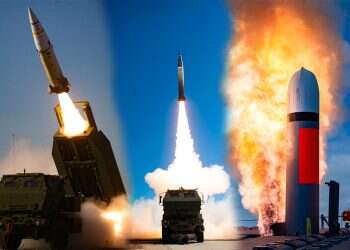
According to Reuters, the US used virtually all its ATACMS and PrSM missiles during the war with Iran, as well...

Antisemitic hate crimes surge in Mamdani's New York

Antisemitic hate crimes surge in Mamdani's New York

by Or Shaked

Police data show antisemitic incidents rose by more than 53% in July compared with last year, with at least 205...

Seoul declares emergency as record heat wave grips South Korea

Seoul declares emergency as record heat wave grips South Korea

by Neta Bar

Authorities in the South Korean capital deploy a fleet of 200 trucks to cool roads across the vast metropolis after...

Menu

Analysis 

Archaeology

Blogpost

Business & Finance

Culture

Exclusive

Explainer

Environment


Features

Health

In Brief

Jewish World

Judea and Samaria

Lifestyle

Cyber & Internet

Sports


Diplomacy 

Iran & The Gulf

Gaza Strip

Politics

Shopping

Terms of use

Privacy Policy

Submissions

Contact Us

About Us

The first issue of Israel Hayom appeared on July 30, 2007. Israel Hayom was founded on the belief that the Israeli public deserves better, more balanced and more accurate journalism. Journalism that speaks, not shouts. Journalism of a different kind. And free of charge.

All rights reserved to Israel Hayom

Hosted by sPD.co.il

  • Home
  • News
    • Israel at War
    • Israel
    • United States
    • Middle East
    • Sports
  • Opinions
  • Jewish World
    • Archaeology
    • Antisemitism
  • Lifestyle
    • Food
    • Travel
    • Fashion
    • Culture
  • Magazine
    • Feature
    • Analysis
    • Explainer
    • Environment & Wildlife
    • Health & Wellness
  • In Memoriam
  • Subscribe to Newsletter
  • Submit your opinion
  • Terms and conditions

All rights reserved to Israel Hayom

Hosted by sPD.co.il

Newsletter

[contact-form-7 id=”508379″ html_id=”isrh_form_Newsletter_en” title=”newsletter_subscribe”]

  • Home
  • News
    • Israel at War
    • Israel
    • United States
    • Middle East
    • Sports
  • Opinions
  • Jewish World
    • Archaeology
    • Antisemitism
  • Lifestyle
    • Food
    • Travel
    • Fashion
    • Culture
  • Magazine
    • Feature
    • Analysis
    • Explainer
    • Environment & Wildlife
    • Health & Wellness
  • In Memoriam
  • Subscribe to Newsletter
  • Submit your opinion
  • Terms and conditions

All rights reserved to Israel Hayom

Hosted by sPD.co.il