The coronavirus pandemic has drawn attention to humankind's carbon footprint. More than ever before we ask ourselves, how can we become more sustainable? Can we prevent pollution? How can we minimize waste? What about lowering emission levels? Will there be enough food for everyone in the future?
Follow Israel Hayom on Facebook and Twitter
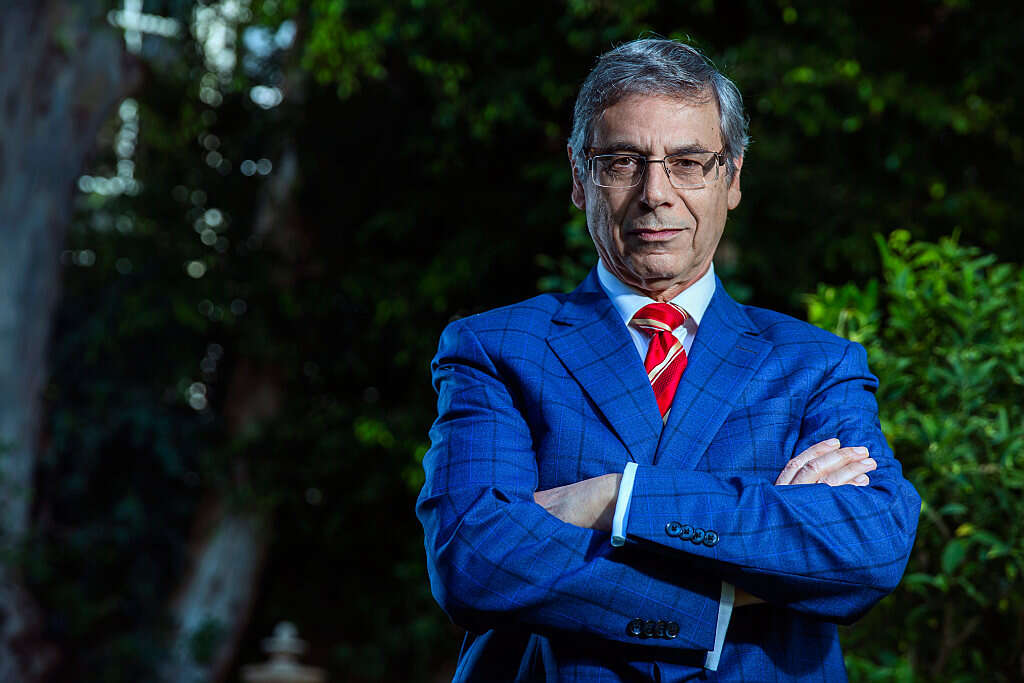
Danny Ayalon, a former ambassador and foreign policy adviser to three prime ministers-turned entrepreneur, believes that the answer to many of the world's problems lies in modern agriculture.
Having transitioned from politics to agriculture, he works with Future Crops, an Amsterdam-based company focused on vertical farming – the practice of growing crops in vertically stacked layers that often incorporates controlled-environment agriculture, which aims to optimize plant growth – and MeaTech, a company that creates lab-grown meat.
"Ever since the coronavirus came into our lives, we realized that man is not in charge of the universe," Ayalon told Israel Hayom.
"Our control over the forces of nature, of Earth, of our future is more limited than we had thought. And when we are no longer in charge of the world, only three things guarantee our lives here: food, water, and energy security. Food, water, and energy are three resources that can be depleted and therefore literally cast a cloud on our world.
"Experts have come to a conclusion that one of the most important fields to focus on is agriculture, and indeed we are currently witnessing the most significant agricultural revolution ever since the first agricultural revolution that took place about 10,00 years ago."
Q: Back then, in the first agricultural revolution, there was a need for a lot of land.
"But today we have technology. The name of the game is to reach maximum output with minimum input in the smallest space possible. This is the holy grail of the new revolution. And that is how technology enters the picture. To grow fruits, vegetables and spices today requires lots of space. The technology we developed at Future Crops allows us to minimize the space, increase production and redefine the food supply chain."
Q: How exactly?
"We have a nine-story hangar in Amsterdam to grow crops like coriander, basil, dill, and parsley. It has LED lights, and each plant gets exactly the amount of light it needs. We are the plant psychologists, [we] listen to all its needs and do everything to make sure the plant grows in the most optimal way.

"If it lacks something, it immediately receives water. Everything is done without a human's touch. We use algorithms and big data in collaboration with world-class researchers from the Weizmann Institute. It is essentially the application of vertical farming, growing various crops in vertically stacked layers, in enclosed structures, on soil platforms.
"For example, if it takes a month to grow lettuce in an open field, in a vertical farm, it takes two weeks, half that time. There's also a significant reduction in water consumption, and no pesticides or sprays are used at all. Also, the produce is available in all seasons; it does not depend on the temperature. Whoever likes mangos and strawberries, for example, will be able to enjoy them all year round."
Q: So if produce is grown faster and within a smaller space, is it going to cost less?
"The prices might be a bit higher today because this technology and the various infrastructures require an economic return of the initial investment in them. With time, the process will become more efficient, and the investments will be repaid, so in the end, the prices that the consumer will need to pay will be lower than today.
"Let me give you a simple example. Do you know how much a kilogram [2.2 pounds] of basil costs in Europe today? €90 ($108). In Israel, the price is €20 ($24). In the [United Arab] Emirates, where almost everything connected to food is imported – the prices go accordingly as well. Once you have more innovative vertical farms, consumers will pay much less."
Q: Should we expect vertical farm skyscrapers to pop up all over?
"I'm not sure that we will need skyscrapers, as with time the facilities will become smaller. Imagine that in every supermarket there will be a vertical produce stand with all the vegetables and spices, and later also fruits which you pick on the spot, without the need to move the produce from place to place. That is why vertical farming is also called urban farming, meaning there is no need for fields; you can grow [produce] on the rooftop. No resource limits you."
Q: What about the taste?
"Ours is a fresher and tastier product. I ought to give credit to the Weizmann Institute here. The challenge for them wasn't the quality of the vitamins but the taste, and they managed to achieve a great taste. In the Netherlands, Future Crops already sells parsley, and it tastes outstanding."
Q: Regular parsley lasts for about two weeks in the fridge. What about Future Crops parsley?
"Our parsley has a two-month shelf life, and it does not oxidize within a week or two."
Q: If every country will be self-reliant in terms of agriculture, do you think it will affect relations between countries?
"Economies will become self-sufficient eventually, which will ensure security with far fewer conflicts. There is less and less water in the Middle East, which might someday lead to tensions. We hope technology will reduce the tensions between countries, and territory will be less critical. Our world faces crucial challenges. Food and water security have the potential to either divide or bring us together and ensure our long-term existence.
"By the way, in every developed Western country, like the United States, Australia, and also in Europe, issues of food security, climate, and greenhouse emissions are on the top of the political agenda. We are not talking about it [in Israel,] as security and foreign affairs take the central stage, but Israel does have a lot to offer here."
Q: Do we have the potential to become the Silicon Valley of advanced agriculture?
"Israel takes tremendous pride in its actions that help save the world. Will we become the Silicon Valley of agriculture? There is no doubt about it. We can already see foreign investors who come here to look for opportunities, including my business partner Lior Maimon, co-founder and CEO of Silver Road Capital, and Steven Levin, one of the leaders of the US food industry. Silver Road Capital is a holdings and financial advisory firm with a broad portfolio of high-tech companies, as well as agricultural and food technologies, and represents international companies and funds in investments in Israel and the world.
"Future Crops's goal is to raise 35 million shekels on the Israeli stock exchange to invest in enlarging the existing facilities and [set up] other production lines and facilities in Europe and other continents. We cooperate with the Albert Heijn supermarket chain [in the Netherlands] and a leading food chain in France."
Q: Vertical farming is estimated at $3 billion. Google and Amazon have invested hundreds of millions in the field as well. What is their goal?
"A simple answer would be profit. A longer answer is that they [large corporations] understand that food has the highest demand. People cannot live without food and water, and Google and Amazon understand that potential."
Q: US President Joe Biden took office with the largest team of climate experts ever. That ought to give the field momentum.
"Green energy and vertical farming will get a considerable boost. Climate change and green energy are well-rooted in the Democratic Party's ideology.
"It is also possible that large companies entered the agriculture fields precisely because of the Biden administration; they are worried about their future. They are afraid of a certain dismantling, so focusing on secondary fields is part of a security scenario for them."
Q: Biden also wants to address greenhouse emissions, which are the result of the food production industry, mainly meat. Are Amazon and Google's food counterparts - McDonald's and Burger King - looking for meat substitutes?
"Firstly, cultured [lab-grown] meat does not require grazing land, cows do not need to be fed, and so much land can instead be turned into forests that support the environment. This is an optimistic industry that leaves us with a better world.
"As for the meat alternatives market, there are two major companies in the US that produce plant-based protein, Beyond Meat, and Impossible Foods.
"Impossible's burgers are already at Burger King, McDonald's has partnered up with Beyond Meat, and last November, it announced that it would create its own plant-based burger.
"The problem is that pea protein [used in plant-based burgers,] does not have all the amino acids that animal protein contains. Also, they need to add additives to supplement for taste and smell.
"At MeaTech, where I'm a director, we are on our way to producing animal meat, cultured meat, real stakes: we take a cow's own stem cell from which meat can be produced in almost unlimited quantities. We also use 3D digital printing technology. And we also created a thin layer of meat, carpaccio. Needless to say, no cow was harmed in the process."
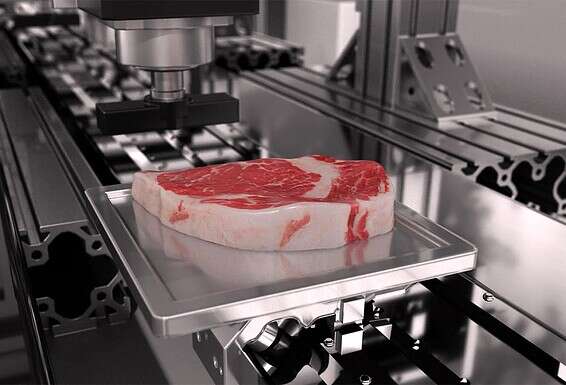
Q: Why do you use 3D printers?
"Because there is no need for a human being's involvement. It is relevant now during the coronavirus pandemic when the food supply chain is disrupted. With such printers, your production can continue without delays, whenever you want.
Also, it is theoretically possible to provide food for space flights. Astronauts who go out into space will not have to take food with them; rather, they will be able to produce it on the spot.
"People understand that crises like the coronavirus can disrupt the supply chain and are looking for alternatives. A 3D printer allows restaurants, supermarkets, and butcher shops to have meat without relying on the supply chain."
Q: The death rate from obesity is higher than the death rate from hunger. How will cultured meat affect these statistics?
"It is possible to create meat with much less fat and more protein in each portion and add various nutrients in the future to strengthen the immune system and prevent disease. This, of course, requires a lot of research and approvals. Just like there's talk about customized medicine, so it will be possible to produce food that suits a person's genetic structure and body in the most optimal way."
Q: Will the cost of this meat also be optimal?
"They will cost more in the beginning compared to regular meat because there are initial costs that have to be repaid. When it becomes a mass production, prices will drop over time."
Q: With your vast experience in politics, what do you think of Israeli politics these days? Do you ever consider a political comeback?
"No election campaign goes by without someone making me an offer [to return to politics] but I'm not interested. Unfortunately, the Israeli government, and all governments in the Western world, have not been able to run their countries properly in recent years.
"For example, more of the government's national taks are transitioning to the private market or the third sector. We see that associations [are the ones] who take care of the needy, establish settlements in the Negev and in the Galilee, bring immigrants to Israel and provide Israelis with information. All these things should be done by the government.
"The Israeli government lacks vision, ideologies, every matter is personal and is charged with negative sentiments. If I do return one day, it will only happen after we change the government system which will take its power from small [political] parties.
"In my opinion, we need to transition to a regional choice, by district. This will result in higher quality politicians. How so? Because whoever wants to be elected will need to run and convince the people who live in his area and district, and they are the ones who know his activities best. Also, closed primaries should be avoided because they make all kinds of deals possible. That needs to change."
Subscribe to Israel Hayom's daily newsletter and never miss our top stories!