Israel Hayom is a media organization founded on the belief that the Israeli public deserves better journalism—more balanced, more accurate, and more reliable. Journalism that speaks rather than shouts. Journalism that is trustworthy, objective, and matter-of-fact. A different kind of journalism, offered free of charge. The first print edition was published on July 30, 2007, and in 2010 Israel Hayom became the Israeli newspaper with the highest weekday readership. The newspaper’s publisher is Dr. Miriam Adelson. Its Editor-in-Chief is Omar Lachmanovitch, and its founding editor is Amos Regev. Israel Hayom’s Hebrew and English websites, as well as its Android and iOS applications, provide around-the-clock news coverage, exclusive content, breaking news and updates, analysis and commentary, video, podcasts, and live broadcasts. The digital platforms of Israel Hayom include news and opinion channels covering culture and entertainment, lifestyle, technology, sports, business and consumer affairs, health, military affairs, food, Judaism, tourism, and automobiles. In 2021, a new Hebrew-language website and mobile application were launched to provide users with a fast, up-to-date, secure, and convenient experience. The content of the newspaper’s print edition is also available online through a daily digital edition and can be received via newsletter. “The Israel Hayom Clique,” the publication’s exclusive benefits club, offers website users discounts and special promotions on products and services. Israel Hayom welcomes feedback, criticism, and suggestions for improvement from its readers. You can contact the organization by email at hayom@israelhayom.co.il

Wednesday Jul 15, 2026
NEWSLETTER
www.israelhayom.com
  • Home
  • News
    • Israel
    • Israel at War
    • Middle East
    • United States
  • Opinions
  • Jewish World
    • Archaeology
    • Antisemitism
  • Lifestyle
    • Food
    • Travel
    • Fashion
    • Culture
  • Magazine
    • Feature
    • Analysis
    • Explainer
  • In Memoriam
www.israelhayom.com
  • Home
  • News
    • Israel
    • Israel at War
    • Middle East
    • United States
  • Opinions
  • Jewish World
    • Archaeology
    • Antisemitism
  • Lifestyle
    • Food
    • Travel
    • Fashion
    • Culture
  • Magazine
    • Feature
    • Analysis
    • Explainer
  • In Memoriam
www.israelhayom.com
Home Science & Technology

Technion develops eco-friendly method of harvesting energy from seaweed

Idea comes to doctoral student Yaniv Shlosberg while swimming at the beach. "It is a wonder where scientific ideas come from," he says.

by  ILH Staff
Published on  12-31-2021 13:33
Last modified: 01-02-2022 11:03
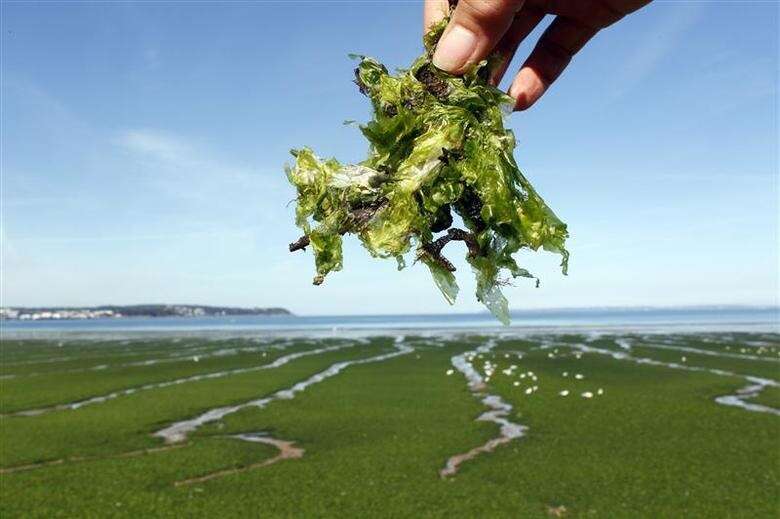
Technion develops eco-friendly method of harvesting energy from seaweedReuters/Mal Langsdon

Seaweed is grown for a variety of industries, including food, cosmetics and pharmaceuticals. | File photo: Reuters/Mal Langsdon

Share on FacebookShare on Twitter

Researchers from the Technion – Israel Institute of Technology have developed a method that harvests an electrical current directly from seaweed in an environmentally friendly and efficient fashion. 

Follow Israel Hayom on Facebook and Twitter

The research, the idea for which came to doctoral student Yaniv Shlosberg while swimming at the beach, has been developed by a consortium of researchers from three Technion faculties and has been presented in the peer-reviewed Biosensors and Bioelectronics scientific journal. 

The research was led by Professor Noam Adir and Shlosberg in cooperation with researchers from the Israel Oceanographic and Limnological Research Institute and others. 

The use of fossil fuels results in the emission of greenhouse gases and other polluting compounds, which have been found to be connected to climate change. Pollution due to the use of these fuels starts from their extraction and transportation around the globe, to be used in centralized power plants and refineries.

These problematic issues are the driving force behind research into methods of alternative, clean and renewable energy sources. One of these is the use of living organisms as the source of electrical currents in microbial fuel cells. Certain bacteria have the ability to transfer electrons to electrochemical cells to produce electrical current. The bacteria need to be constantly fed and some of them are pathogenic. A similar technology is Bio-PhotoElectrochemical Cells, the source of electrons can be from photosynthetic bacteria, especially cyanobacteria. 

Many different species of seaweed grow naturally on the Mediterranean shore of Israel, especially Ulva which is grown in large quantities at IOLR for research purposes.

After developing new methods to connect Ulva and BPEC, currents a thousand times greater than those from cyanobacteria were obtained. Adir noted that these increased currents are due to the high rate of seaweed photosynthesis, and the ability to use the seaweed in their natural seawater as the BPEC electrolyte – the solution that promotes electron transfer in the BPEC. In addition, the seaweed provides currents in the dark, about 50% of that obtained in light. The source of the dark current is from respiration – where sugars made by the photosynthetic process are used as an internal source of nutrients. In a fashion similar to the cyanobacterial BOEC, no additional chemicals are needed to obtain the current. The Ulva produce mediating electron transfer molecules that are secreted from the cells and transfer the electrons to the BPEC electrode.

Fossil fuel-based energy-producing technologies are known as "carbon positive." This means that the process releases carbon into the atmosphere during fuel combustion. Solar cell technologies are known as "carbon-neutral", no carbon is released into the atmosphere. However, the production of solar cells and their transportation to the site of use is many times more "carbon positive". The new technology presented here is "carbon negative". The seaweed absorbs carbon from the atmosphere during the day while growing and releasing oxygen. During the harvesting of the currents during the day, no carbon is released. During the night, the seaweed releases the normal amount of carbon from respiration. In addition, seaweed, especially Ulva, is grown for a variety of industries: food (Ulva is also considered a superfood), cosmetics, and pharmaceuticals.

"It is a wonder where scientific ideas come from," Shlosberg said. "I had the idea one day when I went to the beach. At the time I was studying the cyanobacterial BPEC when I noticed seaweed on a rock that looked like electrical cords. I said to myself – since they also perform photosynthesis, maybe we can use them to produce currents. From this idea came the collaboration from all the Technion and IOLR researchers which led to our most recent paper. I believe that our idea can lead to a real revolution in clean energy production."

Technion and IOLR researchers built a prototype device that collects the current directly in the Ulva growth vat. 

Professor Adir added: "By presenting our prototype device, we show that significant currents can be harvested from the seaweed. We believe that the technology can be further improved leading to future green energy technologies."

Subscribe to Israel Hayom's daily newsletter and never miss our top stories!

Tags: Technion

Related Posts

God is out: How ChatGPT is erasing religion

God is out: How ChatGPT is erasing religion

by Shachar Shapiro

Of 12,000 studies on bias in artificial intelligence, only 0.2% examined religion. Unprecedented academic study exposes AI’s “omissive bias”. Yeshiva...

Operational expertise becomes key advantage for vertical AI foundersGetty Images

Operational expertise becomes key advantage for vertical AI founders

by ILH Staff

As AI makes software easier to build, GC Ventures is betting that the next great tech companies will be founded...

Antarctic bacteria may hold key to new melanoma treatment

Antarctic bacteria may hold key to new melanoma treatment

by Assaf Golan

Scientists diving in the icy waters of Antarctica were stunned to discover a unique bacterium that, over millions of years,...

Menu

Analysis 

Archaeology

Blogpost

Business & Finance

Culture

Exclusive

Explainer

Environment


Features

Health

In Brief

Jewish World

Judea and Samaria

Lifestyle

Cyber & Internet

Sports


Diplomacy 

Iran & The Gulf

Gaza Strip

Politics

Shopping

Terms of use

Privacy Policy

Submissions

Contact Us

About Us

The first issue of Israel Hayom appeared on July 30, 2007. Israel Hayom was founded on the belief that the Israeli public deserves better, more balanced and more accurate journalism. Journalism that speaks, not shouts. Journalism of a different kind. And free of charge.

All rights reserved to Israel Hayom

Hosted by sPD.co.il

  • Home
  • News
    • Israel at War
    • Israel
    • United States
    • Middle East
    • Sports
  • Opinions
  • Jewish World
    • Archaeology
    • Antisemitism
  • Lifestyle
    • Food
    • Travel
    • Fashion
    • Culture
  • Magazine
    • Feature
    • Analysis
    • Explainer
    • Environment & Wildlife
    • Health & Wellness
  • In Memoriam
  • Subscribe to Newsletter
  • Submit your opinion
  • Terms and conditions

All rights reserved to Israel Hayom

Hosted by sPD.co.il

Newsletter

[contact-form-7 id=”508379″ html_id=”isrh_form_Newsletter_en” title=”newsletter_subscribe”]

  • Home
  • News
    • Israel at War
    • Israel
    • United States
    • Middle East
    • Sports
  • Opinions
  • Jewish World
    • Archaeology
    • Antisemitism
  • Lifestyle
    • Food
    • Travel
    • Fashion
    • Culture
  • Magazine
    • Feature
    • Analysis
    • Explainer
    • Environment & Wildlife
    • Health & Wellness
  • In Memoriam
  • Subscribe to Newsletter
  • Submit your opinion
  • Terms and conditions

All rights reserved to Israel Hayom

Hosted by sPD.co.il