

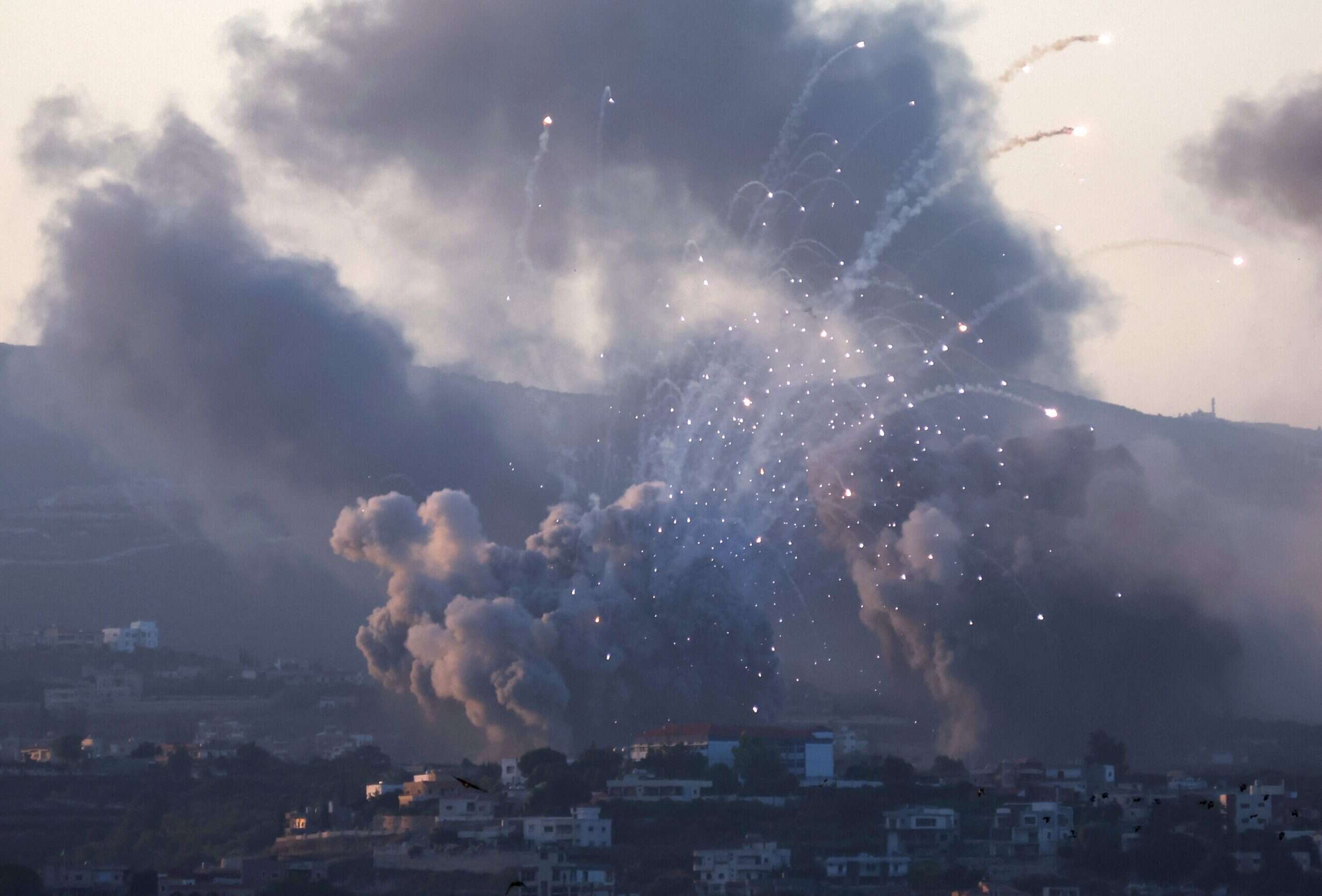
As we mark one year since the Iron Swords War, during which the IDF focused on fighting in the Gaza Strip, it's evident that decision-makers are abandoning the containment policy in the north.
This phase, which began with a widespread communication disruption attack, continued with intense and unprecedented airstrikes that eliminated most of Hezbollah's top leadership. In recent days, the military has begun a limited ground incursion, which has unfortunately already exacted a heavy toll. Israel's experience in the Second Lebanon War provides lessons that should be applied to the current conflict. Here is a partial list:
Unattainable goals
The war objectives defined in the government meeting on July 12, 2006, were: returning the kidnapped soldiers; achieving a complete ceasefire; deploying the Lebanese army throughout southern Lebanon; and removing Hezbollah from the area. These goals were set for the sake of internal legitimacy, even though it was clear they were not feasible given the limited patterns of action taken.

The gap between the expectations created among the public and the results on the ground is the main reason why the war is etched in collective memory as a failure.
Excessive fear of casualties
Until almost the end of the war, decision-makers refrained from executing a broad ground maneuver, despite it being clear that short-range rocket fire could not be reduced by air power alone and through limited raids. Not only did the raids fail to stop rocket fire, but this pattern of action also resulted in avoiding the opening and securing of logistical routes, creating significant supply difficulties for the fighters.
Furthermore, following the first casualties, restrictions were imposed on the forces that did not fit the reality, such as instructions to avoid fighting during the day, prohibitions on entering nature reserves, the need to receive individual approval for each border crossing, and more. Finally, although the fighting at the field levels generally excelled in professionalism and bravery, the message passed to the fighters to avoid unnecessary risks even at the cost of not completing the mission trickled down from top to bottom and impaired the value of adherence to the objective.
Over-emphasis on the cognitive dimension
During the war, several controversial actions were taken, which were sharply criticized for risking fighters to achieve a "victory image." Such were the battles in Bint Jbeil, during which ground forces were ordered to take control of the town, which did not constitute a strategic target but rather a location for Nasrallah's "Spider Web" speech.
The desire for a cognitive achievement led the IDF into Bint Jbeil no less than five times and exacted a heavy price, perceived as unjustified and affecting the motivation to fight.
Excessive media exposure
The media policy adopted by the IDF led to unprecedented exposure of the IDF, causing severe intelligence damage and aiding enemy intelligence services. Information exposure was done, among other things, in briefings given by senior military officials on air, in interviews initiated by the media with soldiers and commanders, and during commentaries in television studios.
The gap between the expectations created among the public and the results on the ground is the main reason why the war is etched in collective memory as a failure.
Duration of the war
Even in formulating the objectives, there was disregard for one of the basic foundations of Israeli security doctrine: setting timelines for an initiated war that would last for a short and defined period. Contrary to the decision throughout most of the war to adopt a pattern of limited-scope raids, there was a constant effort to expand the time window of military activity, while there was no depreciation in the scope of fire to the home front until the last day of the war.
Much of the above stemmed from a mistaken assessment of Israeli society's resilience. Back to 2024, even after a year of war and despite a deep crisis of trust between the people and their leaders following Oct. 7, most of the public is convinced of the war's righteousness and gives decision-makers generous credit for action. However, this does not mean that it grants credit for repeating past mistakes.


