Israel Hayom is a media organization founded on the belief that the Israeli public deserves better journalism—more balanced, more accurate, and more reliable. Journalism that speaks rather than shouts. Journalism that is trustworthy, objective, and matter-of-fact. A different kind of journalism, offered free of charge. The first print edition was published on July 30, 2007, and in 2010 Israel Hayom became the Israeli newspaper with the highest weekday readership. The newspaper’s publisher is Dr. Miriam Adelson. Its Editor-in-Chief is Omar Lachmanovitch, and its founding editor is Amos Regev. Israel Hayom’s Hebrew and English websites, as well as its Android and iOS applications, provide around-the-clock news coverage, exclusive content, breaking news and updates, analysis and commentary, video, podcasts, and live broadcasts. The digital platforms of Israel Hayom include news and opinion channels covering culture and entertainment, lifestyle, technology, sports, business and consumer affairs, health, military affairs, food, Judaism, tourism, and automobiles. In 2021, a new Hebrew-language website and mobile application were launched to provide users with a fast, up-to-date, secure, and convenient experience. The content of the newspaper’s print edition is also available online through a daily digital edition and can be received via newsletter. “The Israel Hayom Clique,” the publication’s exclusive benefits club, offers website users discounts and special promotions on products and services. Israel Hayom welcomes feedback, criticism, and suggestions for improvement from its readers. You can contact the organization by email at hayom@israelhayom.co.il

Thursday Jul 23, 2026
NEWSLETTER
www.israelhayom.com
  • Home
  • News
    • Israel
    • Israel at War
    • Middle East
    • United States
  • Opinions
  • Jewish World
    • Archaeology
    • Antisemitism
  • Lifestyle
    • Food
    • Travel
    • Fashion
    • Culture
  • Magazine
    • Feature
    • Analysis
    • Explainer
  • In Memoriam
www.israelhayom.com
  • Home
  • News
    • Israel
    • Israel at War
    • Middle East
    • United States
  • Opinions
  • Jewish World
    • Archaeology
    • Antisemitism
  • Lifestyle
    • Food
    • Travel
    • Fashion
    • Culture
  • Magazine
    • Feature
    • Analysis
    • Explainer
  • In Memoriam
www.israelhayom.com
Home Analysis

Lessons from the 2006 Lebanon War: Will Israel apply them?

A year after Oct. 7, most of the public is still convinced of the war's righteousness and gives decision-makers generous credit for action.

by  Pnina Shuker
Published on  10-06-2024 14:30
Last modified: 11-28-2024 09:58
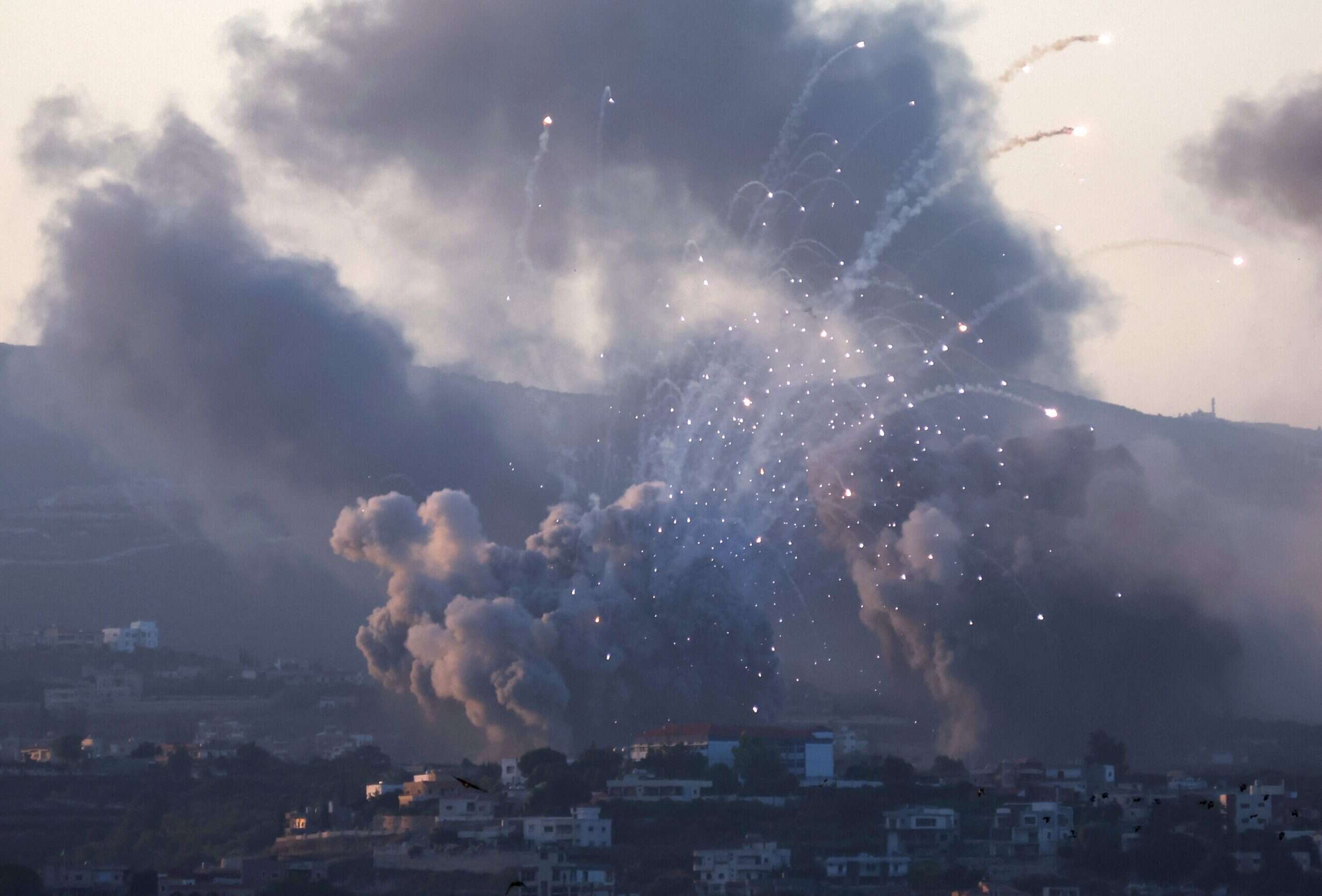
IDF launches preemptive airstrikes in southern Lebanon after attempted cruise missile launchReuters/Aziz Taher

Smoke billows over southern Lebanon following Israeli strikes, Sept. 23, 2024 (Reuters/Aziz Taher) | Photo: Reuters/Aziz Taher

Share on FacebookShare on Twitter

As we mark one year since the Iron Swords War, during which the IDF focused on fighting in the Gaza Strip, it's evident that decision-makers are abandoning the containment policy in the north.

This phase, which began with a widespread communication disruption attack, continued with intense and unprecedented airstrikes that eliminated most of Hezbollah's top leadership. In recent days, the military has begun a limited ground incursion, which has unfortunately already exacted a heavy toll. Israel's experience in the Second Lebanon War provides lessons that should be applied to the current conflict. Here is a partial list:

Unattainable goals

The war objectives defined in the government meeting on July 12, 2006, were: returning the kidnapped soldiers; achieving a complete ceasefire; deploying the Lebanese army throughout southern Lebanon; and removing Hezbollah from the area. These goals were set for the sake of internal legitimacy, even though it was clear they were not feasible given the limited patterns of action taken.

Israeli soldiers react as they stand in the shock wave as an artillery piece fires into southern Lebanon from a position near Kiryat Shmona, northern Israel, July 14, 2006 (AP/Kevin Frayer) AP/Kevin Frayer

The gap between the expectations created among the public and the results on the ground is the main reason why the war is etched in collective memory as a failure.

Excessive fear of casualties

Until almost the end of the war, decision-makers refrained from executing a broad ground maneuver, despite it being clear that short-range rocket fire could not be reduced by air power alone and through limited raids. Not only did the raids fail to stop rocket fire, but this pattern of action also resulted in avoiding the opening and securing of logistical routes, creating significant supply difficulties for the fighters.

Furthermore, following the first casualties, restrictions were imposed on the forces that did not fit the reality, such as instructions to avoid fighting during the day, prohibitions on entering nature reserves, the need to receive individual approval for each border crossing, and more. Finally, although the fighting at the field levels generally excelled in professionalism and bravery, the message passed to the fighters to avoid unnecessary risks even at the cost of not completing the mission trickled down from top to bottom and impaired the value of adherence to the objective.

Over-emphasis on the cognitive dimension

During the war, several controversial actions were taken, which were sharply criticized for risking fighters to achieve a "victory image." Such were the battles in Bint Jbeil, during which ground forces were ordered to take control of the town, which did not constitute a strategic target but rather a location for Nasrallah's "Spider Web" speech.

The desire for a cognitive achievement led the IDF into Bint Jbeil no less than five times and exacted a heavy price, perceived as unjustified and affecting the motivation to fight.

Excessive media exposure

The media policy adopted by the IDF led to unprecedented exposure of the IDF, causing severe intelligence damage and aiding enemy intelligence services. Information exposure was done, among other things, in briefings given by senior military officials on air, in interviews initiated by the media with soldiers and commanders, and during commentaries in television studios.

The gap between the expectations created among the public and the results on the ground is the main reason why the war is etched in collective memory as a failure.

Duration of the war

Even in formulating the objectives, there was disregard for one of the basic foundations of Israeli security doctrine: setting timelines for an initiated war that would last for a short and defined period. Contrary to the decision throughout most of the war to adopt a pattern of limited-scope raids, there was a constant effort to expand the time window of military activity, while there was no depreciation in the scope of fire to the home front until the last day of the war.

Much of the above stemmed from a mistaken assessment of Israeli society's resilience. Back to 2024, even after a year of war and despite a deep crisis of trust between the people and their leaders following Oct. 7, most of the public is convinced of the war's righteousness and gives decision-makers generous credit for action. However, this does not mean that it grants credit for repeating past mistakes.
Tags: Gaza WarHamasIsrael

Related Posts

Hamas signals openness to Gaza disarmamentEPA

Hamas is marketing the Hezbollah model, and not for the first time

by Shachar Kleiman

The terrorist organization is not truly prepared to give up power as long as it refuses to disarm. The proposed...

Something deep is changing on the Haredi street. The real conflagration lies ahead

Something deep is changing on the Haredi street. The real conflagration lies ahead

by Yaakov Hershkowitz

The draft crisis is pushing the integration of Haredi Israelis into broader Israeli society further away and radicalizing the discourse....

The Gulf states have moved on, leaving Israel behind

The Gulf states have moved on, leaving Israel behind

by Yoel Guzansky

The signing of the memorandum of understanding between Washington and Tehran marks the beginning of a new regional order. While...

Menu

Analysis 

Archaeology

Blogpost

Business & Finance

Culture

Exclusive

Explainer

Environment


Features

Health

In Brief

Jewish World

Judea and Samaria

Lifestyle

Cyber & Internet

Sports


Diplomacy 

Iran & The Gulf

Gaza Strip

Politics

Shopping

Terms of use

Privacy Policy

Submissions

Contact Us

About Us

The first issue of Israel Hayom appeared on July 30, 2007. Israel Hayom was founded on the belief that the Israeli public deserves better, more balanced and more accurate journalism. Journalism that speaks, not shouts. Journalism of a different kind. And free of charge.

All rights reserved to Israel Hayom

Hosted by sPD.co.il

  • Home
  • News
    • Israel at War
    • Israel
    • United States
    • Middle East
    • Sports
  • Opinions
  • Jewish World
    • Archaeology
    • Antisemitism
  • Lifestyle
    • Food
    • Travel
    • Fashion
    • Culture
  • Magazine
    • Feature
    • Analysis
    • Explainer
    • Environment & Wildlife
    • Health & Wellness
  • In Memoriam
  • Subscribe to Newsletter
  • Submit your opinion
  • Terms and conditions

All rights reserved to Israel Hayom

Hosted by sPD.co.il

Newsletter

[contact-form-7 id=”508379″ html_id=”isrh_form_Newsletter_en” title=”newsletter_subscribe”]

  • Home
  • News
    • Israel at War
    • Israel
    • United States
    • Middle East
    • Sports
  • Opinions
  • Jewish World
    • Archaeology
    • Antisemitism
  • Lifestyle
    • Food
    • Travel
    • Fashion
    • Culture
  • Magazine
    • Feature
    • Analysis
    • Explainer
    • Environment & Wildlife
    • Health & Wellness
  • In Memoriam
  • Subscribe to Newsletter
  • Submit your opinion
  • Terms and conditions

All rights reserved to Israel Hayom

Hosted by sPD.co.il