"Of all the officers who were awake that cursed night, Aryeh Amidror was in the best position to understand what was happening on the other side of the fence."
That is according to K., a former intelligence official who personally knows Lt. Col. Aryeh Amidror, the Gaza Division's intelligence officer on Oct. 7, whose name was cleared for publication Thursday.
"But what characterizes Aryeh, perhaps more than anything else, is his ability to adjust himself to the tune his commanders are playing. Maybe because he came from an elite family and grew up in the prestigious Havatzalot excellence program, he knew exactly how to tell people what they wanted to hear."
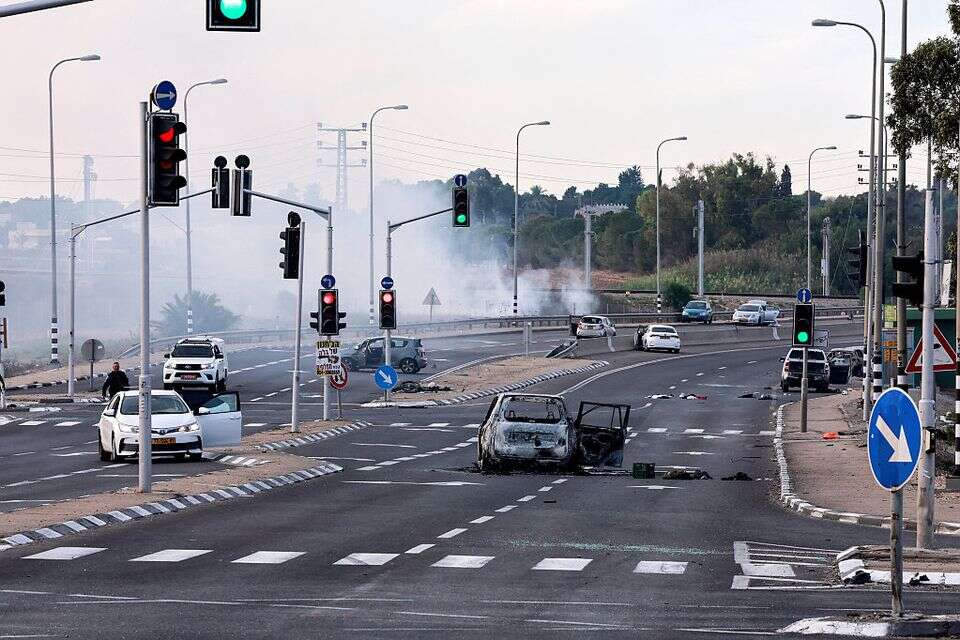
Indeed, on the night of Oct. 7, Amidror was among the calmest people in the room, according to testimony obtained by Israel Hayom. Consistent with the political echelon's approach, which had also filtered down to senior officials in the Israel Defense Forces and the Shin Bet security agency and placed a premium on maintaining quiet along the Gaza border, Amidror was one of the dominant voices urging against any dramatic action.
At around 5 a.m., for example, Southern Command chief Maj. Gen. Yaron Finkelman spoke with Amidror and Gaza Division commander Brig. Gen. Avi Rosenfeld and asked them to bolster readiness on the ground following information that SIM cards used by Hamas' elite Nukhba forces had been activated. Amidror argued there was no reason for alarm.
"Amidror is really insistent about it," said a source familiar with the details of the conversation. "He and Rosenfeld say they are completely calm."
A family connection
Amidror is the son of Maj. Gen. (res.) Yaakov Amidror, who had a long career in the IDF Military Intelligence Directorate, including as head of its Research Division, and later served as national security adviser and head of the National Security Council. The younger Amidror followed in his father's footsteps, joining Havatzalot, the IDF's prestigious flagship training program for intelligence officers.
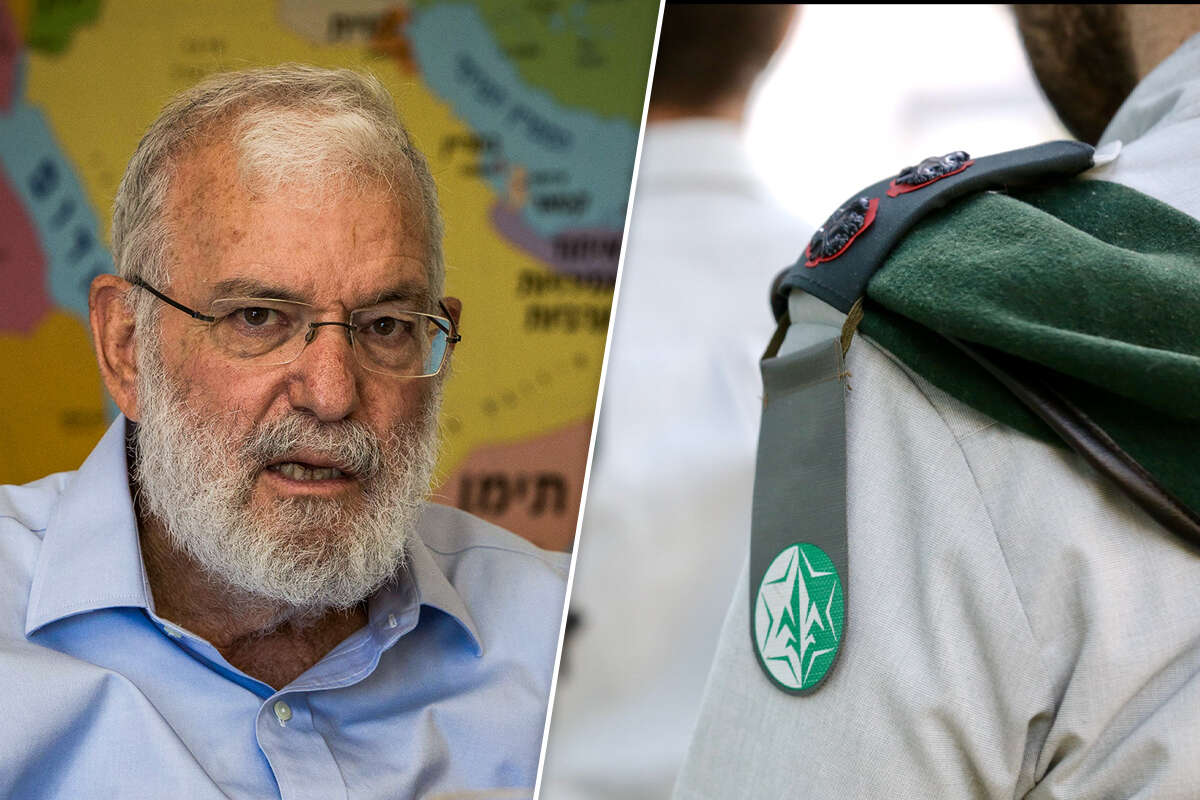
He began his career in the Research Division before moving into field intelligence. More than a decade ago, he was already serving in an intelligence position in the Gaza Division, including during Operation Protective Edge in 2014. Amidror, who throughout his career was regarded as an outstanding and brilliant officer, later became the intelligence officer of the Samaria Brigade. In the spring of 2023, he took over as the Gaza Division intelligence officer.
"On paper," said a veteran intelligence officer who knows Amidror well, "he followed the perfect career path. He had been both a staff officer and a field officer, and he already knew Gaza from previous positions."
But alongside the professional praise he received from his commanders and the knowledge and experience he accumulated over the years, Amidror was repeatedly criticized by those serving under him. Several describe him as arrogant and conceited, someone who had difficulty accepting views that contradicted his own, a potentially critical vulnerability in the intelligence profession.
"Aryeh is a problematic figure. Very much so," said an intelligence officer who served under him in the division.
Failure to interpret 'Jericho Wall'
Amidror's attitude toward dissenting opinions was also reflected in the handling of "Jericho Wall."
In 2018, Military Intelligence obtained documents from inside Hamas' most closely guarded secrets that pointed to the terrorist organization's plans for a large-scale raid. The documents were interpreted, however, as copies of a plan Hamas had no intention of implementing in the foreseeable future.
When Hamas accelerated work on the plan in May 2022, Military Intelligence obtained the operational order for what Hamas called "Al-Aqsa Flood." Those documents were analyzed by the Gaza Division's intelligence branch during the tenure of Amidror's predecessor, Y.
Although the plan was in the division intelligence branch's possession, it "was not translated into a warning model and did not generate skeptical discussion," according to the Military Intelligence investigation.
When Amidror took over, he, like his predecessor, did not create an updated warning model for the plan. Tensions would later emerge between the two, with each seeking to place responsibility for that failure on the other.
The needle moved too late
The significant shift in the approach to Hamas' plans came only in the weeks before October 2023, when Military Intelligence decided, for reasons that remain unclear, to resume monitoring Hamas' tactical radio network, a practice that had been abandoned for an extended period.
That produced more detailed intelligence about Hamas' training for a raid, which in turn led several analysts at Unit 8200's Yarkon base, including NCO V., to develop a different assessment of the invasion plan. They argued that a large-scale raid into Israel was no longer a distant aspiration, but an operational plan.
When V. emailed Amidror with her conclusions, he replied that there was no reason to get excited about Hamas' "showboating." Amidror also did not relay the intelligence to senior officials in Military Intelligence and Unit 8200.
It should be noted, however, that following V.'s emails and the conclusions reached by her colleagues, the Gaza Division's intelligence branch did begin drawing up a work plan and research process aimed at reassessing its assumptions about Hamas. Tragically, those steps were not implemented before Oct. 7. "The prevailing approach toward Hamas within Military Intelligence was not eroded," the investigation concluded.
One of the central claims against Amidror, beyond his overly relaxed approach toward "Jericho Wall," was that as the Gaza Division intelligence officer he had concentrated in his hands most of the intelligence concerning Hamas' offensive intentions. In addition to the fact that the border surveillance soldiers reported directly to the division's intelligence branch, and that the division had other intelligence capabilities at its disposal, Amidror also had access to some of the most highly classified intelligence obtained from deep inside Hamas' secrets.
"Precisely because of the process of strengthening the regional divisions' intelligence capabilities, which began after the Second Lebanon War in 2006 amid criticism that intelligence had remained boxed up inside Military Intelligence instead of reaching the field, the division knew more than anyone," said a former senior IDF officer. "But the division simply did not share the information it possessed with those above it, not even during the night of Oct. 7. The division's intelligence personnel thought they knew best."
"The division is the optimal place to take intelligence from the field and use it to break down the strategic intelligence conception," another former intelligence officer said. "It is exposed to most of the material, certainly when it comes to concrete warnings, and it also knows better than anyone the vulnerabilities of our forces on the ground. The division is the perfect integrator, and the division intelligence officer is in the position to sound the alarm."
Yet despite having all the information about Hamas' plans and training, the division made no preparations for the possibility of a large-scale Hamas invasion, nor did it sound the alarm during the night.
Why, then, was Amidror so calm during the critical hours of Oct. 7? One argument made by those around him is that although the division possessed a great deal of intelligence, it remained dependent on information collected and analyzed by the Military Intelligence Research Division.
From an intelligence standpoint, for example, the Gaza Division was responsible for the territory close to the line of contact, not for the depths of the Gaza Strip or Hamas' rocket arrays.
"When you have a raid on this scale, elements are involved that do not fall within the division's intelligence responsibility," explained a senior division official on Oct. 7. For example, Hamas brigade commanders, its military and political leadership, indirect fire and so on. Those were not under Amidror."
The tune commanders wanted to hear
Another former senior Southern Command officer said, "To carry out an event on the scale of Oct. 7, you have to activate every Hamas system. The only person with the full picture is the head of the Research Division, not the division."
There is another explanation, however, which goes back to the issue raised at the outset: Amidror's ability to adapt himself to the tune his commanders wanted to hear. During the lengthy period leading up to Oct. 7, the political echelon repeatedly rejected proposals from Southern Command and the Shin Bet to initiate offensive action against the Gaza Strip.

Even when Hamas initiated attacks on Israeli territory, instructions from the senior command urged Gaza Division personnel not to respond. Even when warnings were received of an imminent anti-tank missile or sniper attack, orders generally instructed division personnel to minimize their exposure along the border as much as possible, in an effort to prevent casualties and avoid an incident that could escalate into another round of fighting, until the warning had passed. The division even coined its own expression for the situation: "being on the grill."
"They kept asking us for quiet all the time, and then they blame us when the shit hits the fan," a former senior Southern Command officer said.