Friday Dec 5, 2025
NEWSLETTER
www.israelhayom.com
  • Home
  • News
    • Israel
    • Israel at War
    • Middle East
    • United States
  • Opinions
  • Jewish World
    • Archaeology
    • Antisemitism
  • Lifestyle
    • Food
    • Travel
    • Fashion
    • Culture
  • Magazine
    • Feature
    • Analysis
    • Explainer
  • In Memoriam
www.israelhayom.com
  • Home
  • News
    • Israel
    • Israel at War
    • Middle East
    • United States
  • Opinions
  • Jewish World
    • Archaeology
    • Antisemitism
  • Lifestyle
    • Food
    • Travel
    • Fashion
    • Culture
  • Magazine
    • Feature
    • Analysis
    • Explainer
  • In Memoriam
www.israelhayom.com
Home News Israel at War Lebanon War

Dramatic testimony suggests UN peacekeepers bribed by Hezbollah

Captured terrorists confirm they paid UNIFIL to use their outposts against Israel and even using their surveillance cameras. This is in violation of its mandate.

by  Lilach Shoval
Published on  10-21-2024 08:02
Last modified: 10-21-2024 10:40
UNIFIL's fallen SukkahAFP

A United Nations Interim Force In Lebanon (UNIFIL) armored vehicle drives on a road in the southern Lebanese area of Marjeyoun on October 17, 2024 | Photo: AFP

Share on FacebookShare on Twitter

Hezbollah operatives captured during recent Israel Defense Forces (IDF) ground operations in southern Lebanon have disclosed during interrogations that the organization paid off UNIFIL personnel to use their positions in the region, according to security sources who spoke to Israel Hayom.
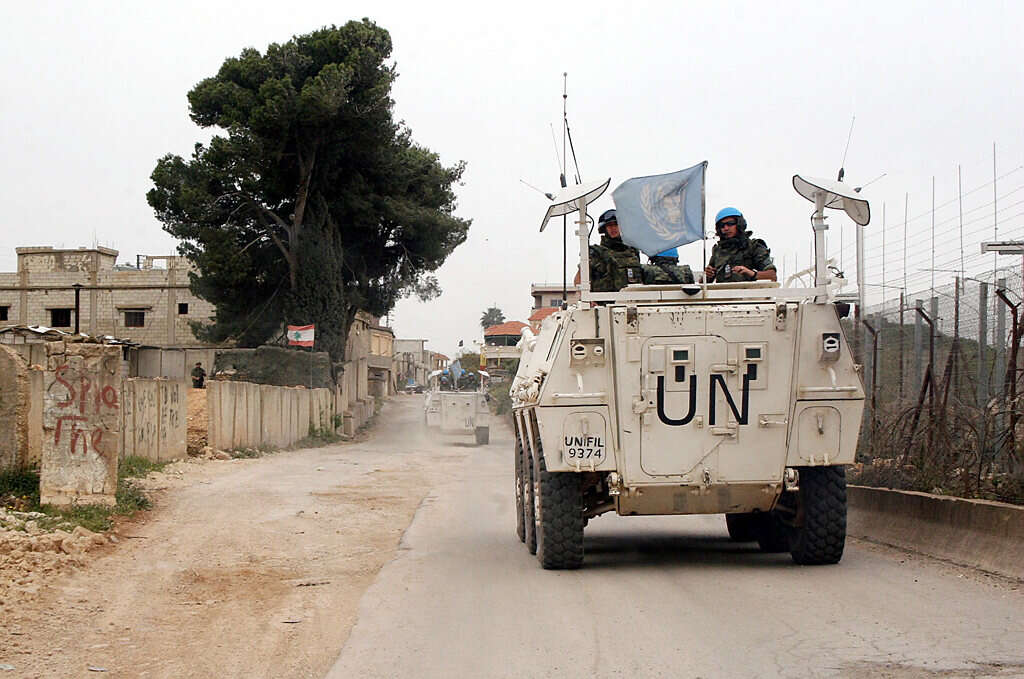
United Nations Interim Forces in Lebanon (UNIFIL) drive past a Lebanese Army position (L) at Fatima's Gate in the southern Lebanese village of Kfar Kila on the border with Israel on April 6, 2008 (AFP/Ali Dia) AFP/Ali Dia

These sources, privy to the details, revealed that Hezbollah also took control of UNIFIL cameras in compounds near the Israeli border and utilized them for their own purposes. In light of these revelations and UNIFIL's glaring failure to prevent Hezbollah's entrenchment along the border Israel plans to rely primarily on commitments from the Lebanese army in any future arrangement with Lebanon, rather than on UNIFIL, which has proven ineffective over the years and is now accused of frequently collaborating with Hezbollah operatives.

A force mired in failure

UNIFIL, a UN peacekeeping force, was deployed in southern Lebanon under a UN Security Council resolution following Operation Litani in 1978 and has since operated under various mandates. Initially lacking enforcement powers until the Second Lebanon War, its mandate was expanded in 2006 from peacekeeping to limited enforcement authority.

UN Resolution 1701, adopted at the war's conclusion, authorized UNIFIL soldiers to stop Hezbollah operatives from engaging in terrorist activities south of the Litani River. However, the UNIFIL force has failed spectacularly in its mission, with Israel claiming in some instances that it even facilitates Hezbollah's plans under its watch.

Even as the IDF recently entered Lebanon for ground operations near the border to dismantle Hezbollah's terror network, UNIFIL adamantly refused Israeli pleas to evacuate their positions and withdraw from the border area.

The organization insists on maintaining its presence in the line of fire, thereby endangering foreign soldiers from various countries serving in the force. UNIFIL's refusal to evacuate its personnel caught Israel off guard, prompting attempts through multiple channels to persuade the organization to retreat from the danger zone.

Israel suspects that UNIFIL's insistence on staying is partly an attempt to obscure its ongoing failure to prevent Hezbollah's arms buildup and blatant violations of Resolution 1701. Compounding the issue, UNIFIL has recently leveled accusations at the IDF, claiming that Merkava tanks forcibly entered one of the organization's village positions, destroying the gate.

The IDF explained that the incident occurred during heavy anti-tank missile fire on its forces, which wounded several soldiers. To evacuate the wounded, tanks had to reverse in an area where they couldn't advance due to the threat of fire.

Furthermore, the IDF reports that in recent months, Hezbollah has been launching missiles and rockets at Israel from sites adjacent to UNIFIL positions, with some projectiles landing close to their outposts.

Diplomatic fallout

The friction between the IDF and UNIFIL is drawing international condemnation, undermining the IDF's efforts to build international legitimacy for its operations in southern Lebanon and causing significant diplomatic damage with European countries.

Israel's UN ambassador, Danny Danon, recently stated, "Hezbollah terrorists use UNIFIL outposts as hiding places and set up ambushes nearby. The UN's insistence on keeping UNIFIL soldiers in the line of fire is incomprehensible."

Israeli sources indicate that the UN currently intends to maintain UNIFIL's presence in the sector even after the war ends. However, given the organization's abject failure, Israel plans to rely more heavily on the responsibilities it hopes the Lebanese army will assume, and less on the UN force that failed to enforce its mandate.

Tags: Gaza WarIsraelLebanonUNIFIL

Related Posts

Israel-Lebanon agreement may turn into strategic trap

In first ever civilian talks, Israel and Lebanon confront Hezbollah's grip

by Danny Zaken

Civilian representatives from Israel and Lebanon met for the first time in US-mediated discussions aimed at advancing economic cooperation. The...

Israel, Lebanon launch non-military economic talksAFP; AP Photo/Bilal Hussein; Gideon Markowicz;

Israel, Lebanon launch non-military economic talks

by ILH Staff

Netanyahu instructs envoy to meet Lebanese governmental-economic officials in rare move. This marks a first attempt to establish a foundation...

Trump sets disarmament deadline for HezbollahArab media

Trump sets disarmament deadline for Hezbollah

by Ariel Kahana

Diplomatic sources reveal the Trump administration has set a deadline for Lebanon to disarm Hezbollah, warning that failure to act...

Menu

Analysis 

Archaeology

Blogpost

Business & Finance

Culture

Exclusive

Explainer

Environment


Features

Health

In Brief

Jewish World

Judea and Samaria

Lifestyle

Cyber & Internet

Sports


Diplomacy 

Iran & The Gulf

Gaza Strip

Politics

Shopping

Terms of use

Privacy Policy

Submissions

Contact Us

About Us

The first issue of Israel Hayom appeared on July 30, 2007. Israel Hayom was founded on the belief that the Israeli public deserves better, more balanced and more accurate journalism. Journalism that speaks, not shouts. Journalism of a different kind. And free of charge.

All rights reserved to Israel Hayom

Hosted by sPD.co.il

  • Home
  • News
    • Israel at War
    • Israel
    • United States
    • Middle East
    • Sports
  • Opinions
  • Jewish World
    • Archaeology
    • Antisemitism
  • Lifestyle
    • Food
    • Travel
    • Fashion
    • Culture
  • Magazine
    • Feature
    • Analysis
    • Explainer
    • Environment & Wildlife
    • Health & Wellness
  • In Memoriam
  • Subscribe to Newsletter
  • Submit your opinion
  • Terms and conditions

All rights reserved to Israel Hayom

Hosted by sPD.co.il

Newsletter

[contact-form-7 id=”508379″ html_id=”isrh_form_Newsletter_en” title=”newsletter_subscribe”]

  • Home
  • News
    • Israel at War
    • Israel
    • United States
    • Middle East
    • Sports
  • Opinions
  • Jewish World
    • Archaeology
    • Antisemitism
  • Lifestyle
    • Food
    • Travel
    • Fashion
    • Culture
  • Magazine
    • Feature
    • Analysis
    • Explainer
    • Environment & Wildlife
    • Health & Wellness
  • In Memoriam
  • Subscribe to Newsletter
  • Submit your opinion
  • Terms and conditions

All rights reserved to Israel Hayom

Hosted by sPD.co.il