Wednesday Nov 12, 2025
NEWSLETTER
www.israelhayom.com
  • Home
  • News
    • Israel
    • Israel at War
    • Middle East
    • United States
  • Opinions
  • Jewish World
    • Archaeology
    • Antisemitism
  • Lifestyle
    • Food
    • Travel
    • Fashion
    • Culture
  • Magazine
    • Feature
    • Analysis
    • Explainer
  • In Memoriam
www.israelhayom.com
  • Home
  • News
    • Israel
    • Israel at War
    • Middle East
    • United States
  • Opinions
  • Jewish World
    • Archaeology
    • Antisemitism
  • Lifestyle
    • Food
    • Travel
    • Fashion
    • Culture
  • Magazine
    • Feature
    • Analysis
    • Explainer
  • In Memoriam
www.israelhayom.com
Home Commentary

Syria: A ticking time bomb for global security

As President Bashar al-Assad's grip weakens, the battle for Syria intensifies, threatening regional stability and escalating global risks.

by  Zina Rakhamilova
Published on  12-05-2024 10:11
Last modified: 12-05-2024 10:19
Syria: A ticking time bomb for global securityOmar Haj Kadour/AFP

Anti-government fighters brandish their guns as they ride a vehicle in Syria's northern city of Aleppo, Nov. 30, 2024 | Photo: Omar Haj Kadour/AFP

Share on FacebookShare on Twitter

Syria and its President Bashar al-Assad have returned to global headlines in recent weeks, reigniting attention on a conflict that is as intricate as it is devastating. Calling it "complicated" barely scratches the surface, given the multitude of groups and nations involved. Yet, beneath the complexity lies a stark reality: Syria is a ticking time bomb for global security.

Most of us remember the harrowing images from Syria in 2011 when the civil war began. What started as peaceful protests against Assad's authoritarian regime during the Arab Spring rapidly escalated into a brutal war. The Syrian conflict has since evolved into a multidimensional catastrophe involving the Assad government, rebel groups, Kurdish forces, and extremist organizations like ISIS. It has also become a proxy war, with Russia and Iran backing Assad while the US, Turkey, and others support opposition factions. The toll has been staggering: massive displacement, over half a million deaths, and a severe humanitarian crisis.
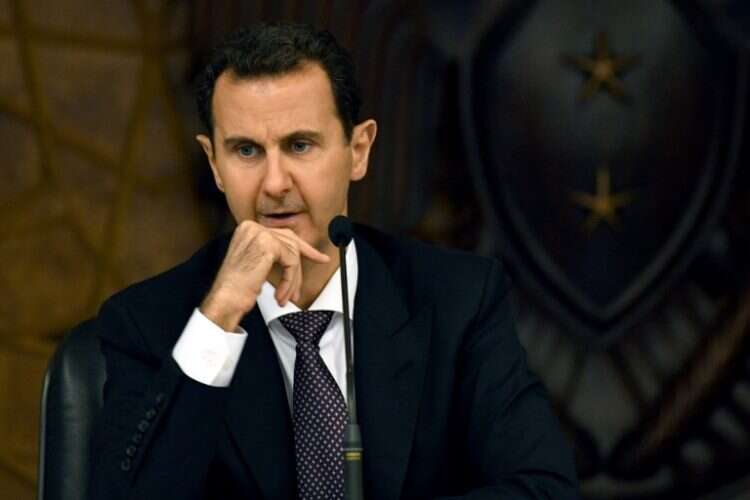
Syrian President Bashar
Assad (AFP via SANA)

At the height of the civil war, Assad employed chemical weapons, mass torture, and starvation against his people, obliterating human rights in Syria. According to the United Nations, the war has caused an estimated 470,000 to 610,000 violent deaths, making it the second-deadliest conflict of the 21st century after the Second Congo War. By 2017, Assad's forces, bolstered by Russian and Iranian support, regained control of key cities, seemingly halting the war's momentum.

However, recent developments have shattered this fragile equilibrium. In a shocking move, Hayat Tahrir al-Sham (HTS), an armed Islamist rebel group, seized Assad's palace in Aleppo. While opposition to Assad's regime is often welcomed, HTS's jihadist ideology and its ties to al-Qaeda raise serious concerns. This offensive marks the first time since the conflict began in 2011 that Assad's regime has lost its grip on Aleppo, a development that could signal a significant turning point.

Assad has vowed to "crush" the rebels, but his position has been weakend. With Russia distracted by its war in Ukraine and Hezbollah—Iran's proxy—weakened and degraded by Israel Israel, Assad's vulnerabilities have been exposed. Meanwhile, a Kurdish-U.S.-supported coalition has made gains near Aleppo, capturing two towns. Yet, despite their military successes, the coalition's ability to topple Assad's regime remains uncertain.

The implications of Syria's ongoing chaos extend far beyond its borders. Islamist insurgents, Iran, and Russia are using Syria as a staging ground for extremism and geopolitical ambitions. The Islamic Republic of Iran exploits the conflict to entrench its influence, arm Hezbollah, and position itself closer to Israel. For Russia, Syria serves as a testing ground for military strategies. These dynamics are transforming Syria into a hub for extremist networks that pose threats not only to the region but to global stability.

Now more than ever, alliances must be forged among those who understand the stakes. Israelis, Kurds, and Iranians – particularly those opposing the Islamic Republic – should unite against the shared threats posed by this "axis of evil." Cooperation could pave the way for a more secure and stable region.

Syria isn't just a humanitarian disaster; it's a strategic failure with profound global consequences. Every day that the world ignores it, the risks to international stability multiply. The question is no longer about Syria alone. It is about whether we are prepared to confront the broader consequences of letting the Middle East's instability reshape the world.

Tags: AssadSyria

Related Posts

Greta Thunberg falsely blames Israel for killing 'Mr. FAFO'

Greta Thunberg trades climate for Palestinian activism with Francesca Albanese

by Stefano Piazza

The two high-profile activists will headline strikes in Genoa and Rome on November 28–29, shifting the focus from labor demands...

Netanyahu doesn't get a pass on October 7 accountabilityoliver contreras / AFP; Anadolu Agency via Reuters Conne

Netanyahu doesn't get a pass on October 7 accountability

by Yoav Limor

Military completes unprecedented self-examination of failures while prime minister blocks state inquiry committee and refuses to acknowledge tragedy that occurred...

Facing forward

Facing forward

by Meir Holtz

When I look forward, I feel hopeful. There is a generation we can trust. Our role is to look at...

Menu

Analysis 

Archaeology

Blogpost

Business & Finance

Culture

Exclusive

Explainer

Environment


Features

Health

In Brief

Jewish World

Judea and Samaria

Lifestyle

Cyber & Internet

Sports


Diplomacy 

Iran & The Gulf

Gaza Strip

Politics

Shopping

Terms of use

Privacy Policy

Submissions

Contact Us

About Us

The first issue of Israel Hayom appeared on July 30, 2007. Israel Hayom was founded on the belief that the Israeli public deserves better, more balanced and more accurate journalism. Journalism that speaks, not shouts. Journalism of a different kind. And free of charge.

All rights reserved to Israel Hayom

Hosted by sPD.co.il

  • Home
  • News
    • Israel at War
    • Israel
    • United States
    • Middle East
    • Sports
  • Opinions
  • Jewish World
    • Archaeology
    • Antisemitism
  • Lifestyle
    • Food
    • Travel
    • Fashion
    • Culture
  • Magazine
    • Feature
    • Analysis
    • Explainer
    • Environment & Wildlife
    • Health & Wellness
  • In Memoriam
  • Subscribe to Newsletter
  • Submit your opinion
  • Terms and conditions

All rights reserved to Israel Hayom

Hosted by sPD.co.il

Newsletter

[contact-form-7 id=”508379″ html_id=”isrh_form_Newsletter_en” title=”newsletter_subscribe”]

  • Home
  • News
    • Israel at War
    • Israel
    • United States
    • Middle East
    • Sports
  • Opinions
  • Jewish World
    • Archaeology
    • Antisemitism
  • Lifestyle
    • Food
    • Travel
    • Fashion
    • Culture
  • Magazine
    • Feature
    • Analysis
    • Explainer
    • Environment & Wildlife
    • Health & Wellness
  • In Memoriam
  • Subscribe to Newsletter
  • Submit your opinion
  • Terms and conditions

All rights reserved to Israel Hayom

Hosted by sPD.co.il