Friday Dec 5, 2025
NEWSLETTER
www.israelhayom.com
  • Home
  • News
    • Israel
    • Israel at War
    • Middle East
    • United States
  • Opinions
  • Jewish World
    • Archaeology
    • Antisemitism
  • Lifestyle
    • Food
    • Travel
    • Fashion
    • Culture
  • Magazine
    • Feature
    • Analysis
    • Explainer
  • In Memoriam
www.israelhayom.com
  • Home
  • News
    • Israel
    • Israel at War
    • Middle East
    • United States
  • Opinions
  • Jewish World
    • Archaeology
    • Antisemitism
  • Lifestyle
    • Food
    • Travel
    • Fashion
    • Culture
  • Magazine
    • Feature
    • Analysis
    • Explainer
  • In Memoriam
www.israelhayom.com
Home News Israel at War

How Israel destroyed the Syrian Army

For the first time during the war, there was agreement between the political and military leadership in Israel. This consensus led to an unprecedented operation in scope and success – approximately 80% of the Syrian army's capabilities were destroyed.

by  Yishai Elmakies/Makor Rishon
Published on  12-11-2024 09:45
Last modified: 12-11-2024 12:42
How Israel destroyed the Syrian Army

An F-15I fighter jet of the Israeli Air Force. Photo: IDF Spokesperson.

Share on FacebookShare on Twitter

The IDF announced last night the conclusion of the strategic phase of Operation "Arrow of Bashan" in under 72 hours. Despite this, control over the buffer zone and key positions along the Syrian border remains ongoing. The goal of these maneuvers is to prevent the rebels' empowerment – by confiscating weapons and military equipment and denying their proximity to the Israeli border, which could endanger Israeli communities and IDF forces.

The operation's significance cannot be overstated. The destruction of such a large percentage of an advanced military force like the Syrian army is an event unparalleled globally for decades.

As with all major IDF operations, this impressive achievement rests on three pillars:

1. Unprecedented coordination

For the first time during the war, there was complete consensus between the Chief of Staff, senior military leaders, the Prime Minister, and other members of the political echelon. Israel had long anticipated the collapse of Assad's regime but underestimated the speed of events. Despite the surprise, Israel was the first to act. While Iran hesitated, the IDF recommended airstrikes and entering the buffer zone, effectively convincing a receptive cabinet. Plans from Military Intelligence, the Operations Directorate, the Air Force, and the Navy were swiftly prepared over the weekend, presented to commanders and policymakers, approved, and implemented.
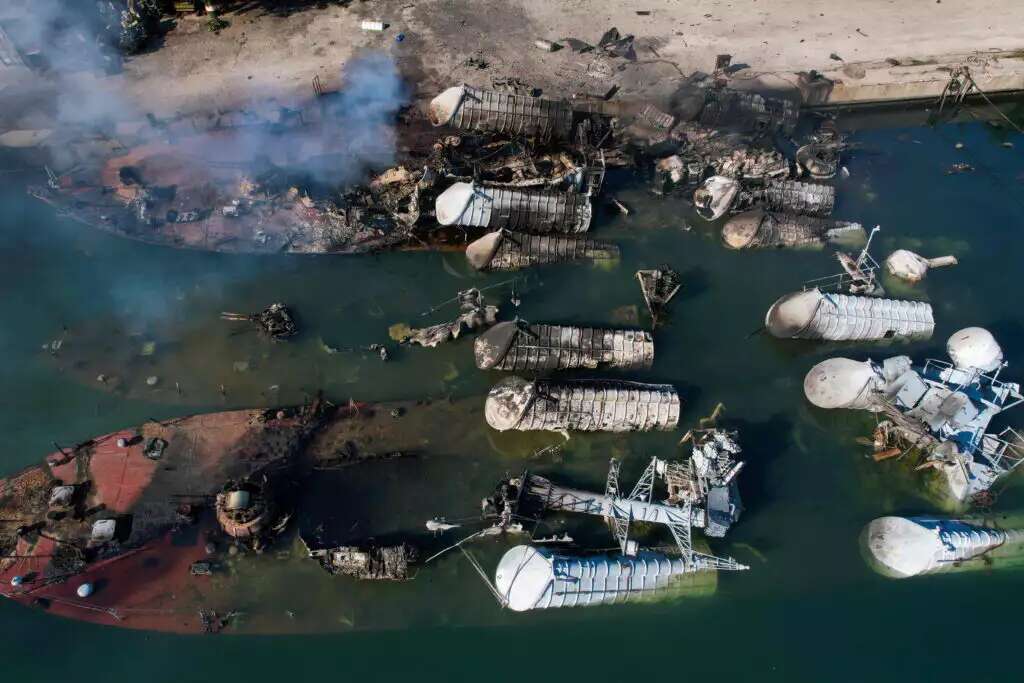
Syrian Navy warships reportedly bombed by the IDF. Photo: AFP.

2. Targeting strategic weaponry and military assets

Within the first 24 hours, air defense systems and numerous fighter jets were neutralized. This allowed 350 Israeli Air Force fighter jets to operate without interference in Syrian airspace, targeting 320 strategic objectives.

The targets were prioritized by their importance. Missile boats launched numerous simultaneous strikes on two Syrian naval bases – Al-Bayda and Latakia – causing significant damage and destroying 15 vessels. These vessels carried sea-to-sea missiles with ranges of 80–190 kilometers and explosive payloads of dozens of kilograms each. Anti-aircraft batteries, Syrian Air Force bases, and dozens of manufacturing facilities in Damascus, Homs, Tartus, Latakia, and Palmyra were also struck. These facilities housed Scud missiles, cruise missiles, coastal defense missiles, surface-to-air missiles, drones, fighter jets, combat helicopters, radar systems, tanks, hangars, and more.

These strikes followed years of intelligence gathering by the IDF, and the execution was described as flawless. The Defense Ministry estimates that 70-80% of the Syrian army's strategic capabilities have been destroyed.
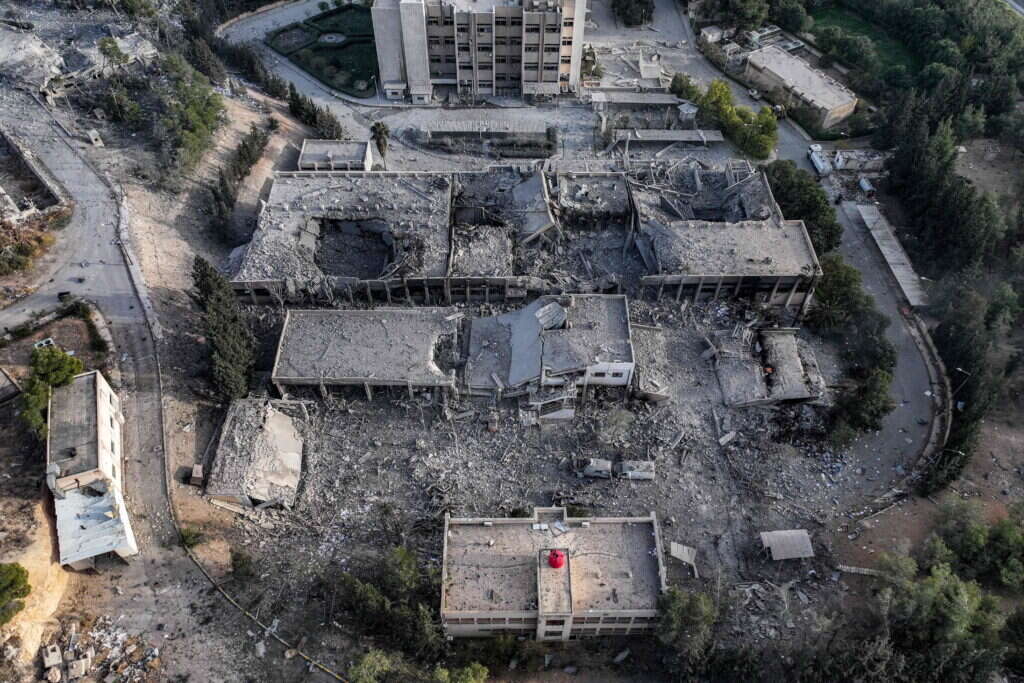
A research center reportedly bombed by the IDF. Photo: AFP.

3. Iran's diminished role

For years, Syria served as Iran's primary base for stockpiling weapons, training countless jihadist forces, and distributing armaments across the Middle East with Assad's cooperation. Exploiting the power vacuum in Syria and Iran's lack of response to Assad's downfall, the IDF has significantly undermined Iran's foothold in the region. The scope and ambiguity of the strikes have deterred Iran from retaliating.

What Comes Next?

The buffer zone and key positions captured by the IDF will remain under Israeli control for the foreseeable future due to tactical considerations. How long this situation will persist is uncertain – weeks, months, or even years. Residents of the Golan Heights are calling for the border fence to be relocated to the far edge of the buffer zone.

The leader of Hayat Tahrir al-Sham, Abu Mohammad al-Julani. Photo: AFP.

On the other side are the rebels, who, despite their attempts to project a "clean" image to the West, are unequivocally jihadist in nature. Once they are done with Damascus, their sights will turn to Al-Aqsa, following the same path as their Sunni Islamist counterparts in Hamas. It is no coincidence that the leader of Hayat Tahrir al-Sham, Ahmad Hussein al-Sharaa, is nicknamed "al-Julani," a reference to his connection to the Golan Heights. Someone bearing such a name will not relinquish the area without a fight.

Tags: IranIsraelSyria

Related Posts

From Hamas prisoner to militia leader: The Palestinian collaborating with IsraelArab Networks

Gaza militia leader Yasser Abu Shabab killed

by Hodaya Busheri and Lidor Sultan

Abu Shabab, who established an independent Gazan militia and opposed Hamas rule, was critically wounded in an assassination attempt and...

Israel-Lebanon agreement may turn into strategic trap

In first ever civilian talks, Israel and Lebanon confront Hezbollah's grip

by Danny Zaken

Civilian representatives from Israel and Lebanon met for the first time in US-mediated discussions aimed at advancing economic cooperation. The...

The story of Staff Sgt. Ran Gvili, the last hostage in Gaza

The story of Staff Sgt. Ran Gvili, the last hostage in Gaza

by ILH Staff

790 days after the deadliest massacre in Israel’s history, which led to the abduction of hundreds of civilians, Staff Sgt....

Menu

Analysis 

Archaeology

Blogpost

Business & Finance

Culture

Exclusive

Explainer

Environment


Features

Health

In Brief

Jewish World

Judea and Samaria

Lifestyle

Cyber & Internet

Sports


Diplomacy 

Iran & The Gulf

Gaza Strip

Politics

Shopping

Terms of use

Privacy Policy

Submissions

Contact Us

About Us

The first issue of Israel Hayom appeared on July 30, 2007. Israel Hayom was founded on the belief that the Israeli public deserves better, more balanced and more accurate journalism. Journalism that speaks, not shouts. Journalism of a different kind. And free of charge.

All rights reserved to Israel Hayom

Hosted by sPD.co.il

  • Home
  • News
    • Israel at War
    • Israel
    • United States
    • Middle East
    • Sports
  • Opinions
  • Jewish World
    • Archaeology
    • Antisemitism
  • Lifestyle
    • Food
    • Travel
    • Fashion
    • Culture
  • Magazine
    • Feature
    • Analysis
    • Explainer
    • Environment & Wildlife
    • Health & Wellness
  • In Memoriam
  • Subscribe to Newsletter
  • Submit your opinion
  • Terms and conditions

All rights reserved to Israel Hayom

Hosted by sPD.co.il

Newsletter

[contact-form-7 id=”508379″ html_id=”isrh_form_Newsletter_en” title=”newsletter_subscribe”]

  • Home
  • News
    • Israel at War
    • Israel
    • United States
    • Middle East
    • Sports
  • Opinions
  • Jewish World
    • Archaeology
    • Antisemitism
  • Lifestyle
    • Food
    • Travel
    • Fashion
    • Culture
  • Magazine
    • Feature
    • Analysis
    • Explainer
    • Environment & Wildlife
    • Health & Wellness
  • In Memoriam
  • Subscribe to Newsletter
  • Submit your opinion
  • Terms and conditions

All rights reserved to Israel Hayom

Hosted by sPD.co.il