Israel Hayom is a media organization founded on the belief that the Israeli public deserves better journalism—more balanced, more accurate, and more reliable. Journalism that speaks rather than shouts. Journalism that is trustworthy, objective, and matter-of-fact. A different kind of journalism, offered free of charge. The first print edition was published on July 30, 2007, and in 2010 Israel Hayom became the Israeli newspaper with the highest weekday readership. The newspaper’s publisher is Dr. Miriam Adelson. Its Editor-in-Chief is Omar Lachmanovitch, and its founding editor is Amos Regev. Israel Hayom’s Hebrew and English websites, as well as its Android and iOS applications, provide around-the-clock news coverage, exclusive content, breaking news and updates, analysis and commentary, video, podcasts, and live broadcasts. The digital platforms of Israel Hayom include news and opinion channels covering culture and entertainment, lifestyle, technology, sports, business and consumer affairs, health, military affairs, food, Judaism, tourism, and automobiles. In 2021, a new Hebrew-language website and mobile application were launched to provide users with a fast, up-to-date, secure, and convenient experience. The content of the newspaper’s print edition is also available online through a daily digital edition and can be received via newsletter. “The Israel Hayom Clique,” the publication’s exclusive benefits club, offers website users discounts and special promotions on products and services. Israel Hayom welcomes feedback, criticism, and suggestions for improvement from its readers. You can contact the organization by email at hayom@israelhayom.co.il

Thursday Aug 13, 2026
NEWSLETTER
www.israelhayom.com
  • Home
  • News
    • Israel
    • Israel at War
    • Middle East
    • United States
  • Opinions
  • Jewish World
    • Archaeology
    • Antisemitism
  • Lifestyle
    • Food
    • Travel
    • Fashion
    • Culture
  • Magazine
    • Feature
    • Analysis
    • Explainer
  • In Memoriam
www.israelhayom.com
  • Home
  • News
    • Israel
    • Israel at War
    • Middle East
    • United States
  • Opinions
  • Jewish World
    • Archaeology
    • Antisemitism
  • Lifestyle
    • Food
    • Travel
    • Fashion
    • Culture
  • Magazine
    • Feature
    • Analysis
    • Explainer
  • In Memoriam
www.israelhayom.com
Home News Israel Israel at War

Operation 'Arrow of Bashan': PM sends warning to Syria

Forces targeted 320 strategic assets spanning from Damascus to Tartus, including MiG-29 fighter jets, manufacturing facilities, ammunition storage sites, and a Scud missile battery. Netanyahu notes it was "similar to what the Royal Air Force did when it bombed the Vichy regime's fleet that collaborated with the Nazis so that it wouldn't fall into their hands."

by  Lilach Shoval
Published on  12-10-2024 18:34
Last modified: 12-10-2024 22:58
Operation 'Arrow of Bashan': PM sends warning to SyriaAli Haj Suleiman/Getty Images

Smoke rises in the aftermath of suspected IDF strikes near Mezzeh Air Base, on December 8, 2024 in Damascus, Syria | Photo: Ali Haj Suleiman/Getty Images

Share on FacebookShare on Twitter

The IDF concluded an extensive series of strikes throughout Syria on Tuesday and announced that the extensive strike to eliminate the threat from Syria would get the name Operation Arrow of Bashan, with Prime Minister Benjamin Netanyahu warning the Syrian rebels who seized power Israel would not tolerate aggression.

Video: The damage to the Syrian Navy after the Israeli strikes / Credit: Arab media

"Israel does not intend to interfere in Syria's internal affairs," Netanyahu declared Tuesday, revealing that he had "authorized the Israeli Air Force to bomb strategic military capabilities left by the Syrian military, so that these do not fall into the hands of the jihadists." The premier drew a historical parallel, noting it was "similar to what the Royal Air Force did when it bombed the Vichy regime's fleet that collaborated with the Nazis so that it wouldn't fall into their hands."

Military sources revealed that hundreds of strategic targets across Syrian territory were struck in an operation that had remained under strict operational secrecy. Simultaneously, the IDF chief of staff and the director of Shin Bet held crucial discussions in Egypt addressing regional security concerns, including ongoing hostage-related matters.

Netanyahu expressed openness to relations with Syria's future regime while laying down clear conditions. "If this regime allows Iran to re-establish itself in Syria, or allows the transfer of Iranian weapons or any other weapons to Hezbollah; or attacks us – we will respond with force and we will exact a heavy price," he warned, adding ominously that in that case, "what happened to the previous regime will happen to this regime as well."

Prime Minister Benjamin Netanyahu: "If the new regime in Syria allows Iran to re-establish itself, or allows the transfer of Iranian weapons to Hezbollah – we will respond forcefully and we will exact a heavy price." pic.twitter.com/B5UTGCXoGN

— Prime Minister of Israel (@IsraeliPM) December 10, 2024

Military officials indicate the operation was launched in response to rapidly evolving developments on the ground. While surveillance of rebel activity in the region had been ongoing, the acceleration of events demanded immediate action. The operation received approval from the IDF Chief of Staff Herzi Halevi during a Saturday security assessment, leading to the swift deployment of forces.

The operation saw the deployment of 350 Israeli Air Force combat aircraft conducting multiple strike missions. Forces targeted 320 strategic assets spanning from Damascus to Tartus, including MiG-29 fighter jets, manufacturing facilities, ammunition storage sites, Scud missile battery, cruise missile systems, unmanned aerial vehicles, aircraft and attack helicopters, radar installations, and weapons storage facilities.
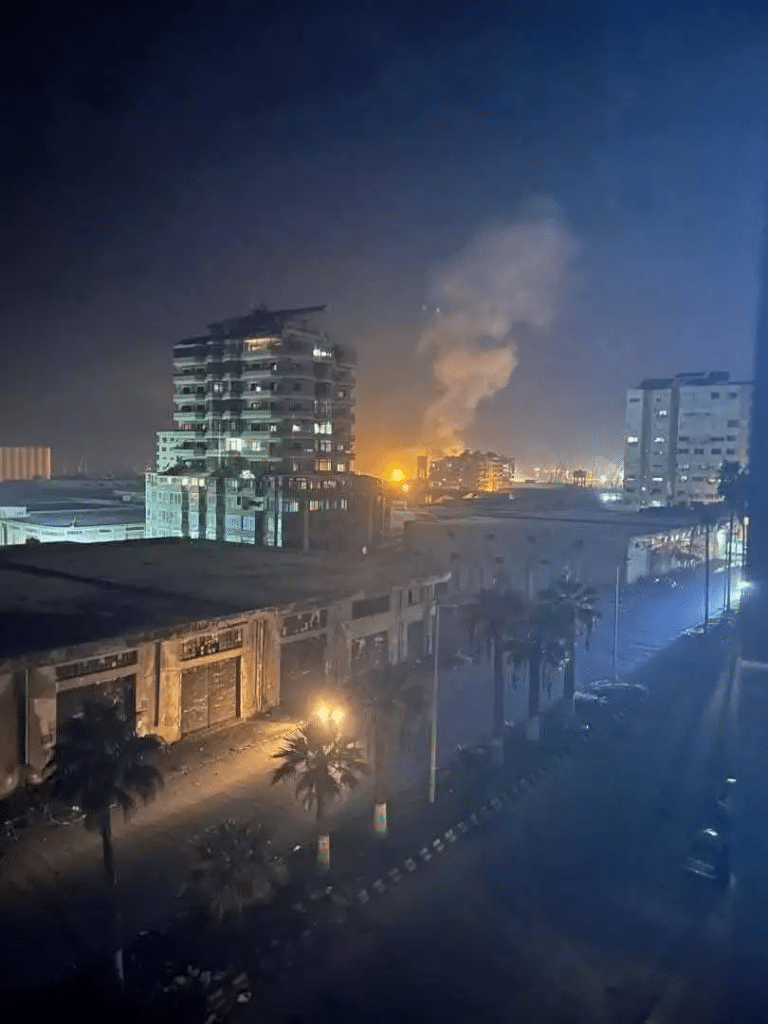
Strikes at the Lattakia port in western Syria. Photo credit: Arab media

Naval forces joined the campaign, executing strikes against advanced Syrian naval vessels at two coastal locations – Latakia and Minet el-Beida. Military sources confirmed that the targeted assets, which included dozens of sea-to-sea missiles capable of striking targets 50-62 miles away, had been under sustained intelligence monitoring for years.

In response to the Syrian developments, IDF forces have established positions at strategic locations along the buffer zone border. This deployment aims to safeguard Israeli civilians and prevent critical military capabilities from falling into unauthorized possession. During buffer zone operations, various weapons systems were discovered, with the military emphasizing its commitment to addressing any additional armaments found in the region. Officials stress that these actions are defensive in nature and do not constitute interference in Syria's internal conflict.

Addressing the Iranian dimension, military sources indicate that Tehran has experienced a substantial decline in its Syrian foothold, significantly diminishing its operational capabilities against Hezbollah. The IDF maintains its focus on the Syria-Lebanon border, emphasizing that any attempts to transfer weapons will trigger a military response.


Tags: IsraelSyriaSyrian rebels

Related Posts

US takes control of Gaza tunnel operations

US takes control of Gaza tunnel operations

by Danny Zaken and Hodaya Busheri

Amid cash-flow problems and the lack of a comprehensive IDF work plan, the US will operate four new concrete plants...

Israel eyes new targets, more aggressive strikes in next Iran campaign

Israel eyes new targets, more aggressive strikes in next Iran campaign

by Lilach Shoval

Israel has raised its alert level to its highest point amid concerns that fighting with Iran could resume, although the...

Israeli officials: 'We are approaching boiling point, on maximum alert'

Israeli officials: 'We are approaching boiling point, on maximum alert'

by Shirit Avitan Cohen

Israel’s security cabinet will convene Friday, reflecting the country’s heightened vigilance ahead of the United States’ next moves against Iran:...

Menu

Analysis 

Archaeology

Blogpost

Business & Finance

Culture

Exclusive

Explainer

Environment


Features

Health

In Brief

Jewish World

Judea and Samaria

Lifestyle

Cyber & Internet

Sports


Diplomacy 

Iran & The Gulf

Gaza Strip

Politics

Shopping

Terms of use

Privacy Policy

Submissions

Contact Us

About Us

The first issue of Israel Hayom appeared on July 30, 2007. Israel Hayom was founded on the belief that the Israeli public deserves better, more balanced and more accurate journalism. Journalism that speaks, not shouts. Journalism of a different kind. And free of charge.

All rights reserved to Israel Hayom

Hosted by sPD.co.il

  • Home
  • News
    • Israel at War
    • Israel
    • United States
    • Middle East
    • Sports
  • Opinions
  • Jewish World
    • Archaeology
    • Antisemitism
  • Lifestyle
    • Food
    • Travel
    • Fashion
    • Culture
  • Magazine
    • Feature
    • Analysis
    • Explainer
    • Environment & Wildlife
    • Health & Wellness
  • In Memoriam
  • Subscribe to Newsletter
  • Submit your opinion
  • Terms and conditions

All rights reserved to Israel Hayom

Hosted by sPD.co.il

Newsletter

[contact-form-7 id=”508379″ html_id=”isrh_form_Newsletter_en” title=”newsletter_subscribe”]

  • Home
  • News
    • Israel at War
    • Israel
    • United States
    • Middle East
    • Sports
  • Opinions
  • Jewish World
    • Archaeology
    • Antisemitism
  • Lifestyle
    • Food
    • Travel
    • Fashion
    • Culture
  • Magazine
    • Feature
    • Analysis
    • Explainer
    • Environment & Wildlife
    • Health & Wellness
  • In Memoriam
  • Subscribe to Newsletter
  • Submit your opinion
  • Terms and conditions

All rights reserved to Israel Hayom

Hosted by sPD.co.il