Israel Hayom is a media organization founded on the belief that the Israeli public deserves better journalism—more balanced, more accurate, and more reliable. Journalism that speaks rather than shouts. Journalism that is trustworthy, objective, and matter-of-fact. A different kind of journalism, offered free of charge. The first print edition was published on July 30, 2007, and in 2010 Israel Hayom became the Israeli newspaper with the highest weekday readership. The newspaper’s publisher is Dr. Miriam Adelson. Its Editor-in-Chief is Omar Lachmanovitch, and its founding editor is Amos Regev. Israel Hayom’s Hebrew and English websites, as well as its Android and iOS applications, provide around-the-clock news coverage, exclusive content, breaking news and updates, analysis and commentary, video, podcasts, and live broadcasts. The digital platforms of Israel Hayom include news and opinion channels covering culture and entertainment, lifestyle, technology, sports, business and consumer affairs, health, military affairs, food, Judaism, tourism, and automobiles. In 2021, a new Hebrew-language website and mobile application were launched to provide users with a fast, up-to-date, secure, and convenient experience. The content of the newspaper’s print edition is also available online through a daily digital edition and can be received via newsletter. “The Israel Hayom Clique,” the publication’s exclusive benefits club, offers website users discounts and special promotions on products and services. Israel Hayom welcomes feedback, criticism, and suggestions for improvement from its readers. You can contact the organization by email at hayom@israelhayom.co.il

Monday Jul 13, 2026
NEWSLETTER
www.israelhayom.com
  • Home
  • News
    • Israel
    • Israel at War
    • Middle East
    • United States
  • Opinions
  • Jewish World
    • Archaeology
    • Antisemitism
  • Lifestyle
    • Food
    • Travel
    • Fashion
    • Culture
  • Magazine
    • Feature
    • Analysis
    • Explainer
  • In Memoriam
www.israelhayom.com
  • Home
  • News
    • Israel
    • Israel at War
    • Middle East
    • United States
  • Opinions
  • Jewish World
    • Archaeology
    • Antisemitism
  • Lifestyle
    • Food
    • Travel
    • Fashion
    • Culture
  • Magazine
    • Feature
    • Analysis
    • Explainer
  • In Memoriam
www.israelhayom.com
Home News Israel Israel at War Gaza War

Israeli assessment: Uncertainty over Gaza's reconstruction pushs many back to displacement camps

The Meir Amit Intelligence and Terrorism Information Center believes that, in light of President Donald Trump's proposal to make Gaza's residents leave, many young Gazans may consider emigrating in hopes of building a better future abroad.

by  Shachar Kleiman
Published on  02-11-2025 07:15
Last modified: 02-11-2025 11:00
Israeli assessment: Uncertainty over Gaza's reconstruction pushs many back to displacement campsAFP

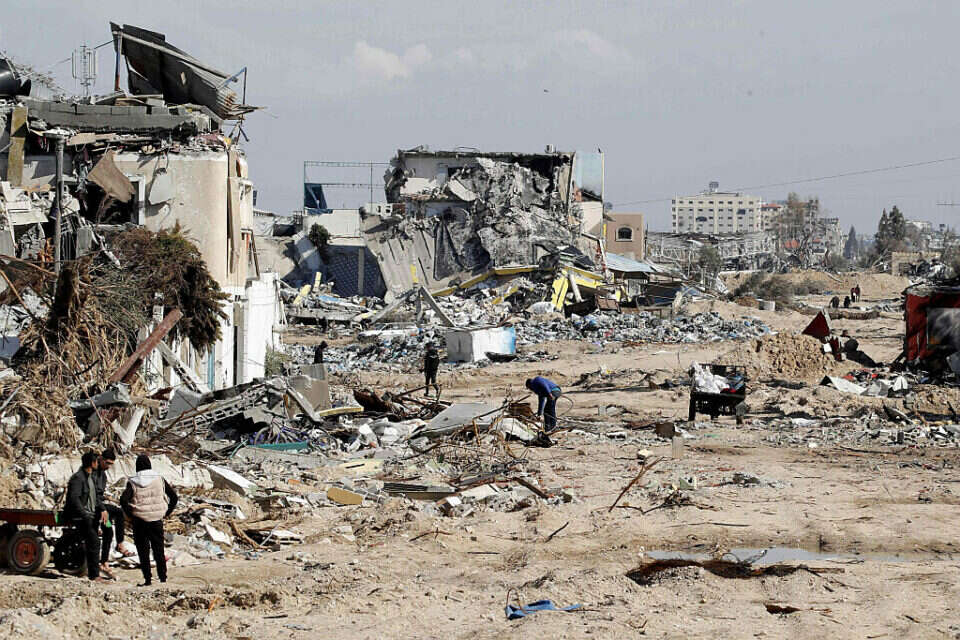
The scale of destruction in the Gaza Strip | Photo: AFP

Share on FacebookShare on Twitter

The Meir Amit Intelligence and Terrorism Information Center estimates that uncertainty regarding the duration of Gaza's reconstruction, particularly in the northern part of the Strip, is expected to increase frustration among residents. Many are likely to return to displacement camps in the southern part of the Strip, where basic infrastructure for survival exists and humanitarian aid is consistently supplied.

The research center noted that in light of President Donald Trump's proposal to make Gaza's residents leave, either temporarily or permanently, the devastation may prompt young Gazans to consider leaving for foreign countries in the hope of building a better future.

The report's authors assessed that Hamas will attempt to suppress critical voices by force. However, given the widespread public frustration and the extensive destruction in Gaza, it will be difficult for the terrorist organization to maintain its "victory" narrative without presenting concrete solutions for residents. Hamas may try to shift responsibility to another entity, such as the Gaza governance committee that Egypt is working to promote, while striving to preserve its military power.

The report also provided data on movement toward northern Gaza. According to monitoring of movement from southern to northern Gaza, 545,355 people crossed the Netzarim Corridor between January 30 and February 3, 2025. Of those, 62% moved independently, while 38% were families. Among the returnees, 66% headed to northern Gaza, while 34% went to Gaza City. Additionally, 36,620 people crossed southward through the Netzarim Corridor between January 27 and February 3, 2025, according to data from ReliefWeb.
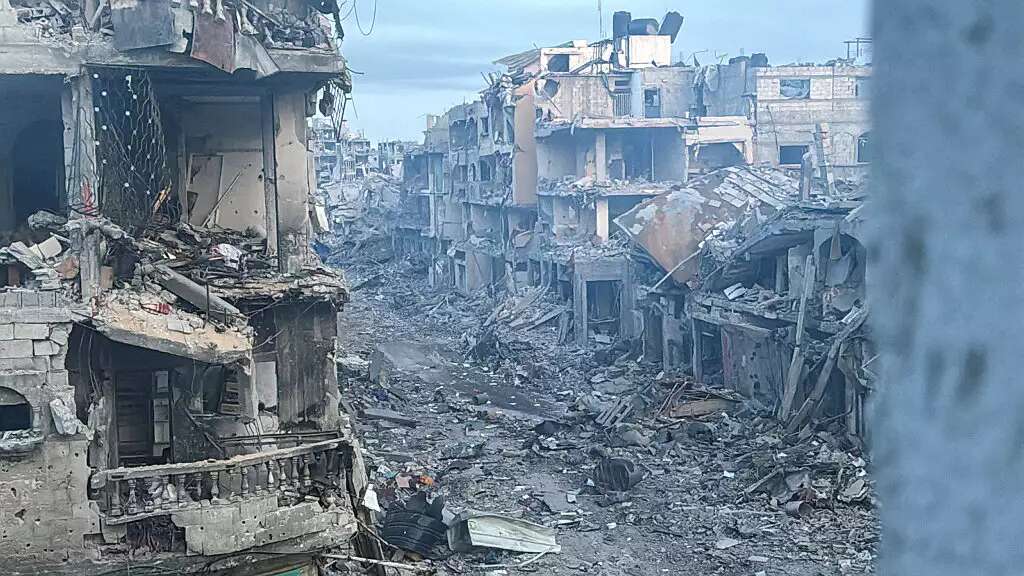
Gaza. Photo: Reuters

The report highlighted testimonies from Palestinians who returned to northern Gaza and vowed never to leave again. One such case was Wasim Al-Za'im, who was interviewed by the Palestinian newspaper Al-Ayyam. He expressed deep regret for having fled northern Gaza at the start of the war, saying he would never repeat the experience, even if it meant facing death for himself and his family. He described his displacement as a bitter ordeal he would never forget. According to him, those who remained in their homes ultimately fared no worse than those who were displaced.

Another testimony came from Samiha Saad, who, after returning to her home in the Sheikh Radwan neighborhood of Gaza City, described the experience as so harrowing that she vowed never to go through it again, regardless of circumstances. "Death here is a million times better than a life of displacement," she stated.

Despite the relief felt by many Palestinians upon returning home, the reality of widespread destruction quickly led to frustration, anger, and despair. The report stressed that many residents who initially returned to northern Gaza soon moved south again after realizing they had no homes to return to.

Journalist Hossam Sha'at described the dire situation: "People returned to ruins without tents, without drinking water… They are trying to rebuild their lives, gathering scraps of fabric and wood, perhaps from what remains of their homes. They walk hundreds of meters in search of water or food, sleep in the open, and spread out on the ground under the sky. As for those whose homes are still partially standing, they are trying to repair them as best they can to live among the rubble."

A Palestinian youth was documented holding a small child he had adopted after the child's parents were not found. The young man, a resident of Jabaliya, had returned to northern Gaza after staying in a school in Rafah. "What is there for us in the north? Why return? Our homes are destroyed. We don't even have tents there," he lamented.

The report also included criticism from Palestinians against Hamas, though it emphasized that such sentiments are not widespread due to fear of the terrorist organization.

Dr. 'Az al-Din Shahin, a physician from Gaza, commented: "The supply of water to all northern areas depends on clearing the rubble from the roads and reopening them, as well as bringing in heavy equipment to restore water lines, at least at a minimal level. No one is even talking about the importance of this issue, because, of course, images of prisoner [hostage] releases are far more compelling than discussing the disasters we are living through."


Tags: Gaza

Related Posts

This is what Hamas' disarmament would look like

Hamas rakes in millions, prepares for war

by Lilach Shoval

Direct taxation, control of markets and smuggling are helping Hamas swell its coffers. Funds from abroad are funneled into the...

Hasbara in crisis: How the October 7 massacre is being forgotten Arab Networks

1,000 days of war: Gaza border residents warn Hamas will return

by Shirit Avitan Cohen

The plan to establish humanitarian shelters near Rafah is stirring anger and concern in Gaza border communities. Officials warn: "Any...

Terrorist who held Omer Shem Tov captive in Gaza eliminated

Terrorist who held Omer Shem Tov captive in Gaza eliminated

by Lilach Shoval

Sabai Zahir Abd al-Hamid Abu Hasna, a Nukhba terrorist who took part in the Oct. 7 massacre and was involved...

Menu

Analysis 

Archaeology

Blogpost

Business & Finance

Culture

Exclusive

Explainer

Environment


Features

Health

In Brief

Jewish World

Judea and Samaria

Lifestyle

Cyber & Internet

Sports


Diplomacy 

Iran & The Gulf

Gaza Strip

Politics

Shopping

Terms of use

Privacy Policy

Submissions

Contact Us

About Us

The first issue of Israel Hayom appeared on July 30, 2007. Israel Hayom was founded on the belief that the Israeli public deserves better, more balanced and more accurate journalism. Journalism that speaks, not shouts. Journalism of a different kind. And free of charge.

All rights reserved to Israel Hayom

Hosted by sPD.co.il

  • Home
  • News
    • Israel at War
    • Israel
    • United States
    • Middle East
    • Sports
  • Opinions
  • Jewish World
    • Archaeology
    • Antisemitism
  • Lifestyle
    • Food
    • Travel
    • Fashion
    • Culture
  • Magazine
    • Feature
    • Analysis
    • Explainer
    • Environment & Wildlife
    • Health & Wellness
  • In Memoriam
  • Subscribe to Newsletter
  • Submit your opinion
  • Terms and conditions

All rights reserved to Israel Hayom

Hosted by sPD.co.il

Newsletter

[contact-form-7 id=”508379″ html_id=”isrh_form_Newsletter_en” title=”newsletter_subscribe”]

  • Home
  • News
    • Israel at War
    • Israel
    • United States
    • Middle East
    • Sports
  • Opinions
  • Jewish World
    • Archaeology
    • Antisemitism
  • Lifestyle
    • Food
    • Travel
    • Fashion
    • Culture
  • Magazine
    • Feature
    • Analysis
    • Explainer
    • Environment & Wildlife
    • Health & Wellness
  • In Memoriam
  • Subscribe to Newsletter
  • Submit your opinion
  • Terms and conditions

All rights reserved to Israel Hayom

Hosted by sPD.co.il