Israel Hayom is a media organization founded on the belief that the Israeli public deserves better journalism—more balanced, more accurate, and more reliable. Journalism that speaks rather than shouts. Journalism that is trustworthy, objective, and matter-of-fact. A different kind of journalism, offered free of charge. The first print edition was published on July 30, 2007, and in 2010 Israel Hayom became the Israeli newspaper with the highest weekday readership. The newspaper’s publisher is Dr. Miriam Adelson. Its Editor-in-Chief is Omar Lachmanovitch, and its founding editor is Amos Regev. Israel Hayom’s Hebrew and English websites, as well as its Android and iOS applications, provide around-the-clock news coverage, exclusive content, breaking news and updates, analysis and commentary, video, podcasts, and live broadcasts. The digital platforms of Israel Hayom include news and opinion channels covering culture and entertainment, lifestyle, technology, sports, business and consumer affairs, health, military affairs, food, Judaism, tourism, and automobiles. In 2021, a new Hebrew-language website and mobile application were launched to provide users with a fast, up-to-date, secure, and convenient experience. The content of the newspaper’s print edition is also available online through a daily digital edition and can be received via newsletter. “The Israel Hayom Clique,” the publication’s exclusive benefits club, offers website users discounts and special promotions on products and services. Israel Hayom welcomes feedback, criticism, and suggestions for improvement from its readers. You can contact the organization by email at hayom@israelhayom.co.il

Wednesday Aug 5, 2026
NEWSLETTER
www.israelhayom.com
  • Home
  • News
    • Israel
    • Israel at War
    • Middle East
    • United States
  • Opinions
  • Jewish World
    • Archaeology
    • Antisemitism
  • Lifestyle
    • Food
    • Travel
    • Fashion
    • Culture
  • Magazine
    • Feature
    • Analysis
    • Explainer
  • In Memoriam
www.israelhayom.com
  • Home
  • News
    • Israel
    • Israel at War
    • Middle East
    • United States
  • Opinions
  • Jewish World
    • Archaeology
    • Antisemitism
  • Lifestyle
    • Food
    • Travel
    • Fashion
    • Culture
  • Magazine
    • Feature
    • Analysis
    • Explainer
  • In Memoriam
www.israelhayom.com
Home Explainer

The 'monster' in the mountain: Fordow – the nuclear facility targeted by the US

Northeast of the city of Qom lies a facility that is virtually immune to conventional airstrikes. From the inside, it reveals the deepest and most formidable challenge in the campaign against Iran.

by  ILH Staff
Published on  06-22-2025 03:26
Last modified: 06-22-2025 04:36
The 'monster' in the mountain: Fordow – the nuclear facility targeted by the USAFP PHOTO / Satellite image

Fordo nuclear facility. Photo: AFP PHOTO / Satellite image | Photo: AFP PHOTO / Satellite image

Share on FacebookShare on Twitter

Northeast of the Shiite holy city of Qom lies Iran's Fordow facility – the Islamic Republic's second uranium enrichment site and its most heavily fortified. Unlike the larger and better-known Natanz plant, Fordow is a smaller facility but is buried deep within a mountain, 80 to 90 meters underground, making it virtually impervious to conventional airstrikes.
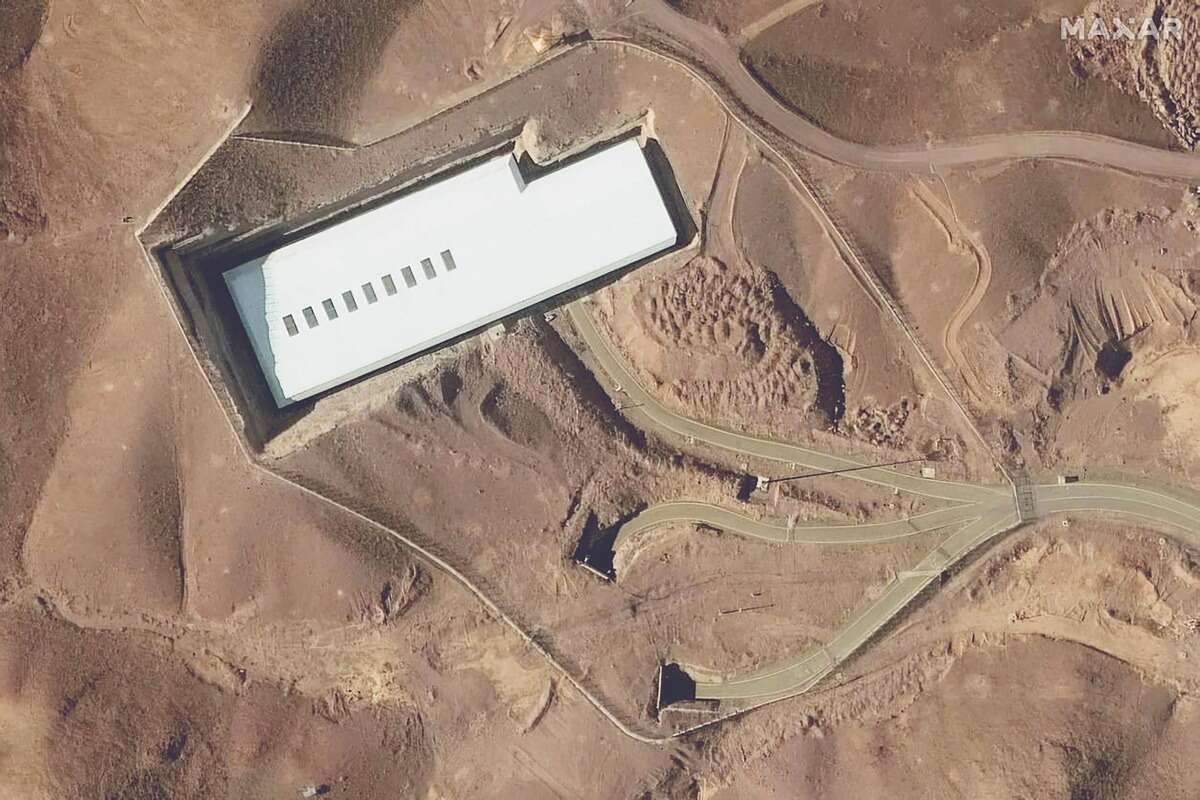
מתקן הגרעין בפורדו  , AFP PHOTO/Satellite image
Fordow nuclear facility. Photo: AFP PHOTO / Satellite image

Why Fordow matters – and how it differs from Natanz

To grasp Fordow's critical importance, it helps to compare it with Natanz. The latter is a sprawling complex housing over 19,000 centrifuges, and according to the Institute for Science and International Security (ISIS), could potentially accommodate up to 50,000. However, Natanz has a key vulnerability – it is buried just eight meters below ground. According to the International Atomic Energy Agency, its surface buildings were completely destroyed in a previous attack. While the underground halls remained intact, the damage to its electrical systems suggests possible harm to the centrifuges.

Fordow, however, is a different story. With about 3,000 centrifuges spread across two halls, it is much smaller – but it is buried 80 to 90 meters underground, inside solid rock. While Natanz enriches uranium to low levels (3–5%), Fordow is Iran's main site for higher-level enrichment – up to 60%, and traces of uranium enriched to 83.7% were recently detected there, dangerously close to the 90% level required for nuclear weapons. In essence, Fordow serves as Iran's "insurance policy" for its nuclear program, a secure site where the regime could rapidly move to weapons-grade enrichment if it decides to pursue a bomb.
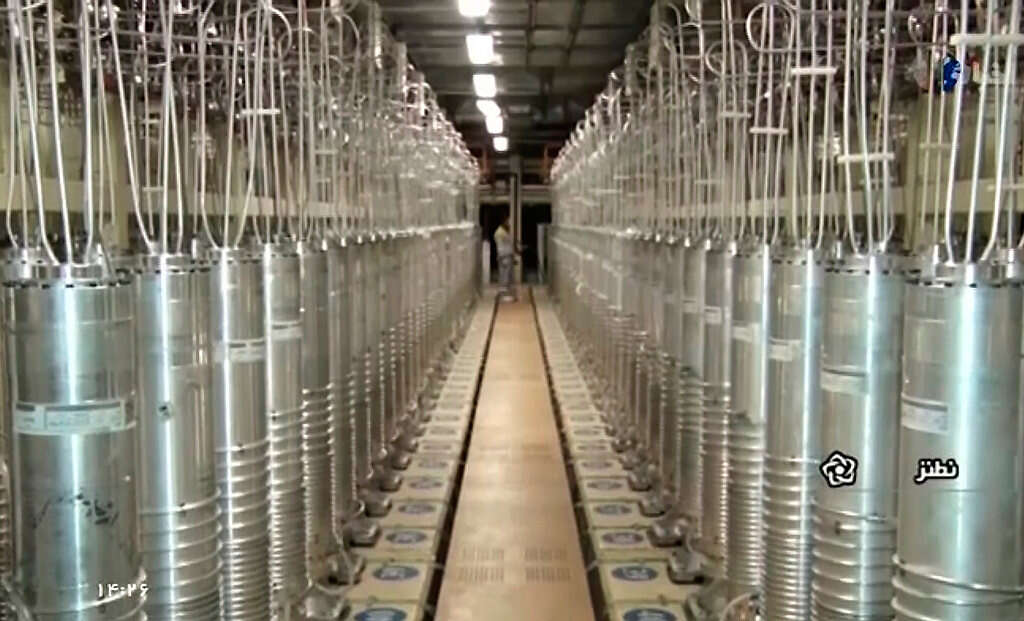
צנטריפוגות בנתנז (ארכיון) , אי.פי
Centrifuges at Natanz (archive). Photo: AP

Enrichment is the process of increasing the concentration of fissile material – a specific isotope of uranium found only in small quantities in mined ore. High-speed centrifuges separate heavier particles from lighter ones, and the resulting gas is then converted back into metal. For weapons production, the fissile material is shaped into a sphere and combined with a triggering mechanism to form a nuclear bomb.

Satellite imagery underscores why Fordow poses such a major challenge to Israel and others concerned with Iran's nuclear ambitions. Winding roads lead directly into tunnels dug into the mountain, giving access to the underground centrifuge halls. Most of the facility – including thousands of centrifuges enriching uranium to near-weapons grade – is hidden deep within rock, shielded in a way that makes it virtually invulnerable to standard aerial assaults.

מתקן הגרעין בפורדו  , AFP PHOTO/Satellite image
Fordow nuclear facility. Photo: AFP PHOTO / Satellite image

A secret revealed

Originally a missile base run by the Islamic Revolutionary Guard Corps, Fordow's conversion into a nuclear enrichment site began around 2006–2007, according to Western intelligence. For years, its existence was kept secret until the US, UK, and France exposed it in September 2009 after it was detected by intelligence services. Iran was forced to acknowledge the site to the International Atomic Energy Agency, claiming it was for civilian purposes.

But nuclear archive documents seized by Israel in 2018 told a different story: Fordow – referred to as "Project Al-Ghadir" – was planned as part of the "Amad Project," Iran's covert nuclear weapons development program.
Tags: FordowIranIran warNatanz

Related Posts

US reinstates Iran oil sanctions after tanker attacks in Strait of Hormuz

The consequences of canceling the US strike on Iran

by Vice Adm. (ret.) Eliezer Marom

The cancellation of the US strike gives Iran time to rebuild its missile arsenal and advance its nuclear program. Postponing...

How Iran is preparing to influence Israel's elections

How Iran is preparing to influence Israel's elections

by Danny Citrinowicz

Iranian influence operations are already underway, and Israeli security officials warn of an attempt to deepen divisions within Israeli society....

The US has no victory image, and that is bad news for Israel

Why Trump put a wider Iran offensive on hold

by ILH Staff

Trump has, for now, frozen plans to expand the campaign amid concerns over the depletion of Patriot interceptor stocks and...

Menu

Analysis 

Archaeology

Blogpost

Business & Finance

Culture

Exclusive

Explainer

Environment


Features

Health

In Brief

Jewish World

Judea and Samaria

Lifestyle

Cyber & Internet

Sports


Diplomacy 

Iran & The Gulf

Gaza Strip

Politics

Shopping

Terms of use

Privacy Policy

Submissions

Contact Us

About Us

The first issue of Israel Hayom appeared on July 30, 2007. Israel Hayom was founded on the belief that the Israeli public deserves better, more balanced and more accurate journalism. Journalism that speaks, not shouts. Journalism of a different kind. And free of charge.

All rights reserved to Israel Hayom

Hosted by sPD.co.il

  • Home
  • News
    • Israel at War
    • Israel
    • United States
    • Middle East
    • Sports
  • Opinions
  • Jewish World
    • Archaeology
    • Antisemitism
  • Lifestyle
    • Food
    • Travel
    • Fashion
    • Culture
  • Magazine
    • Feature
    • Analysis
    • Explainer
    • Environment & Wildlife
    • Health & Wellness
  • In Memoriam
  • Subscribe to Newsletter
  • Submit your opinion
  • Terms and conditions

All rights reserved to Israel Hayom

Hosted by sPD.co.il

Newsletter

[contact-form-7 id=”508379″ html_id=”isrh_form_Newsletter_en” title=”newsletter_subscribe”]

  • Home
  • News
    • Israel at War
    • Israel
    • United States
    • Middle East
    • Sports
  • Opinions
  • Jewish World
    • Archaeology
    • Antisemitism
  • Lifestyle
    • Food
    • Travel
    • Fashion
    • Culture
  • Magazine
    • Feature
    • Analysis
    • Explainer
    • Environment & Wildlife
    • Health & Wellness
  • In Memoriam
  • Subscribe to Newsletter
  • Submit your opinion
  • Terms and conditions

All rights reserved to Israel Hayom

Hosted by sPD.co.il