Sources in Yemen report that the Houthis have found a new source of income in recent months. The terrorist organization has begun trafficking Captagon, a powerful stimulant nicknamed "the poor man's cocaine," to fund its operations.
This week, Yemen's internationally recognized government announced the seizure of a truck carrying 13,000 Captagon pills from Houthi-controlled territory. According to reports, a Border Guard unit intercepted an attempt to smuggle 13,750 pills into Saudi Arabia through the Al-Wadi'a crossing in the north-central part of the country.
Amir al-Azab, the battalion commander at the border crossing, said that upon the truck's arrival at the weapons inspection point, soldiers became suspicious. A thorough search led to the discovery of the drugs, despite a sophisticated effort to conceal them. A Yemeni security source told local media that the driver was arrested and handed over to the relevant authorities for prosecution.

Last month, another Houthi smuggling attempt into Saudi Arabia was foiled, involving more than 1.5 million pills hidden in a truck. Meanwhile, police in the southern city of Aden revealed that the Houthis are operating a large Captagon production facility in the country's northwest. Additional reports indicated that pharmaceutical plants in Sanaa, the Houthi-held capital, have been converted to manufacture the drug, which has become a widespread social scourge in Arab countries.
For years, Syria was the center of Captagon production. But following the collapse of Bashar Assad's regime, the country's new Islamist rulers moved to dismantle the networks once operated by the dictator's inner circle. In this vacuum, the Houthis are believed to have seized the opportunity to dominate the Captagon trade, amassing vast profits to bolster their rule.
Operation Black Flag
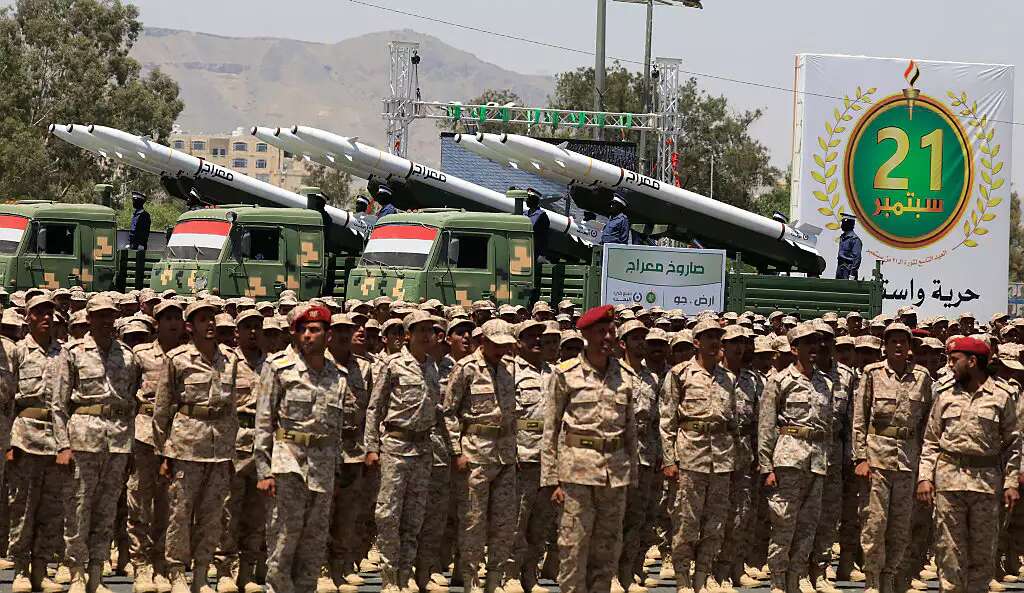
Amid these developments, the Houthis are trying to conceal the aftermath of Israeli airstrikes carried out under Operation Black Flag and have banned the publication of real-time images. Overnight Sunday into Monday, the Israeli Air Force struck dozens of targets in northern Yemen, including infrastructure in the Houthi-controlled ports of Hudaydah, Salif, and Ras Isa.
Additional strikes targeted a power station and the vessel "Galaxy Leader," which was hijacked by the Houthis around two years ago. The ship's crew was released, but the vessel has since been repurposed for terrorist activities in the Red Sea. A Houthi spokesperson claimed that their air defense systems repelled the attack and that in retaliation, ballistic missiles and drones were launched toward Israel. In reality, Israel identified one missile launch and attempted to intercept it.