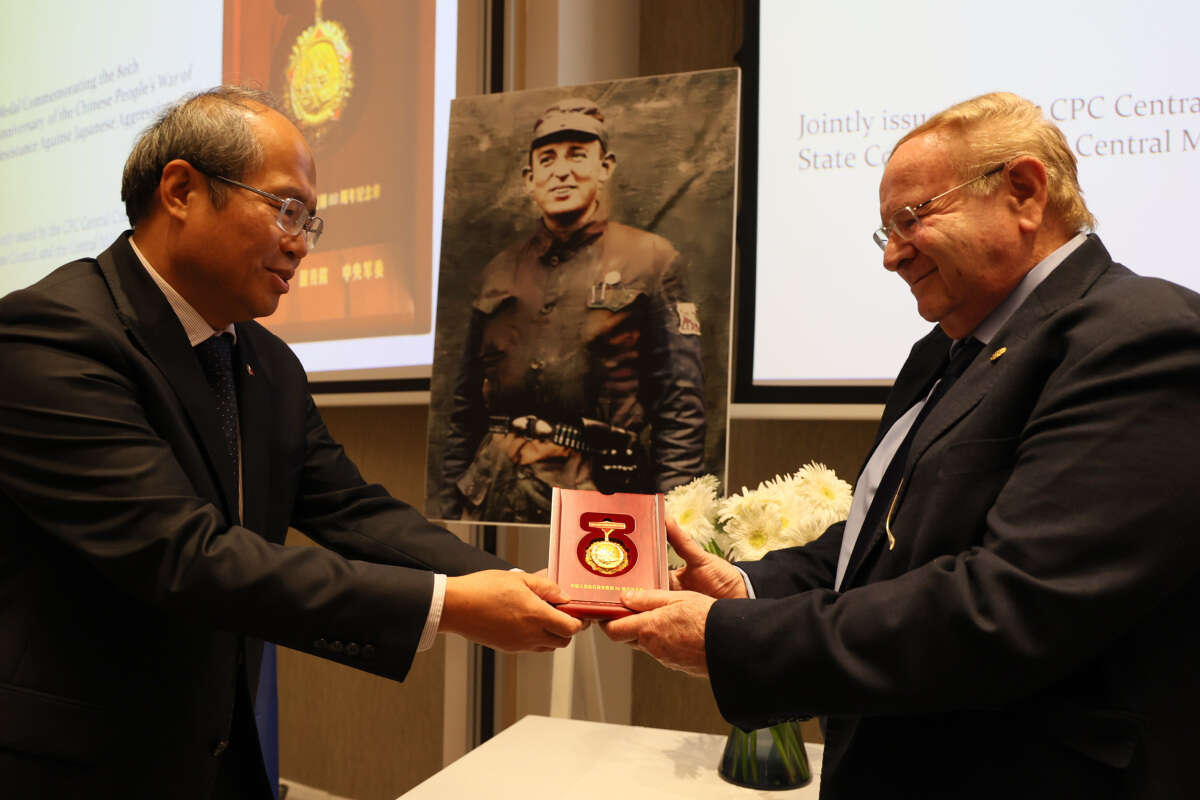
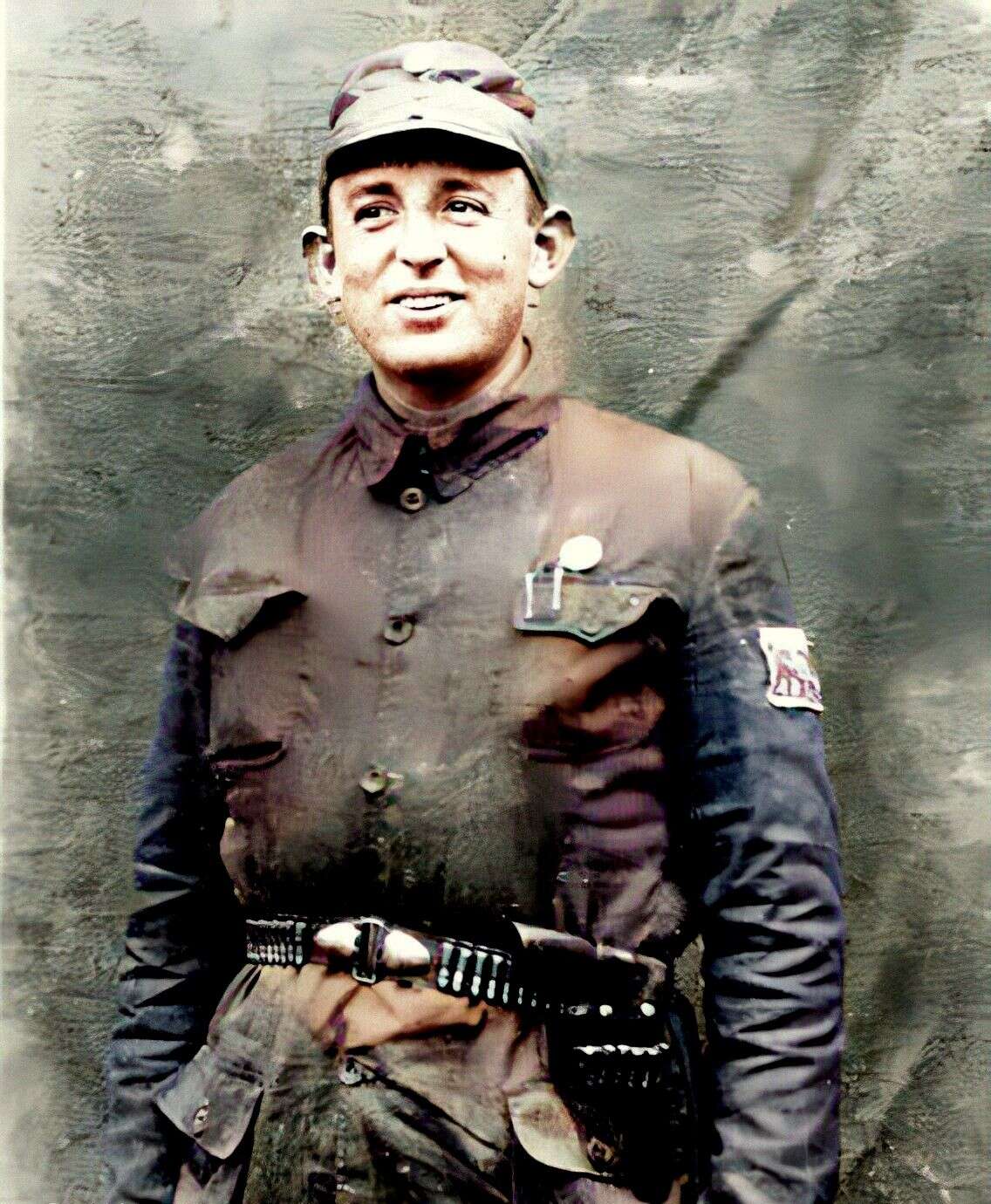
The Chinese Embassy on Wednesday held a special ceremony to honor Dr. Jakob Rosenfeld, a Jewish refugee whose contribution to the fight against the Japanese occupiers in World War II and then in the civil war made him a national hero.
The event, hosted by The Chaim Herzog Museum of the Jewish Soldier in World War II, culminated with a special ceremony in which Rosenfeld's nephew, Menashe Rosenfeld, accepted a medal on his behalf, some 73 years after his death. Rosenfeld had become minister of health under Mao Zedong and even received the rank of general due to his saving of countless Chinese during the chaotic years of the wars after he himself had fled Vienna due to Nazi persecution. He died in Israel in 1952.
Shared memory
Major General (Res.) Zvika Kan-Tor, the museum's CEO, welcomed guests by framing the ceremony within the solemn 80th anniversary of the victory against the Axis Powers in World War II, which in China is referred to as The World Anti-Fascist War.
"Today we commemorate the legacy of Dr. Jakob Rosenfeld, a courageous doctor and soldier, who is honored here in the museum," he said in a statement. "His unique and meaningful story is one among the one and a half million stories of Jewish men and women fighters that continue to inspire us to this day. Every visit to the museum reminds us that Jewish history in World War II is not only about historical dates, but also about personal stories of courage and sacrifice. Our mission is to illuminate the stories of these Jewish fighters and to connect future generations to the legacy of Jewish heroism."
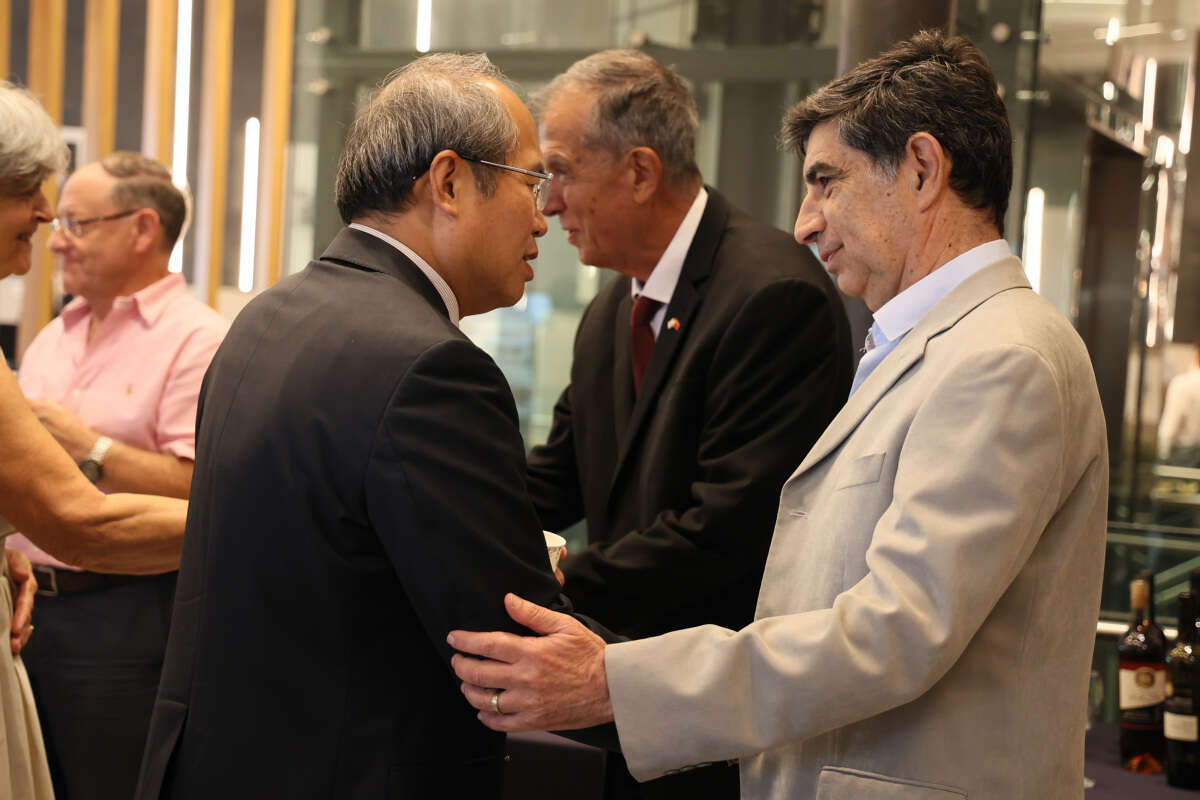
He added that part of the reason it was important to hold this event was to celebrate Rosenfeld beyond China – here in Israel – where he has been an unsung hero. "We are dedicated to telling a wonderful story that in China, millions of people cherish, but here in the state of the Jewish people, almost no one knows," he stated, underscoring the museum's mission to illuminate the forgotten history of the 1.5 million Jewish soldiers who fought the Axis Powers.
This sentiment was echoed in a poignant letter from Israeli President Isaac Herzog, delivered by Aviv Ezra, the deputy director general for Asia and the Pacific at the Israeli Ministry of Foreign Affairs. Herzog hailed Dr. Rosenfeld as a figure who "wrote himself directly into the pages of Chinese history." His letter celebrated the "deep mutual regard shared by people of every rank" and called Rosenfeld a "symbol of what can be achieved when openness and goodwill reign."
Taking the podium, Chinese Ambassador Xiao Junzheng delivered an expansive address that served as the evening's centerpiece, touting the unique relationship between Beijing and Jerusalem not just between leaders, but also in shared values, history and memory.
He began by painting a vivid picture of the honoree. "Today, we hold this special event to commemorate Dr. Jakob Rosenfeld. He was a doctor and a fighter, too," the ambassador said. "He fled Vienna to China in 1939, escaping the persecution by the Nazis. Driven by a sense of justice, he abandoned a comfortable life in Shanghai and joined the anti-Japanese resistance. For 10 years, he fought as an army medical doctor and as a general, saving the lives of Chinese soldiers and civilians. He dedicated himself to the cause of liberating the Chinese people."
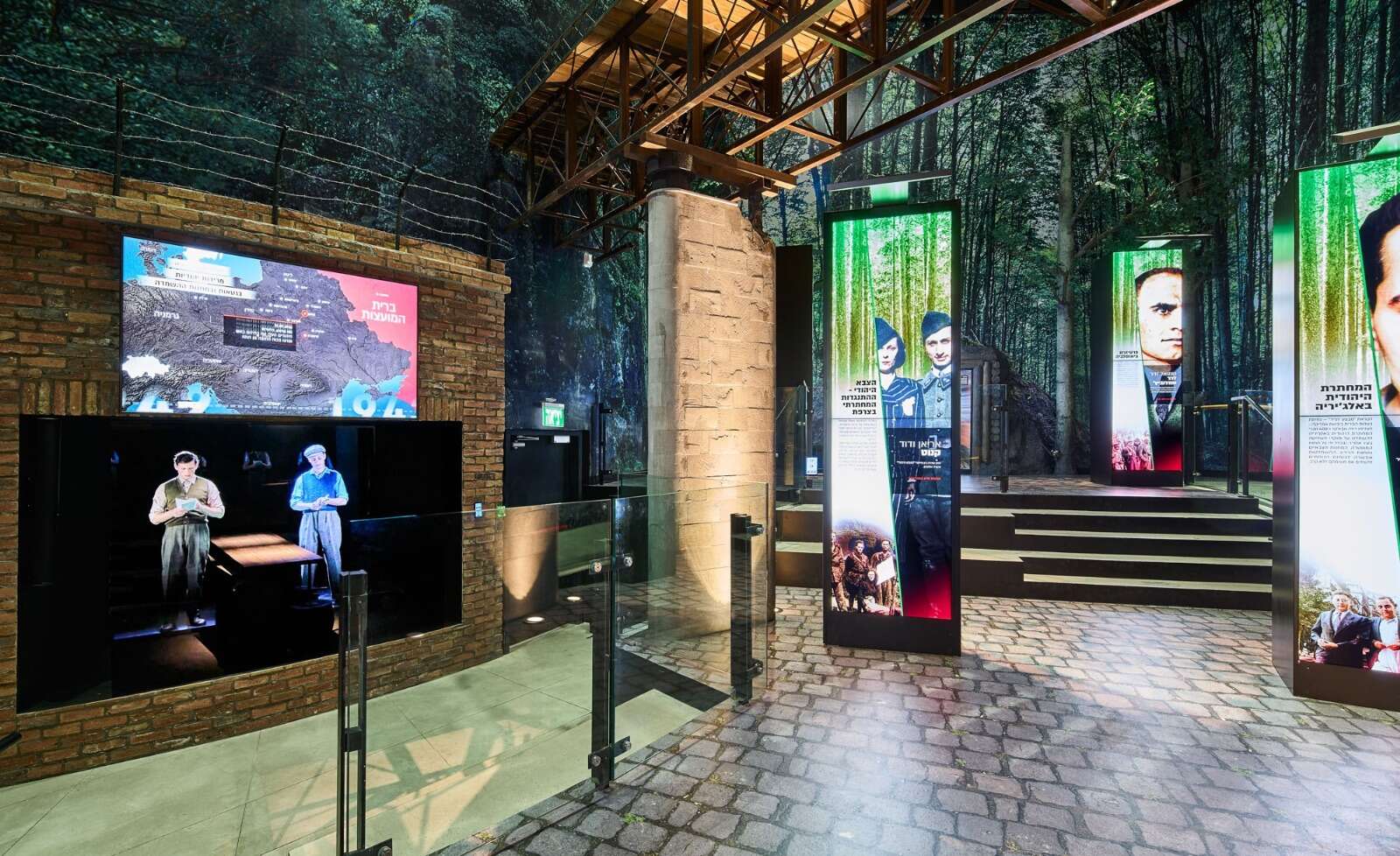
The choice of venue was deeply symbolic, surrounded by exhibits honoring Rosenfeld's actions as one of the 1.5 million Jews who fought in World War II for the cause of freedom, which, according to the ambassador, was a manifestation of the bond between the two ancient peoples, the Chinese and the Jews. "Our destinies are intertwined," he said.
Ambassador Xiao meticulously drew parallels between the immense suffering and resilience of the two peoples during that era. "80 years ago, the Chinese people, alongside nations across the globe, secured victory in the war of resistance against Japanese aggression," he declared. "This great victory stands as a solemn reminder that we must never forget history and must always uphold its truths. The Chinese people's war of resistance against Japanese aggression constituted the main Eastern battlefield of the world anti-fascist war. It began the earliest and endured the longest. Throughout these 14 years of struggle, the Chinese people waged a courageous fight at a tremendous cost, suffering over 35 million casualties."
He then directly honored the history enshrined in the museum walls. "We also remember the 1.5 million Jewish fighters... who fought against the Nazis during World War II. Approximately 250,000 of whom made the ultimate sacrifice. They will forever be remembered by us and by history."
In China, there is no soil for antisemitism
Directly addressing President Herzog's appeal in his letter, Ambassador Xiao reiterated that Beijing "earnestly hopes for an immediate end to the ongoing hostilities", before stressing that "as a reaffirmation of China's consistent position, I once again appeal that all Israeli hostages be released immediately."
He concluded his address by celebrating the deep-rooted friendship between the two peoples. "When the Jewish communities in Europe faced brutal persecution... China provided refuge, with Shanghai alone offering sanctuary to at least 25,000 Jewish refugees," he said. "A friend in need is a friend indeed. This shared history forms a lasting foundation for the friendship between China and Israel. In China, there is no soil for antisemitism. The Chinese government will never allow antisemitism to exist or take root."
The ambassador recalled that Ho Feng-Shan, the consul general in Vienna during WWII, demonstrated this willingness to help the Jews during the 1930s, risking his life to issue a "life-saving visa" that made it possible for Rosenfeld to flee to Shanghai. In turn, Rosenfeld gave his host nation "hope and survival," as did many other Jews who fled to China. "This great victory inspires us to cherish the traditional friendship between the Chinese and Jewish people and to carry it forward for generations to come."
Following his powerful speech, Ambassador Xiao formally announced the honor bestowed upon the Jewish doctor by the Chinese authorities: "A decision has been made by the government of the People's Republic of China to award the commemorative medal to Dr. Jakob Rosenfeld for his remarkable contributions." He then presented the medal to Dr. Menashe Rosenfeld, the hero's nephew, to the applause of the more than 200 in attendance.
Visibly moved, Dr. Rosenfeld spoke of the profound respect his family had for him. "To see the devotion of a nation like China to heroes – Chinese, Jewish, other – I had seen it in China, and I had felt it in China," he shared. He then offered a powerful analogy: "China is a nation of over 5,000 years... We are just 3,700 years old. China, you may be our big brother, and I would like to point out, let's learn from the big brother how to respect and honor heroes."
Video: The event honoring Jakob Rosenfeld on August 27, 2025
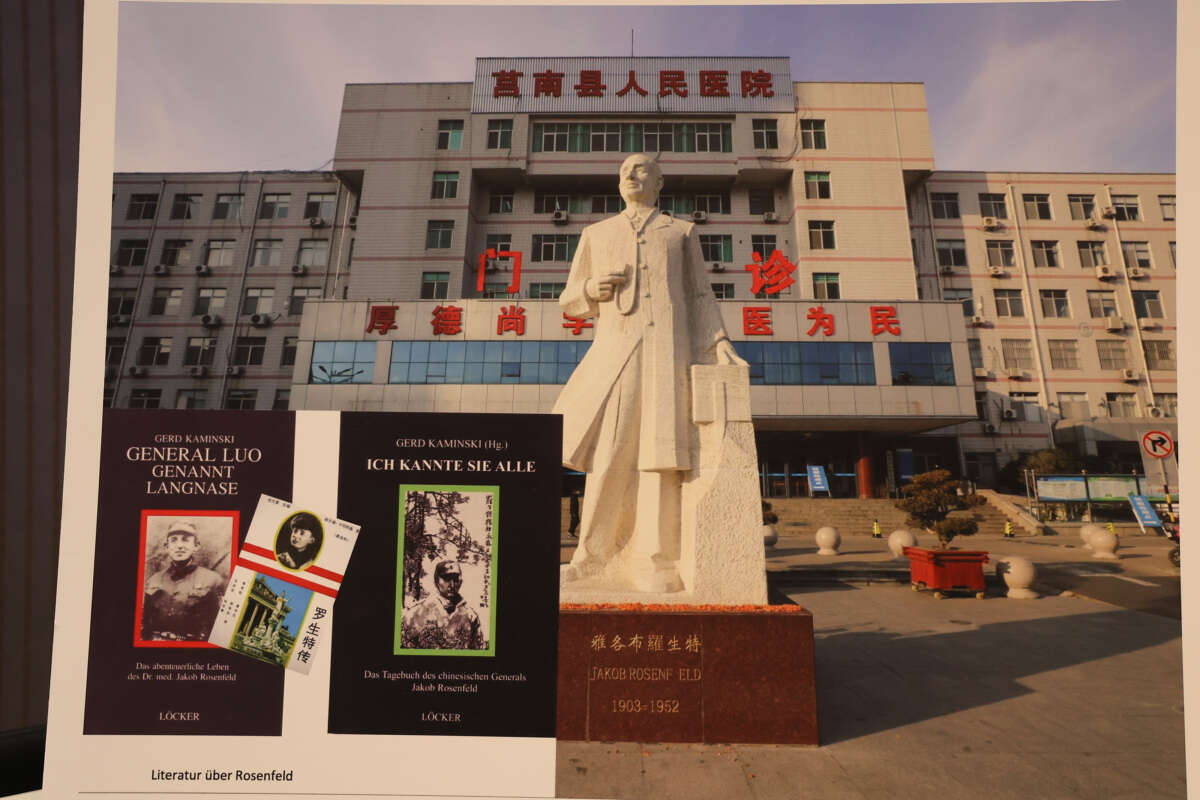
Rosenfeld was echoing what Ambassador Xiao said in his speech about the need to introduce Rosenfeld's story to the mainstream public. "Though Dr. Rosenfeld passed away 73 years ago, his legacy continues to be honored across China," the ambassador said during his speech, citing hospitals, museums, and monuments that bear his name, even a 4-meter statue. Speaking to Israel Hayom, he later added that he hoped this event would raise awareness of Rosenfeld's actions in Israel, just as he had become a national hero in the country where he found refuge. "In China, many people know about his story. But few know about him in Israel; we hope that in the coming years know more and more Israel people will know the story."
The recently built Chaim Herzog Museum of the Jewish Soldier in World War II, which hosted the event, was founded as part of an effort to shed light on the one and a half million Jewish men and women who fought on various fronts. "Until now, these stories have not been properly told," the museum said in a statement. "Many of them later made significant contributions to the establishment of the State of Israel and the IDF," it continued, noting that visitors can see "works of art, original wartime documents, and fascinating anecdotes about Jewish soldiers, narratives that, until today, had not been part of the Jewish collective memory of World War II."