Israel Hayom is a media organization founded on the belief that the Israeli public deserves better journalism—more balanced, more accurate, and more reliable. Journalism that speaks rather than shouts. Journalism that is trustworthy, objective, and matter-of-fact. A different kind of journalism, offered free of charge. The first print edition was published on July 30, 2007, and in 2010 Israel Hayom became the Israeli newspaper with the highest weekday readership. The newspaper’s publisher is Dr. Miriam Adelson. Its Editor-in-Chief is Omar Lachmanovitch, and its founding editor is Amos Regev. Israel Hayom’s Hebrew and English websites, as well as its Android and iOS applications, provide around-the-clock news coverage, exclusive content, breaking news and updates, analysis and commentary, video, podcasts, and live broadcasts. The digital platforms of Israel Hayom include news and opinion channels covering culture and entertainment, lifestyle, technology, sports, business and consumer affairs, health, military affairs, food, Judaism, tourism, and automobiles. In 2021, a new Hebrew-language website and mobile application were launched to provide users with a fast, up-to-date, secure, and convenient experience. The content of the newspaper’s print edition is also available online through a daily digital edition and can be received via newsletter. “The Israel Hayom Clique,” the publication’s exclusive benefits club, offers website users discounts and special promotions on products and services. Israel Hayom welcomes feedback, criticism, and suggestions for improvement from its readers. You can contact the organization by email at hayom@israelhayom.co.il

Tuesday Jun 23, 2026
NEWSLETTER
www.israelhayom.com
  • Home
  • News
    • Israel
    • Israel at War
    • Middle East
    • United States
  • Opinions
  • Jewish World
    • Archaeology
    • Antisemitism
  • Lifestyle
    • Food
    • Travel
    • Fashion
    • Culture
  • Magazine
    • Feature
    • Analysis
    • Explainer
  • In Memoriam
www.israelhayom.com
  • Home
  • News
    • Israel
    • Israel at War
    • Middle East
    • United States
  • Opinions
  • Jewish World
    • Archaeology
    • Antisemitism
  • Lifestyle
    • Food
    • Travel
    • Fashion
    • Culture
  • Magazine
    • Feature
    • Analysis
    • Explainer
  • In Memoriam
www.israelhayom.com
Home News Diplomacy

How will Netanyahu respond at the UN?

After the dramatic international recognition of a Palestinian state, initiated by Saudi Arabia and France, and following President Donald Trump's meeting with Arab leaders, Prime Minister Benjamin Netanyahu is set to address the UN on Friday. His central theme will be a sharp attack on the countries that granted recognition, most of which did not condition it on Hamas surrendering and releasing the hostages.

by  Danny Zaken
Published on  09-25-2025 00:07
Last modified: 09-25-2025 00:08
How will Netanyahu respond at the UN?EPA

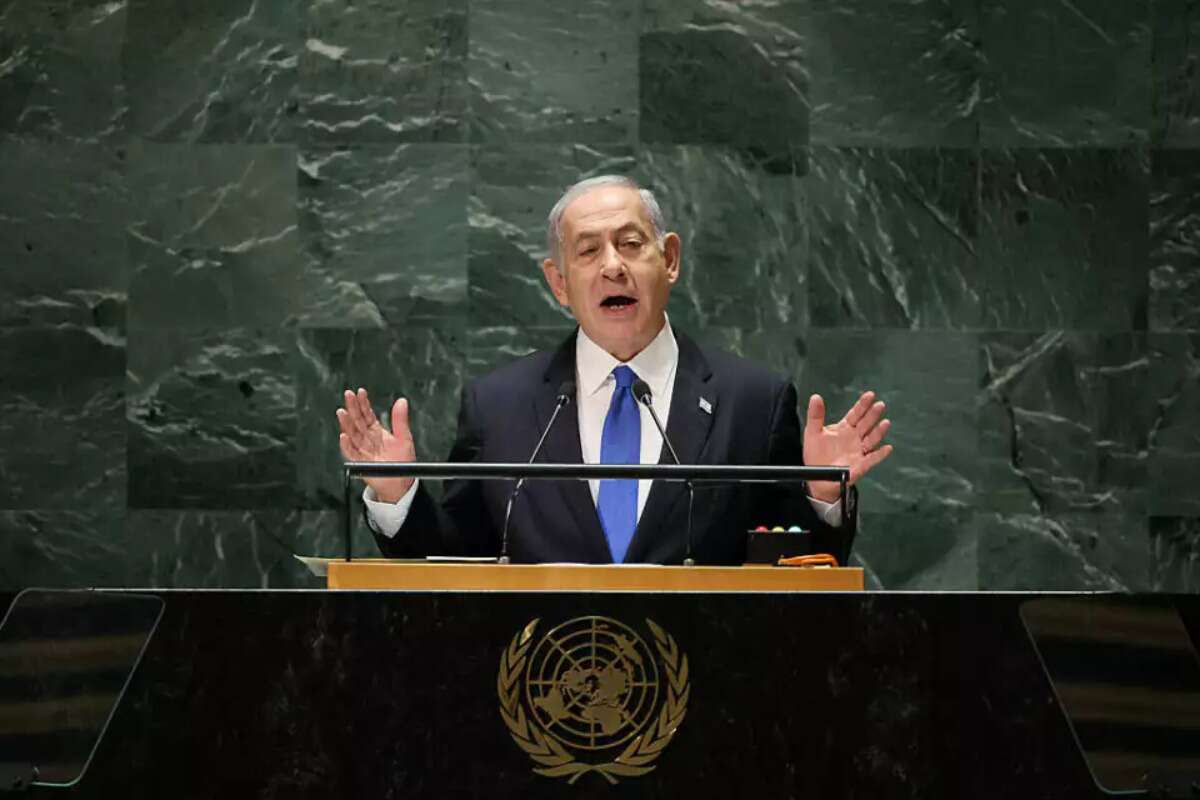
Netanyahu speaks at the UN General Assembly. Photo: EPA | Photo: EPA

Share on FacebookShare on Twitter

Following Trump's speech, delivered in the spirit of a Nobel Peace Prize acceptance, and after the Saudi-French initiative and Trump's summit with Arab and Turkish leaders, Israeli eyes are now set on Netanyahu's Friday speech at the UN, his expected meeting with Trump on monday, and the looming question: will a deal with Syrian President al-Shara be finalized in the coming days?

Until the end of the holiday, Israel's rivals and enemies were largely left unchallenged diplomatically. The US was nearly the sole exception, forcefully recalling the atrocities of October 7, the prize handed to Hamas in the form of Palestinian state recognition, while most others struck blows, many cloaked in hypocrisy, at the Jewish state.

The UN has always been a hostile place for Israel. "Um-Shmum" was coined by David Ben-Gurion back in 1955. Abba Eban fought there with all his diplomatic skill, and Ambassador Chaim Herzog famously tore up the resolution equating Zionism with racism from the General Assembly podium.
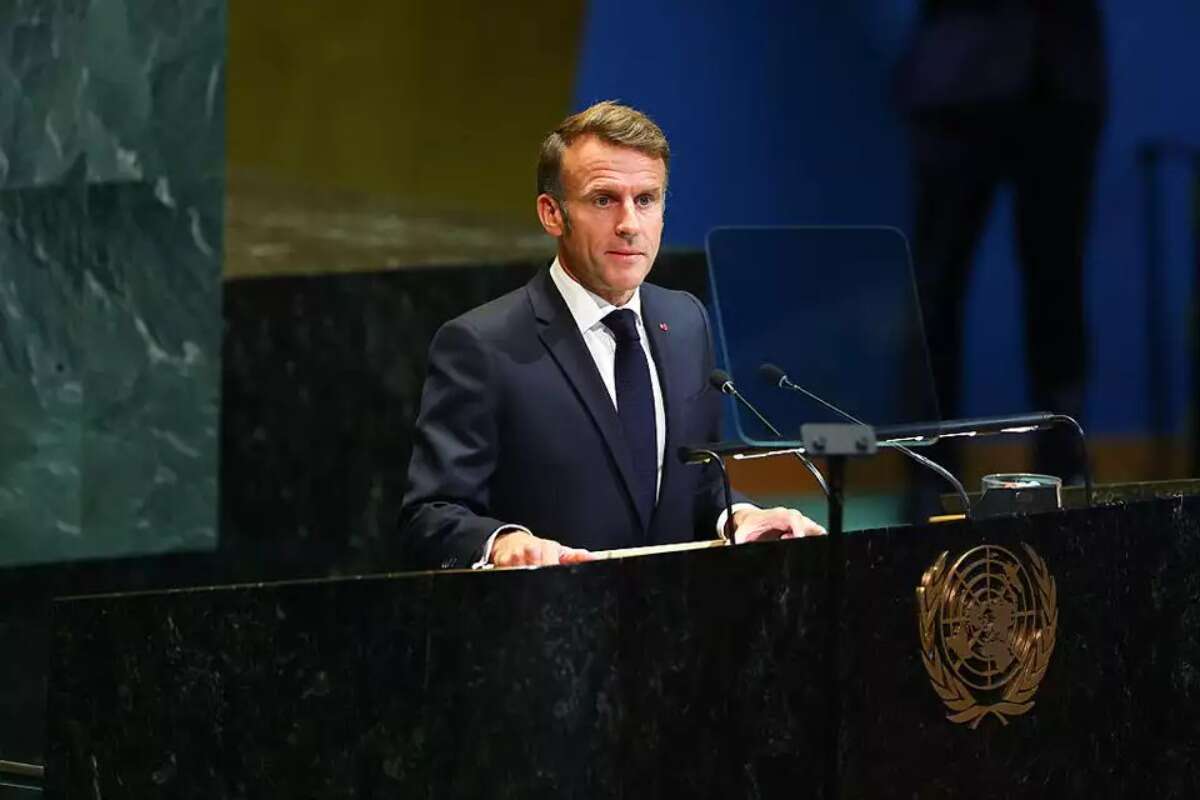
French President Emmanuel Macron announces recognition of a Palestinian state. Photo: AFP AFP

Still, before Netanyahu even arrives in New York after the holiday, there have been statements that partially balanced the hostile atmosphere, not only from Trump. Indonesian President Prabowo Subianto repeated his June declaration, first made alongside French President Emmanuel Macron in Jakarta, that once Israel recognizes a Palestinian state, Indonesia will be ready to recognize Israel. He stressed that support for a two-state solution must ensure Israel's security, saying peace could only be achieved if Israel's safety was guaranteed. "Only then can we achieve real peace. Real peace. And no more hatred and suspicion. The only solution is this: the two-state solution."

נשיא אינדונזיה בעצרת האו"ם , רויטרס
Indonesia's President Prabowo Subianto at the UN General Assembly. Photo: Reuters

Palestinian Authority President Mahmoud Abbas struck an unexpectedly critical tone toward Hamas, demanding the terrorist organization lay down its arms and promising any future Palestinian state would be demilitarized, with Hamas excluded from governance. His remarks appeared aimed at preempting Netanyahu's arguments that a Palestinian state poses a dire security threat to Israel.

But such remarks were exceptions. Netanyahu will arrive to counter them directly in his speech and in behind-the-scenes meetings, including with Trump. His central message will be a fierce condemnation of the countries recognizing a Palestinian state without conditioning it on Hamas's defeat and the hostages' return. He is expected to cite Hamas leaders openly thanking Western nations for this recognition, reiterating his longstanding argument that the October 7 attacks proved the dangers of Palestinian sovereignty next to Israel.

As in previous UN appearances, Netanyahu is expected to bring visual props, possibly including photos or fragments of rockets found near Ramallah and Tulkarem, to demonstrate the proximity of Palestinian threats to Israel's population centers. The plight of the hostages will take center stage, with Netanyahu bringing to New York representatives of hostage families and recently released hostages.

רקטות ברמאללה , דובר צה"ל
Rockets in Ramallah. Photo: IDF Spokesperson's Unit

He is also expected to stress the strategic need to decisively defeat Hamas as justification for continuing the war, while highlighting humanitarian efforts in Gaza such as food distribution centers and safe zones. It is not yet clear if he will address postwar scenarios, who would govern Gaza, the extent of IDF deployment, or broader questions about expanding the Abraham Accords and relations with other Arab states.

According to Israeli officials, including Strategic Affairs Minister Ron Dermer, these regional diplomatic tracks have slipped lower on the priority list. Netanyahu is expected to emphasize Iran, portraying Israel's war against the Islamic Republic as a battle waged on behalf of the entire world. He will call for extending sanctions, including the "snapback" mechanism, to prevent Iran from advancing toward nuclear weapons.

In his meeting with Trump, Netanyahu will seek a green light to continue Israel's military campaign in Gaza until Hamas is fully defeated. The two are likely to agree on the end of the calendar year as the deadline for concluding the war. For Trump, this fits into his narrative of wars he has ended, which he hopes will bolster his case for the Nobel Prize.

טראמפ ונתניהו , אי.פי
Trump and Netanyahu. Photo: AP

Looking beyond Gaza, there are reported disagreements with Washington over reconstruction plans involving regional cooperation toward a broader political and economic "mega-deal," including possible Saudi entry into the Abraham Accords. The two leaders will also coordinate positions on Iran, though Trump has already claimed full credit for the campaign against Tehran in June.

The most intriguing element may be the talks with Syria. According to multiple reports, Trump is pressuring Syrian President al-Shara to show flexibility and reach an agreement with Israel in the coming days. American officials admit the gaps remain significant, particularly concerning Israeli control in the Hermon and along the Golan Heights, as well as security guarantees for the Druze minority allied with Israel.

Syrian leader Ahmed al-Sharaa. Photo: Reuters Reuters

Another sticking point is Israel's demand for continued freedom of action in Syrian skies, including strikes against terrorist targets. If a deal is reached, it could stabilize multiple fronts, particularly Lebanon, and even improve ties with Gulf states currently backing al-Shara.

Lebanon itself will also feature in discussions. US diplomat Thomas Burke, overseeing contacts with Beirut, has hinted that Israeli strikes on Hezbollah targets complicate efforts to reach an agreement with the Shiite terrorist group. Netanyahu will be briefed on negotiations over disarming Hezbollah, a move the group rejects, claiming its arsenal is needed to defend Lebanon against Israeli aggression.
Tags: Benjamin NetanyahuUN

Related Posts

FM Sa'ar: Israel's EU standing improving in our favorJohn Thys/ AFP

Israel severs ties with EU's top diplomat over apartheid comparison

by Adi Nirman and Dudi Kogan

Foreign Minister Gideon Sa'ar says he will cut off all contact with Kaja Kallas until she retracts what he called...

Israel freezes ties with UN secretary-general

Israel freezes ties with UN secretary-general

by Shirit Avitan Cohen

The move announced by Israel's Ambassador to the UN Danny Danon comes after UN Secretary-General Antonio Guterres decided to include...

Israeli Embassy in US refutes 'Gaza hunger' campaign

Israeli Embassy in US refutes 'Gaza hunger' campaign

by Ariel Kahana

A document spanning more than 80 pages details a major study refuting claims of genocide and starvation in during the...

Menu

Analysis 

Archaeology

Blogpost

Business & Finance

Culture

Exclusive

Explainer

Environment


Features

Health

In Brief

Jewish World

Judea and Samaria

Lifestyle

Cyber & Internet

Sports


Diplomacy 

Iran & The Gulf

Gaza Strip

Politics

Shopping

Terms of use

Privacy Policy

Submissions

Contact Us

About Us

The first issue of Israel Hayom appeared on July 30, 2007. Israel Hayom was founded on the belief that the Israeli public deserves better, more balanced and more accurate journalism. Journalism that speaks, not shouts. Journalism of a different kind. And free of charge.

All rights reserved to Israel Hayom

Hosted by sPD.co.il

  • Home
  • News
    • Israel at War
    • Israel
    • United States
    • Middle East
    • Sports
  • Opinions
  • Jewish World
    • Archaeology
    • Antisemitism
  • Lifestyle
    • Food
    • Travel
    • Fashion
    • Culture
  • Magazine
    • Feature
    • Analysis
    • Explainer
    • Environment & Wildlife
    • Health & Wellness
  • In Memoriam
  • Subscribe to Newsletter
  • Submit your opinion
  • Terms and conditions

All rights reserved to Israel Hayom

Hosted by sPD.co.il

Newsletter

[contact-form-7 id=”508379″ html_id=”isrh_form_Newsletter_en” title=”newsletter_subscribe”]

  • Home
  • News
    • Israel at War
    • Israel
    • United States
    • Middle East
    • Sports
  • Opinions
  • Jewish World
    • Archaeology
    • Antisemitism
  • Lifestyle
    • Food
    • Travel
    • Fashion
    • Culture
  • Magazine
    • Feature
    • Analysis
    • Explainer
    • Environment & Wildlife
    • Health & Wellness
  • In Memoriam
  • Subscribe to Newsletter
  • Submit your opinion
  • Terms and conditions

All rights reserved to Israel Hayom

Hosted by sPD.co.il