


Two hundred and twenty years ago, Iran was ruled by a king named Fath-Ali Shah from the Qajar dynasty. He reigned for approximately 37 years, was very corrupt and married hundreds of women, but was also very devout in Islamic commandments and listened greatly to the advice of religious figures at court. Following their misguided counsel, he chose to attack Tsarist Russia to return the Caucasus to Iranian hands, but suffered a severe defeat and lost many additional territories to the empire from the north.
In recent months, many Iranians have compared Supreme Leader Ali Khamenei to that failed king, since in citizens' eyes for more than a decade he has been acting against the state's and public's interests, suffering from hubris and receiving bad advice from extremist elements and Revolutionary Guards personnel. These caused him to insist more and more on continuing nuclear and missile program development, as well as assisting terror organizations and even participating in planning the October 7 events and preparing the ground for them.
The Western world, particularly the US and Israel, expected Iran to abandon or scale back its nuclear ambitions after Israel's military campaign, but Tehran has not recognized the message and continues its challenging behavior in these areas of engagement, especially regarding the nuclear issue. Since military pressure failed to deter Iran's nuclear program, the West, led by Europe, now seeks to reactivate severe sanctions against Iran, which, before the nuclear agreement, damaged the country's economy, regime, and image. These sanctions are intended to again limit oil sales to China, complicate the activities of Iranian shipping companies that transport goods and oil, and nearly completely strangle Iranian banking activity. The goal is to bring Tehran back to a new and improved nuclear agreement, or at least halt its nuclear activity for an extended period.
But today's Iran is not the Iran of 12-15 years ago. The leader feels strong and entrenched in his positions, the public is more oppressed and neutralized than ever, the Revolutionary Guards are the strongest military-economic-media body in the country, and the war against Israel did not cause the regime's fall, allowing it to feel stronger because it "survived an attack by two nuclear entities." He also places his trust in reaching the end of Donald Trump's term safely and electing a Democratic Party candidate, something that, in his view, should restore "the favorable treatment from the Biden era" in the form of sanction easing.
Choosing defiance
And perhaps the most important missing component for the Iranian regime's descent from the tree is that today there are no real moderate elements in the Iranian system who can convince the leader and Revolutionary Guards to pursue an agreement, as former President Hassan Rouhani did, who was a veteran statesman with great influence, unlike the current president, Masoud Pezeshkian, who behaves like the regime's puppet.
Therefore, in recent weeks and months, voices from within the regime calling to leave the Nuclear Non-Proliferation Treaty and abandon the leader's fatwa regarding non-production of weapons are multiplying. Revolutionary Guards commanders have also returned to threatening Israel, and every few days, they conduct missile tests at various ranges. They even try to strengthen the morale of terror organizations against Israel. In practice, reports of Iranian attempts to rehabilitate missile factories and nuclear sites have multiplied, raising great alertness among Western and Israeli intelligence sources.
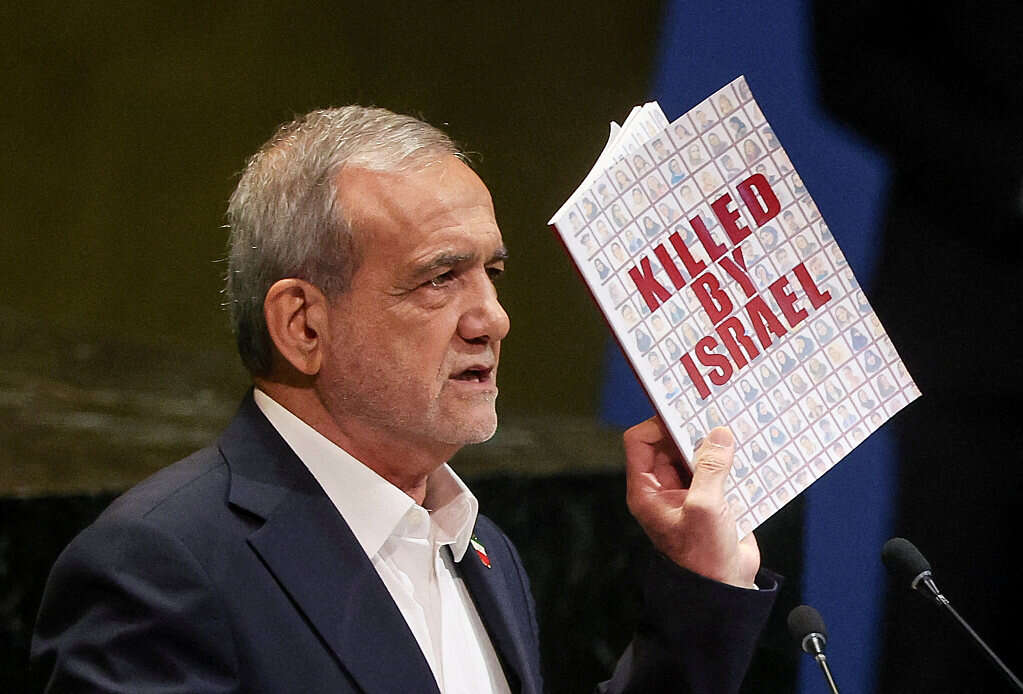
For now, the regime and its leader are taking defiant steps and ignoring the effects of returning sanctions, because in their eyes, the regime is already immune and has learned how to bypass sanctions and other obstacles. However, they overlook the fact that the country's resilience has weakened significantly in recent years, and it is no longer a nation that can withstand further sanctions. The public already pays a heavy price, but those who will feel the price of returning sanctions are precisely the regime elements who have crowded the ranks and become more vulnerable. Nevertheless, although the Iranian regime has previously made last-minute compromises when facing existential pressure, analysts believe this is unlikely to happen again, given the regime's current overconfidence, potentially increasing the risk of renewed military confrontation with Israel.


