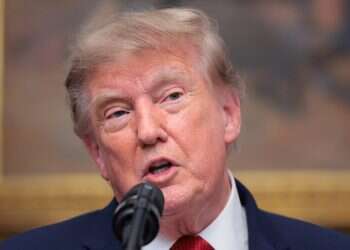
One source and a US official said that Saudi Arabia directly approached President Trump earlier this year after years of showing interest in Lockheed Martin's stealth fighter. The Pentagon is now examining a possible sale of the aircraft, although the scope and status of the request have not yet been publicly disclosed.
The US officials emphasized that no final decision has been made and several stages remain before approval, including cabinet-level consent, Trump's signature, and formal notification to Congress.

The Pentagon's policy office has been working on the potential deal for months, and it has now reached the desk of the secretary of defense, one of the sources said. A Lockheed Martin spokesperson noted that such arms sales occur strictly between governments and fall under Washington's jurisdiction.
The US reviews all arms sales in the Middle East under a policy aimed at ensuring Israel's military superiority, an approach that guarantees Israel access to more advanced American weaponry than that sold to other states in the Middle-East.
The F-35, equipped with stealth technology that enables it to evade enemy radar systems, is widely considered the most advanced fighter jet in the world. Israel has operated the aircraft for nearly a decade, forming several squadrons, and remains the only Middle Eastern nation with the system in service.
Saudi Arabia, the largest buyer of US weaponry, has sought for years to acquire the jet as part of efforts to modernize its air force and counter regional threats, particularly from Iran. The current request, which would allow Riyadh to establish two F-35 squadrons, comes as the Trump administration signals readiness to deepen defense cooperation with the kingdom. The Saudi Air Force currently flies a mix of Boeing-made F-15s and European-built Tornado and Typhoon jets.

The F-35 issue is also linked to broader diplomatic efforts. The Biden administration previously explored offering the jets to Riyadh as part of a comprehensive deal that would include Saudi normalization of ties with Israel, but those efforts stalled when the war in Gaza began.
Since returning to the White House, Trump has made arms sales to Saudi Arabia one of his top foreign policy priorities. In May, the US agreed to sell Riyadh a weapons package worth nearly $142 billion, a deal the White House described as "the largest defense cooperation agreement in Washington's history."