Iran submitted a new proposal at the start of the week as a basis for negotiations with the US, which ostensibly includes flexibility on the nuclear issue, alongside demands to accelerate the pace of sanctions relief already in the early stages, according to three diplomatic sources from the region and the US.
One of them told Israel Hayom that President Donald Trump described the demands on sanctions as brazen and "arrogant," and that Iran had already been given a response saying they were nowhere near what the Americans were prepared to accept on the issue.

However, during a discussion held at the White House on Monday, a message was presented from one of the mediators, apparently Pakistan, indicating the start of some flexibility on the nuclear issue even among commanders in the Revolutionary Guards.
The message was intended to delay a possible US attack, and indeed, at this stage Trump decided to consult with the heads of countries in the region, including Prime Minister Benjamin Netanyahu and the leaders of Saudi Arabia, Qatar and the United Arab Emirates. The decision he made was to postpone the strike in order to give mediation another chance.
According to sources who spoke with Israel Hayom, not all the leaders believed a delay was the right move. Some believed that negotiations were futile and that Iran was playing for time.
They presented Trump with the timetable Iran had dragged out time and again, as well as the fact that it was continuing to attack the UAE, including at particularly sensitive locations, despite the ceasefire.
There is no avoiding escalation
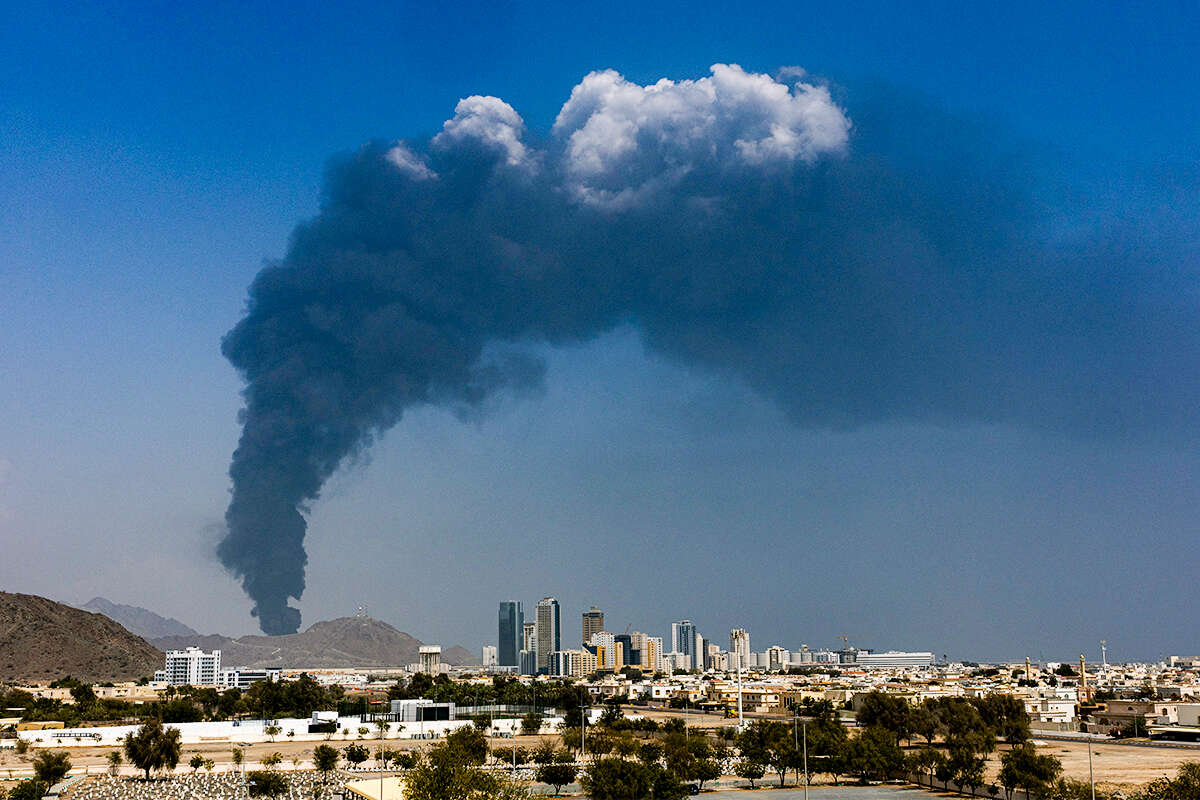
Over the weekend, the Barakah nuclear power plant in the UAE was attacked. The facility supplies electricity, among other things, to desalination plants that also provide water to Saudi Arabia and Qatar.
The attack raised a dual concern: first, a nuclear leak in the event of damage to the reactor, and second, damage to the water supply of the arid Arabian Peninsula, whose population depends on facilities of this kind.
The US, Israel and the UAE face a dilemma, since a counterattack on similar infrastructure facilities, including power plants, could lead to more intense Iranian attacks both on desalination facilities and on oil installations and wells.
The UAE's defensive capabilities are excellent, but not hermetic. One view being raised in the discussions is that there may be no avoiding escalation, even at the price of severe infrastructure damage that would later have to be repaired, as in the Iraq War.
Against an attack: Saudi Arabia and Qatar
Saudi Arabia and Qatar, which are also conducting contacts with Iran, supported postponing the attack, but both back the continuation of economic pressure on Iran in order to bring about the reopening of the Strait of Hormuz, whose closure by Iran is weighing heavily on their economies.

Against the backdrop of these moves, the US Treasury Department is pressing European countries to strictly implement sanctions on Iran, and especially on its financial institutions. Israel Hayom has learned that these include institutions that directly finance the Revolutionary Guards, with the intention being to put pressure on Guards commanders through their pockets in order to bring them to agree to the terms on the nuclear issue.
A US source familiar with the contacts told Israel Hayom that progress on the nuclear issue could lead to understandings on sanctions and the freezing of funds, but gradually and subject to the implementation of agreements. The source made clear that the issue of ballistic missiles and support for regional terrorist organizations had not been taken off the table, but was ranked lower on the list of priorities, with the nuclear issue at the top.
Ready and awaiting
Meanwhile, the Israeli security establishment has been on especially high alert ahead of what appears to be a growing possibility of renewed fighting with Iran. Security officials say the IDFs and CENTCOM are prepared to resume the war at any given moment, and that the decision rests with President Trump.
Israel hopes that this time Trump will allow attacks on Iran's national infrastructure, so that this time the action will be relatively swift and painful for Iran.
It can be assumed that the hope in the US is that after such a painful blow, the Iranians will agree to terms that they do not currently accept.

In Israel, by contrast, officials believe that any deal with the Iranians that leaves the regime intact would be an unsuccessful one, because it would likely dramatically improve the regime's situation. The assumption in Israel is that as long as the current regime remains in place and is not replaced, it will become more extreme and more determined to obtain nuclear weapons and destroy Israel.
For this reason, some defense officials believe that toppling the Iranian regime must still be part of the operation's objectives. In the Mossad, for example, officials believe this remains an achievable goal, even if over time and not immediately. Either way, a series of discussions took place in the defense establishment yesterday on the issue of returning to fighting and its ramifications.