Alongside US President Donald Trump's announcement that he had decided to postpone the attack on Iran planned for today because of "serious talks" under way to reach a deal, the New York Times reported that Iran was completing preparations for the resumption of US attacks, including a plan to exact a heavy price from its neighbors and the global economy.
Hamidreza Azizi, an expert on Iranian security affairs at the German Institute for International and Security Affairs, said in the report that "in the first round of the war this year, the Iranians prepared for a prolonged confrontation of around three months." According to him, that assessment led Iran to make limited use of its missile stockpile, so it would last for weeks of attacks on American, Israeli and Gulf targets.

Now, according to Azizi, if the confrontation resumes, Iran expects it to be "short and intense" and to include coordinated strikes on energy facilities. In such a scenario, Iran is expected to launch dozens or hundreds of missiles a day. In his assessment, energy facilities in Gulf states are expected to be the target of significant Iranian attacks, including oil fields, refineries and ports.
All this is intended to damage global energy markets and increase pressure on Trump. If the damage is especially significant, countries such as Saudi Arabia, the United Arab Emirates and Kuwait could be drawn into a war their leaders are seeking to avoid.
The doomsday weapon if Hormuz is at risk
Iranian officials and government figures have stepped up their threats against the UAE in recent weeks, due to what they perceive as the country's assistance in attacks on Iran, since it hosted large numbers of US forces on its territory. In addition, it was revealed in recent weeks that the UAE and Saudi Arabia secretly attacked Iran during the most recent war.
Ali Alfoneh, a former senior fellow at the Arab Gulf States Institute, explained that reports of an Iranian-Saudi alliance to prevent attacks were "completely unrealistic," and that the Iranian threat against oil facilities in the Gulf continued to be one of the main considerations limiting the intensity of a US attack on Iran.
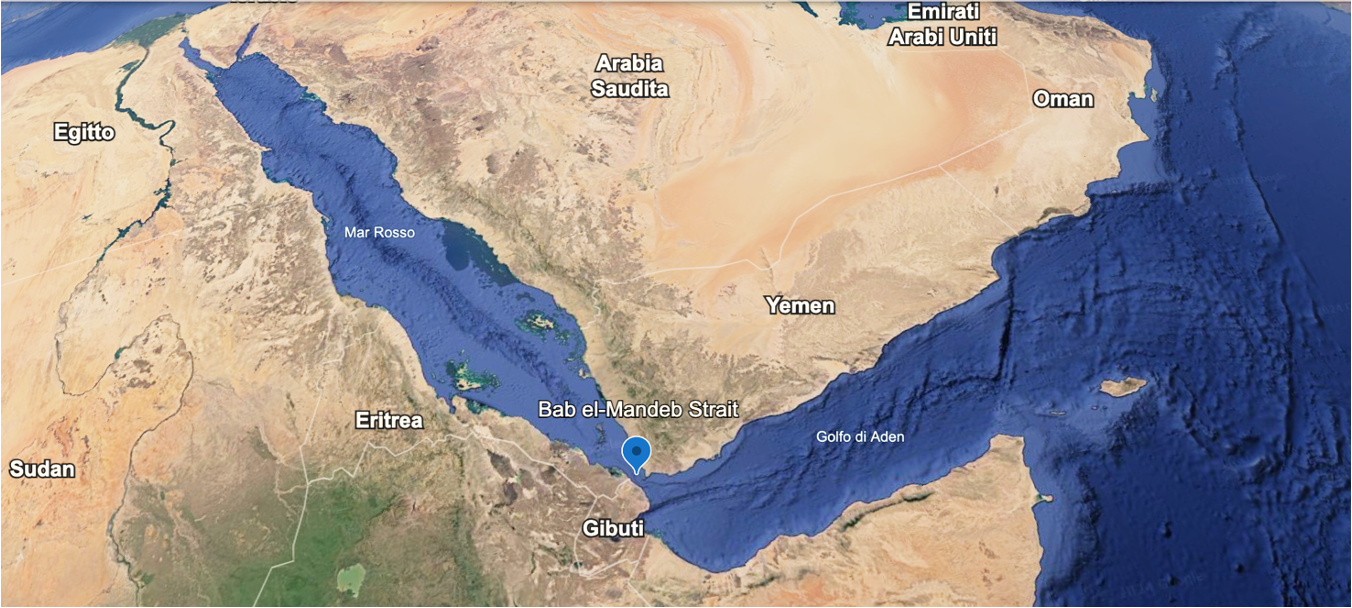
Iran also has the option of blocking the Bab al-Mandab Strait, which connects the Gulf of Aden to the Red Sea and through which 10% of global trade traffic passes. The strait runs through territory controlled by the Houthis in Yemen. If the Iranian government fears that control of the Strait of Hormuz is in danger, it could order its proxy in Yemen to block Bab al-Mandab in order to divide US military efforts.