


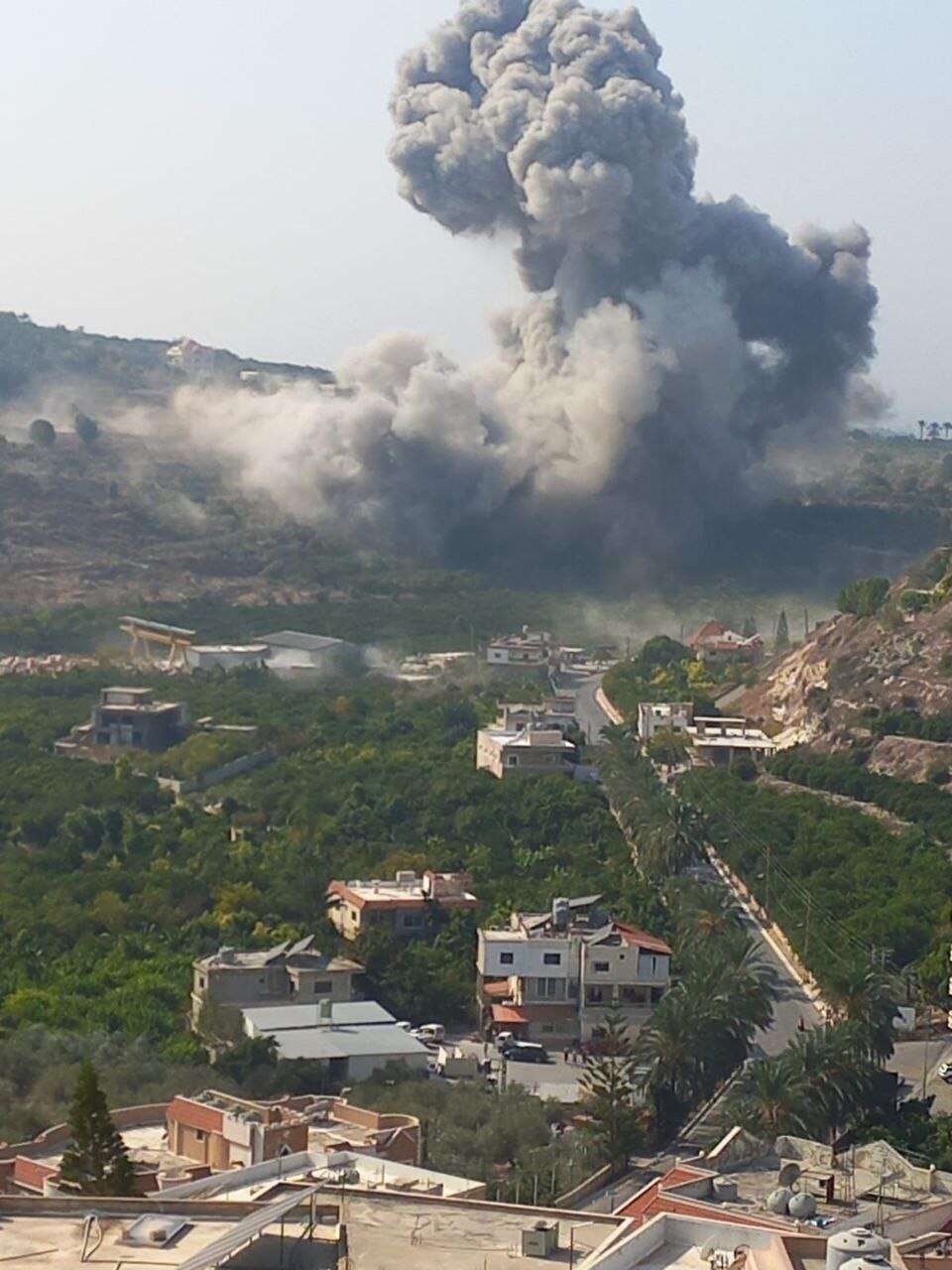
The IDF opened Thursday with a series of relatively unusual strikes in southern Lebanon after tensions rose in recent days with Hezbollah, which has been trying to rebuild its capabilities.
On the surface, the strikes continued a recent run of attacks intended to "cut the grass" on Hezbollah's activity, but this operation differed materially: the IDF ordered evacuations of parts of southern Lebanese towns in order to destroy weapons and materiel Hezbollah is attempting to stockpile, while trying to avoid harm to uninvolved civilians.

Around 3 p.m. local time, the IDF spokesperson in Arabic, Lt. Col. Avichay Adraee, issued evacuation orders for residents of specific buildings in the villages of al-Taybeh and Tir Daba, and later announced the strikes had begun.
As the day went on the IDF announced further evacuations from particular buildings in the village of Zotar al-Sharqiya and in the village of Dunin. In addition to evacuating civilians for their protection, the IDF said it took other measures to avoid civilian harm, including the use of precision munitions, aerial observation and additional intelligence.

According to the IDF spokesperson, the targets were terrorist infrastructure and several weapons caches belonging to the "Quwwat Radwan" unit in southern Lebanon. The statement said the terrorist organization Hezbollah continues attempts to rebuild terror infrastructure in southern Lebanon and is focused on restoring the unit's capabilities in order to strike the State of Israel.
The warehouses struck were located in the heart of civilian areas and, the IDF said, provide yet another example of the terrorist organization Hezbollah's cynical use of Lebanese civilians as human shields by operating out of civilian property.
Israel's security establishment has understood in recent days that while Hezbollah remains severely weakened, it is still trying to regain strength and reconstruct its forces ahead of the next confrontation with Israel.
In recent months Israel and the US have given Lebanon, through the Lebanese army, a chance to do the work of disarming Hezbollah. The rhetoric from Beirut was promising and positive on this front, but on the ground, according to intelligence, not enough was done and Hezbollah continued its efforts.
Israeli officials say they will not accept that situation, and senior figures repeatedly stress that the principal lesson of October 7 is to prevent terrorist organizations from rebuilding along Israel's borders.
In recent days there have been statements suggesting Hezbollah plans to respond to Israeli actions. A military source we spoke with said yesterday that a Hezbollah reaction would actually be beneficial to Israel because it would give Israel greater legitimacy to strike additional Hezbollah targets.
But even if Hezbollah does not respond, it is not inconceivable that Israel will decide to launch a proactive, short operation of several days against Hezbollah targets across Lebanon, and stop the terrorist organization from regaining its strength. Either way, Israeli officials doubt such an operation would take place in the coming month unless Hezbollah errs and decides to act against Israel.


