The wave of antisemitism sweeping Jewish communities around the world is not a local phenomenon, nor is it another "exceptional incident" that can be managed with outdated tools. What we are witnessing on the streets, on university campuses, in educational institutions and across social media is a clear warning sign. Reality has changed, and our response must change with it.
This text continues an article I wrote about two weeks ago on the urgent need to establish a Jewish People's Guard. It is not a summary of the existing situation, but an opening salvo in a necessary process: building an international Jewish security network, adapted to the threats of the 21st century.
The Jewish people did not always know, or were not always able, to defend themselves when it became clear that no one else would do so on their behalf.
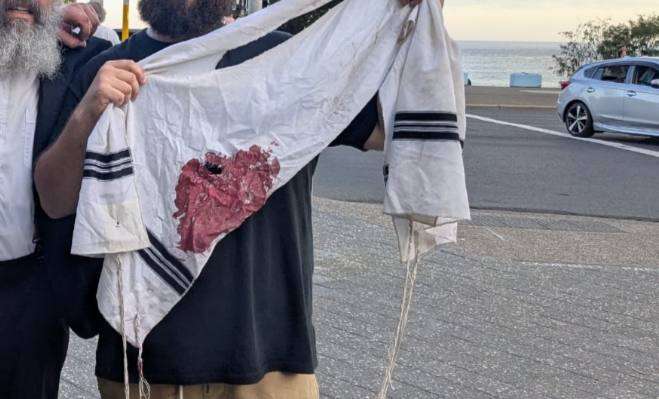
The establishment of the State of Israel and its security apparatus changed the fate of the Jewish people living in Israel, but they did not rule out the principle of mutual responsibility among Jewish communities in the Diaspora. Today, more than ever, the State of Israel's commitment to Jewish communities worldwide is growing. One thing is now unmistakably clear: exclusive reliance on local authorities in the Diaspora, important as they may be, is not enough. A complementary move is required. Not a militia. Not a replacement force. Rather, a coordinated, professional, international defense framework that operates in partnership with the State of Israel, Jewish communities and security bodies and authorities in the various countries.
From here, we must move from idea to action. This means building early warning and deterrence mechanisms, sharing information among communities, training community based response teams under an organized and well drilled command and control model, and strengthening Jewish resilience at an organizational level, not merely a state of mind. A genuine security network is measured by its ability to anticipate threats, identify patterns and respond quickly and responsibly, not only after an incident has already occurred. This is a process that demands leadership, coordination and resources, and above all: an understanding that this is a long term responsibility.
During Hanukkah, it is important to recall a simple truth that is too often forgotten: we do not rely on miracles. A miracle is a last resort, not a work plan. The Maccabees did not wait for salvation. They built power, organized and acted. Today as well, Jewish resilience will not be built on hope alone, but on initiative, mutual responsibility and early preparedness. If we want a safer future for the Jewish people, we must be relentlessly proactive and build the Jewish People's Guard not as a slogan, but as a reality.
Where efforts converge, the miracle will follow.