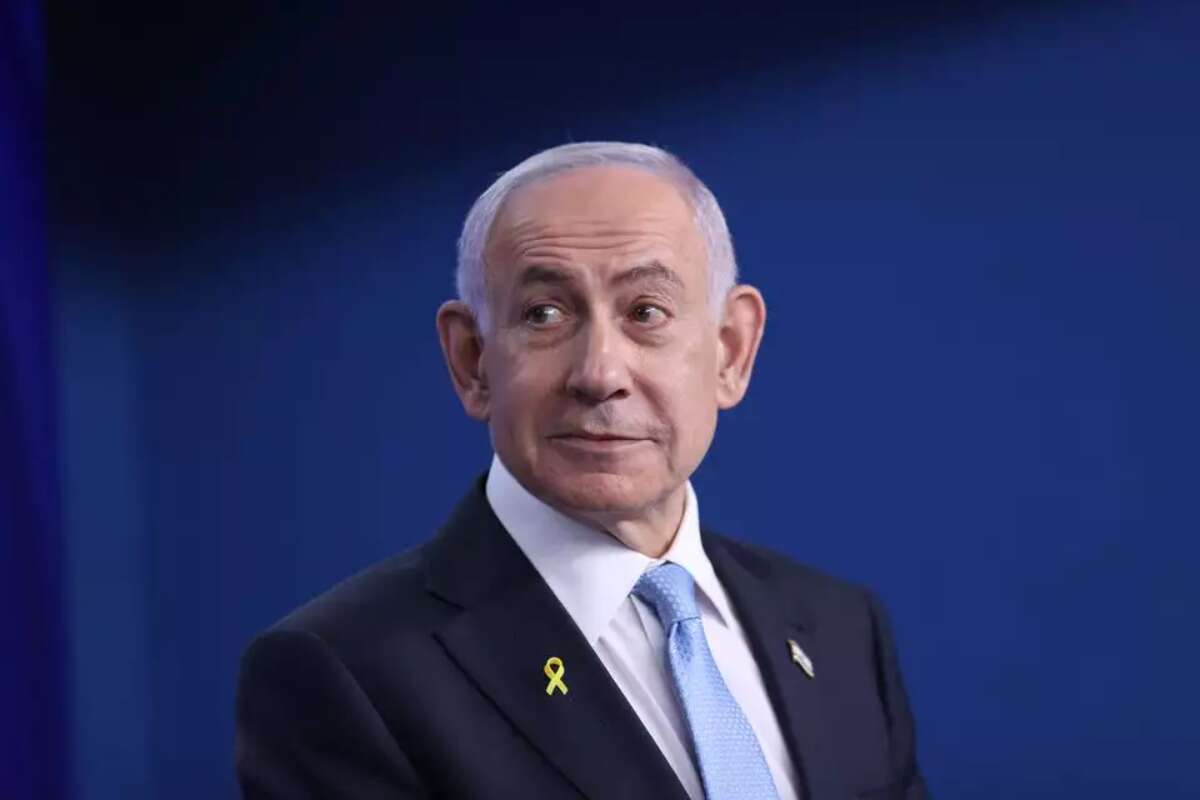
Israeli society has been mired in division and instability for well over a decade. Many Israelis – as well as observers abroad – believe that once Prime Minister Benjamin Netanyahu leaves the political stage, the country will finally begin to heal.
The belief is understandable. A broad swath of Israel's political spectrum has long been defined by being either for or against Netanyahu, so it seems reasonable to imagine that his departure might release the pressure. In reality, though, this expectation is misplaced. The intensity of the Netanyahu fixation points to something deeper.
For decades, Israel's Center-Left has struggled to reconcile its founding self-image with the demographic, cultural, and religious transformation unfolding around it. This dissonance has bred both anxiety and resentment.
In other societies, similar discomforts have often been managed through scapegoating: identifying a figure or group to bear the blame for the strains of modernization. Jews historically filled that role, having been accused over the centuries of obstructing redemption by rejecting whichever "truth" the societal majority held sacred.
Jewish Israelis cannot scapegoat themselves, but the psychological mechanism of blame displacement applies no less to them. It is primordial – more ancient even than the flesh-and-blood Jew. As Jean-Paul Sartre observed, "If the Jew did not exist, the antisemite would invent him."
Confronted by unsettling social change, some Israelis did precisely that. They projected their unease onto a figure who embodied it – Israel's most dominant and resilient political figure, Benjamin Netanyahu.
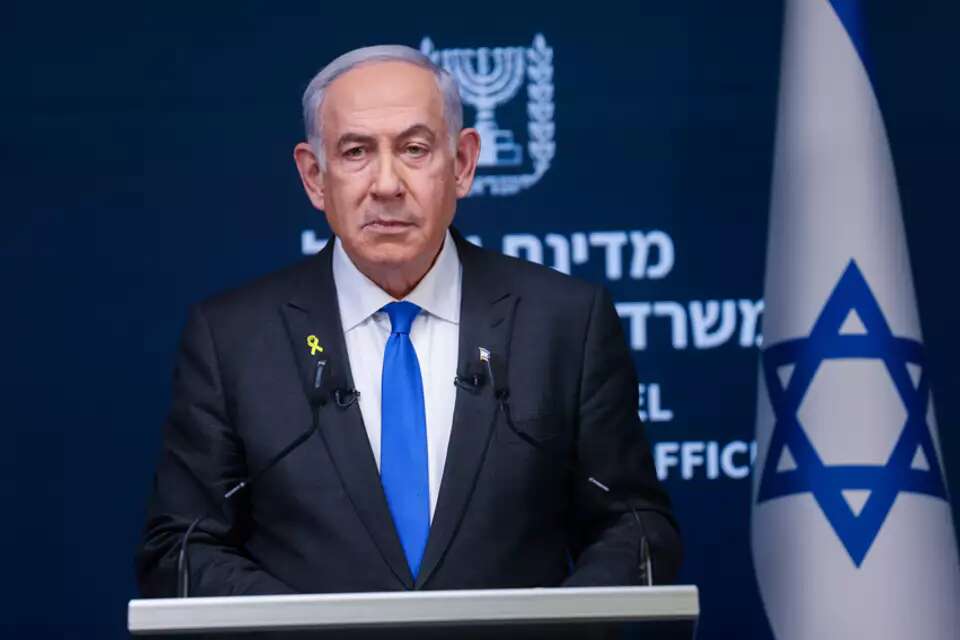
While Netanyahu cannot, on his own, make Israel more religious or less liberal, he has consistently drawn decisive support from sectors of society that many in the Center-Left regard as emblematic of that change. For those who once saw the state as an extension of their own secular and liberal image, Netanyahu became the ideal vessel for their fixation. He came to personify the fact that Israel has slipped away from them, such that they could no longer fully command or define it.
Strikingly, Netanyahu unsettles Israel's elites not because he is foreign to them, but precisely because he isn't. In him they see an inversion of themselves that threatens their sense of moral and cultural superiority. Like them, he is Ashkenazi, Western, educated, secular, and culturally polished – yet he deploys these traits in service of a political and cultural vision that rejects many of their premises.
He is fluent in the West but not deferential to it. He reflects the elites' self-image, but not the insecurities that shaped it. He looks like the Israel they believed they built, yet acts like the Israel that outgrew them.
Over time, this intolerable mirror image has caused political disagreement to harden into moral essentialism. Netanyahu's decisions came to be viewed less as policy choices than as psychological symptoms, interpreted through a lens of mistrust. Assertive diplomatic or military moves were cast as recklessness, while restraint was deemed political calculation. The result was an opposition defined less by alternative policy than by the conviction of Netanyahu's inherent guilt.
Throughout Netanyahu's premiership, Center-Left parties could have zeroed in on education, housing, fair military enlistment, or any of a dozen other issues, making their position the non-negotiable price of joining unity coalitions. But doing so would have meant legitimizing a political and cultural reality they no longer felt represented them. So instead, opposition to Netanyahu became their organizing principle.
The trouble with scapegoating is that it consumes the societies that practice it. Once a single figure is cast as the source of all dysfunction, the energy that might be spent addressing real challenges is redirected into neutralizing that figure.
With the backing of Israel's unelected intellectual and security elites, the anti-Netanyahu movement increasingly leveraged the administrative state not to extract policy concessions, but to engineer his removal from office. The gravest consequence was the weakening of Israel's ability to act as one society under threat. During the judicial reform crisis, large segments of the anti-Netanyahu camp conditioned participation in reserve military duty on the fate of the legislation. October 7 revealed the cost of turning national defense into a bargaining chip.
Scapegoating can produce a momentary catharsis when the chosen target falls. Should Israel find itself with a new Prime Minister, many will experience that fleeting relief – the illusion of moral and national renewal. Yet the deeper social rifts that gave rise to the fixation will remain unresolved. Removing the scapegoat cannot substitute for self-reckoning. Just as no renaissance followed Iraq's expulsion of its Jews, Israel should not expect sudden transformation once its own "Jew" is gone.
Genuine healing begins only when a community recognizes that the object of its hostility was never the true source of its ills. For Israel, that means acknowledging that Netanyahu is not the problem – and that refusing to engage constructively with his political base has been a grave error.
If Israel's Center-Left cannot reach that understanding before Netanyahu leaves the scene – be that in 2027 or 2037 – the path to national reconciliation will emerge too late, with a society freed of its scapegoat but still captive to its fears. The "day after Netanyahu" would then feel less like a new dawn and more like the uneasy continuation of the same night – the country's chance for renewal deferred once again and its divisions left to fester.