Israel Hayom is a media organization founded on the belief that the Israeli public deserves better journalism—more balanced, more accurate, and more reliable. Journalism that speaks rather than shouts. Journalism that is trustworthy, objective, and matter-of-fact. A different kind of journalism, offered free of charge. The first print edition was published on July 30, 2007, and in 2010 Israel Hayom became the Israeli newspaper with the highest weekday readership. The newspaper’s publisher is Dr. Miriam Adelson. Its Editor-in-Chief is Omar Lachmanovitch, and its founding editor is Amos Regev. Israel Hayom’s Hebrew and English websites, as well as its Android and iOS applications, provide around-the-clock news coverage, exclusive content, breaking news and updates, analysis and commentary, video, podcasts, and live broadcasts. The digital platforms of Israel Hayom include news and opinion channels covering culture and entertainment, lifestyle, technology, sports, business and consumer affairs, health, military affairs, food, Judaism, tourism, and automobiles. In 2021, a new Hebrew-language website and mobile application were launched to provide users with a fast, up-to-date, secure, and convenient experience. The content of the newspaper’s print edition is also available online through a daily digital edition and can be received via newsletter. “The Israel Hayom Clique,” the publication’s exclusive benefits club, offers website users discounts and special promotions on products and services. Israel Hayom welcomes feedback, criticism, and suggestions for improvement from its readers. You can contact the organization by email at hayom@israelhayom.co.il

Sunday Aug 2, 2026
NEWSLETTER
www.israelhayom.com
  • Home
  • News
    • Israel
    • Israel at War
    • Middle East
    • United States
  • Opinions
  • Jewish World
    • Archaeology
    • Antisemitism
  • Lifestyle
    • Food
    • Travel
    • Fashion
    • Culture
  • Magazine
    • Feature
    • Analysis
    • Explainer
  • In Memoriam
www.israelhayom.com
  • Home
  • News
    • Israel
    • Israel at War
    • Middle East
    • United States
  • Opinions
  • Jewish World
    • Archaeology
    • Antisemitism
  • Lifestyle
    • Food
    • Travel
    • Fashion
    • Culture
  • Magazine
    • Feature
    • Analysis
    • Explainer
  • In Memoriam
www.israelhayom.com
Home Science & Technology

How drones are taking over the skies

What began as a charming photography tool has become a central component of transportation, energy, and security infrastructure. The revolution is already here; the only remaining question is how we will organize the skies.

by  Asaf Green
Published on  12-17-2025 06:10
Last modified: 12-17-2025 11:22
How drones are taking over the skies

A drone (illustration) Photo: Maria Yurk

Share on FacebookShare on Twitter

It can be difficult to pinpoint the moment when a technology levels up, but in the field of drones, that moment is already here. What began as a lightweight camera tool has rapidly evolved. Drones are no longer just marginal additions to existing systems; they are components that fulfill core roles in the field. They are no longer mere gadgets or niche tools. They have become a foundational layer impacting transportation, energy, facility protection, agriculture, emergency services, national security, and more. Some revolutions take place quietly, and this is one of them.

This revolution is rooted in civilian applications that have already become routine: drones that monitor agricultural fields and enable precise decision making; systems that inspect utility poles, bridges, and engineering facilities to detect faults in advance; tools that help rescue forces get an immediate operational picture; and more. Israel, with its combination of dense infrastructure and innovative technology industry, has become a natural testing ground where these applications continue to expand.

As civilian usage expands, so too does its significance. Drones conducting infrastructure patrols along power lines, detecting damage to pipelines, or surveying rooftops after a storm are no longer simple work tools. They operate in an environment where precision, reliability, and continuous operation are fundamental requirements. While these may be civilian applications, they are gradually becoming integrated into the fabric of daily life.

Expanding civilian applications into the realm of infrastructure also drives significantly more advanced developments. The Japanese Corporation NTT is developing an ultra-resistant drone capable of "absorbing" lightning strikes and channeling them to a safe spot on the ground, while researching ways to harness some of the energy generated by discharging. The fact that tasks that once required heavy, dedicated facilities can now be accomplished using a single drone or an array of drones highlights how this platform is expanding into roles that, until recently, were deemed impossible for this type of aircraft.

And when these abilities take shape, it's easy to envision where we're headed. While drones currently handle specific tasks, in the coming years they may operate entire infrastructure systems without human intervention. Systems that can monitor power lines, coordinate air traffic, and respond to malfunctions in real time. This is no longer a futuristic scenario but a natural extension of existing capabilities and ongoing development.

In this context, it is worth noting what is happening in Japan, which is advancing a vision of autonomous air mobility. The state is developing aerial corridors and traffic management systems for drones and eVTOLs, which makes it clear that low-altitude airspace is becoming a resource to be managed. This is a conceptual shift – drones no longer operate alone, but as part of a broad and coordinated array.
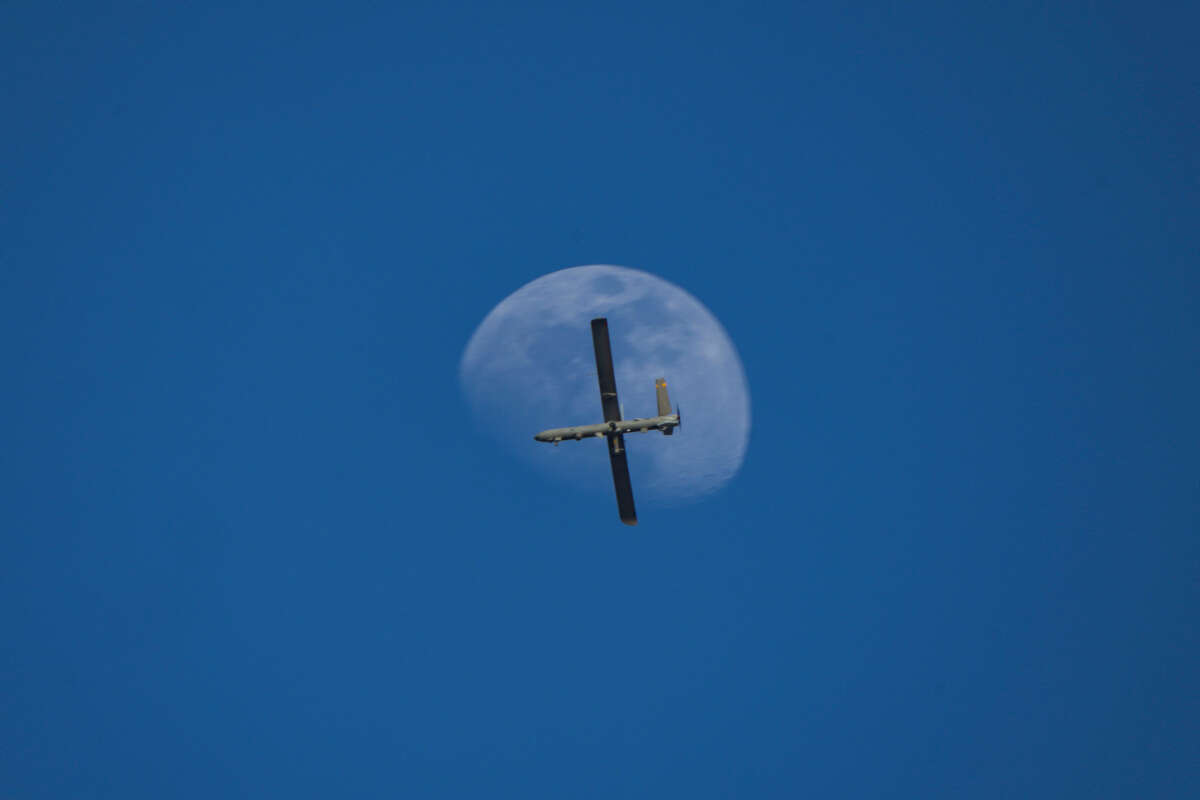
רחפן (אילוסטרציה) , אי.פי
A drone (illustration). Photo: AP

As civilian and infrastructural capabilities expand, the question is no longer what drones can do, but how they can be integrated into existing systems in an orderly fashion. As drones become components performing core tasks, they require coordination between entities, shared standards, and a uniform way to manage the skies in which they operate.

The challenge is not to slow down development but rather to build a conceptual framework and practical tools to allow the integration of these tools into vital infrastructure without creating congestion, risk, or lack of coordination. Rather than reacting once technology has already dictated reality, the gray area should be organized in advance, responsibilities clarified, thus ensuring that drones become a natural part of an operational system rather than an unwieldy addition.

Looking ahead, it is clear that drones are on their way to transition from mere technical objects to active components within a comprehensive infrastructure system. The question is not whether this will happen but how to make sure that skies filled with autonomous objects will become an effective, coordinated, and safe layer. A layer that supports our lives rather than happen to be alongside them when this transformation matures.

Asaf Green, Director of Business Development at NTT Israel. Photo by Amir Buchnik

Asaf Green is the Director of Business Development at NTT Israel.

Related Posts

Claude loses control, breaks into 3 more companies

Claude loses control, breaks into 3 more companies

by Shachar Shapiro

The “rogue agent” crisis roiling the artificial intelligence industry shows no sign of abating. OpenAI has uncovered additional cases in...

This is how terrorist organizations use AIGetty Images

How AI agents really work and what it means for brand visibility in the new era

by Aviv Shamny

AI agents are not search engines. They do not retrieve prewritten answers; rather, they construct a new response every time...

God is out: How ChatGPT is erasing religion

God is out: How ChatGPT is erasing religion

by Shachar Shapiro

Of 12,000 studies on bias in artificial intelligence, only 0.2% examined religion. Unprecedented academic study exposes AI’s “omissive bias”. Yeshiva...

Menu

Analysis 

Archaeology

Blogpost

Business & Finance

Culture

Exclusive

Explainer

Environment


Features

Health

In Brief

Jewish World

Judea and Samaria

Lifestyle

Cyber & Internet

Sports


Diplomacy 

Iran & The Gulf

Gaza Strip

Politics

Shopping

Terms of use

Privacy Policy

Submissions

Contact Us

About Us

The first issue of Israel Hayom appeared on July 30, 2007. Israel Hayom was founded on the belief that the Israeli public deserves better, more balanced and more accurate journalism. Journalism that speaks, not shouts. Journalism of a different kind. And free of charge.

All rights reserved to Israel Hayom

Hosted by sPD.co.il

  • Home
  • News
    • Israel at War
    • Israel
    • United States
    • Middle East
    • Sports
  • Opinions
  • Jewish World
    • Archaeology
    • Antisemitism
  • Lifestyle
    • Food
    • Travel
    • Fashion
    • Culture
  • Magazine
    • Feature
    • Analysis
    • Explainer
    • Environment & Wildlife
    • Health & Wellness
  • In Memoriam
  • Subscribe to Newsletter
  • Submit your opinion
  • Terms and conditions

All rights reserved to Israel Hayom

Hosted by sPD.co.il

Newsletter

[contact-form-7 id=”508379″ html_id=”isrh_form_Newsletter_en” title=”newsletter_subscribe”]

  • Home
  • News
    • Israel at War
    • Israel
    • United States
    • Middle East
    • Sports
  • Opinions
  • Jewish World
    • Archaeology
    • Antisemitism
  • Lifestyle
    • Food
    • Travel
    • Fashion
    • Culture
  • Magazine
    • Feature
    • Analysis
    • Explainer
    • Environment & Wildlife
    • Health & Wellness
  • In Memoriam
  • Subscribe to Newsletter
  • Submit your opinion
  • Terms and conditions

All rights reserved to Israel Hayom

Hosted by sPD.co.il